Early Pricing is reader-supported: some links on this page are affiliate links, and as an Amazon Associate Early Pricing earns from qualifying purchases at no extra cost to you. Learn more.
Dog kennels are defined by interior dimensions, material durability, and specific security features that determine if a pet can safely remain contained. You should prioritize structural integrity and interior clearance over decorative finishes to ensure the kennel serves its primary function. Measure the space your dog occupies while lying down and add at least 4 inches to both length and height to determine your minimum requirement.
Physical Dimensions and Interior Space
Interior length measures the longest straight distance inside the floor space of a dog kennel. A larger interior length allows for longer-bodied breeds to stretch out fully without their heads or tails being cramped against the walls. We found that 13 of the 111 listings we screened state a specific interior length, with values ranging from 21.65 to 96 inches.
If you prefer a natural look, explore our guide on the best wooden dog kennels for your pet.
- Interior Length – This is the primary horizontal measurement for floor space; a higher number is better for larger dogs.
- Interior Width – This measures the shortest straight distance across the floor space. You need a width that accommodates the dog’s shoulder span comfortably.
- Interior Height – This is the vertical distance from the floor to the ceiling of the kennel. A taller height is necessary for breeds that stand up or sit upright inside the crate.
- Weight Capacity – This is the maximum mass the structure can support safely. While 36 of the 111 listings we screened provide a weight capacity, it is important to choose a rating that exceeds your dog’s weight to account for dynamic movement.
Where these choices show up in our reviews
Each of the 3 shown here has its own full review on this site; they run from $129.86 to $229.98.
Budget-conscious owners can find the best dog kennels for small dogs under $150 in our comparison.
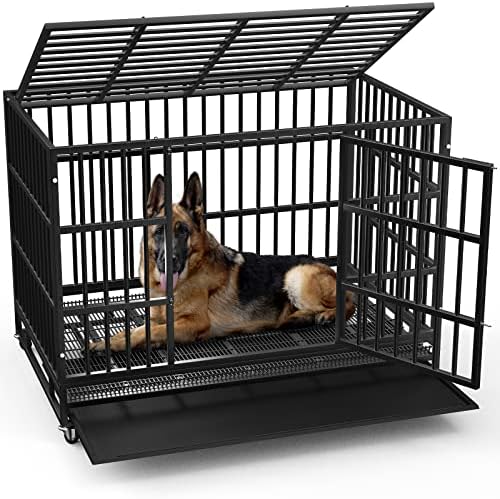


How Dog Kennel Materials Balance Visibility and Chew Resistance
Material selection determines the trade-off between visibility, chew-resistance, and how the kennel integrates into your home. You must choose a material that matches your dog’s destructive habits and your need for airflow.
If you want to blend the crate into your decor, see the best dog crate furniture for living room setups.
- Steel Frame – 47 of the 111 listings we screened state the use of a steel frame for structural support. Steel provides high rigidity and prevents the kennel from warping under weight.
- Wire Material – This construction allows for maximum visibility and airflow. It is often used in heavy-duty outdoor runs to prevent structural breaches from high bite forces.
- Wood Material – Wood offers a more aesthetic integration into living spaces but may have lower chew-resistance than metal.
- Plastic Material – Plastic is often used for lightweight, portable options, though it may lack the durability of steel or iron.
- Iron Pipe – 2 of the 111 listings we screened state an iron pipe construction. This provides extreme durability for heavy-duty containment.
Access and Security Features
Access and security features ensure the kennel remains securely closed and prevents accidental escapes. You should prioritize a locking mechanism that is easy for you to operate but difficult for a dog to manipulate.
Understanding the different designs is easier when you see the different types of dog kennels explained.
- Door Latch Mechanism – This ensures the kennel remains securely closed and prevents accidental escapes. 71 of the 111 listings we screened state they include a locking mechanism.
- Door Type – This refers to how the kennel opens, such as a single door, double door, or side entry. 35 of the 111 listings we screened state they feature a double door.
- Side Entry – This allows you to access the dog from the side rather than the front. This is useful in tight spaces where the front of the kennel is against a wall.
- Sliding Barn – This is a door style that slides horizontally rather than swinging out. It saves floor space but requires clear clearance along the side of the kennel.
- Fold-out Door – This door folds flat against the side of the kennel when open. It is useful for maximizing space in small rooms.
Ventilation and Comfort Features
Ventilation and comfort features facilitate consistent airflow and prevent heat buildup inside the crate. Proper airflow is critical to prevent heat exhaustion or poor air quality for the animal.
If a traditional crate isn’t right for you, browse the various dog kennel alternatives available.
- Ventilation Grates – These facilitate consistent airflow and prevent heat buildup inside the crate. They are usually placed on the sides or top of the kennel.
- Canopy – A canopy provides overhead protection from sun or light rain. 22 of the 111 listings we screened state a canopy is included.
- Base Tray – This provides a removable surface for easy cleaning and waste management. You need a tray that is large enough to catch moisture without overflowing.
- Wheels – Wheels allow for easy mobility of the kennel. 26 of the 111 listings we screened state that wheels are included.
Selecting Training Accessories That Match Specific Kennel Dimensions
Training and compatibility accessories are items you may need to buy to make the kennel functional for specific needs. These items must match the interior dimensions of your specific kennel to fit correctly.
Selecting the right build involves looking at the different material types for dog kennels.
- Divider Panel – This allows for adjustable space for smaller dogs or crate training. You need to ensure the panel’s mounting points align with the kennel’s frame.
- Bedding Mat – This provides cushioning and insulation for the pet. A mat that is too large may bunch up and create a trip hazard or a “ventilation dead zone.”
- Training Treat Dispenser – This encourages positive reinforcement during crate training. These usually attach to the wire bars or the frame of the kennel.
- IATA Compliance – This ensures the kennel meets international aviation regulations for cargo and cabin transport. If you plan to fly with your dog, you must verify the kennel meets these specific dimensions.
Which Measurements Are Most Often Confused?
Confusion between interior and exterior measurements often leads to buyers ordering a kennel that does not fit in their intended space. You must distinguish between the space inside for the dog and the footprint the kennel takes up in your room.
Proper clearance is vital, so check the recommended interior height for dog kennels.
How interior length differs from the total kennel footprint
Interior Length vs. Exterior Footprint: Interior length only measures the longest straight distance inside the floor space. It does not decide the total footprint or the door swing clearance. A kennel with a 42-inch interior length may require 50 inches of floor space once you account for the door’s swing radius.
For a stylish home option, view our full Boldbone Dog Crate review.
Why a kennel weight capacity differs from a dog’s weight
Weight Capacity vs. Dog Weight: Weight capacity measures the maximum mass the structure can support safely. It does not decide the dog’s weight limit. A kennel with a 150 lb weight capacity is not necessarily the best choice for a 100 lb dog, as the dog’s movement and jumping can exert forces much higher than its static weight.
If you need a specific size, see our full Vari Pets Kennel review.
Choosing between wire and plastic for dog kennel durability
Wire vs. Plastic: Wire determines the trade-off between visibility and chew-resistance. While plastic is often easier to clean, wire is the standard for preventing structural breaches by dogs with high bite force. If your dog is a heavy chewer, wire is the required choice over plastic.
This large outdoor option is covered in our full PawHut D02-011 Kennel review.
How side entry allows access when a kennel is against a wall
Single Door vs. Side Entry: A single door usually opens from the front, while a side entry allows access from the side. If you plan to place the kennel against a wall, a side entry is the only way to access the dog without moving the entire unit.
For a compact furniture piece, see our full Hzuaneri Dog Crate review.
Browse our other dog kennel pages
- The Dog Kennels That Work Best for Airline Travel
- Which Wooden Dog Kennels Are Best for Your Pet?
- Best Dog Kennels for Small Dogs Under $150
- Securing a Pet in the Backyard With a Heavy Duty Outdoor Dog Kennel
- The Dog Kennels That Work Best for Travel
- Which Dog Crate Furniture Is Best for a Living Room?