Tag: guides

  • What Dog Grooming Tubs Cost, and What Each Price Level Gets You

    Dog grooming tub prices range from $259.99 to $1,498.00, with the most common purchase points falling between $569.99 and $849.99. As the price rises, the primary change is the median price per unit of 304 Grade stainless steel, which increases from $0.94 at the entry level to $3.44 at the top end.

    Dog Grooming Tub Price Levels at a Glance

    Dog Grooming Tub Price Levels at a Glance
    Price level Price range Products Median stainless steel grade Median rating
    Entry level $259.99 to $425.99 5 304 Grade 3.6
    Lower mid-range $569.99 to $699.99 5 304 Grade 5.0
    Upper mid-range $699.99 to $849.99 5 304 Grade 4.1
    Top end $869.99 to $1498 6 304 Grade 3.7

    Products in this category with a full review here

    From $285.99 to $1089.99: 3 of the 15 in this category we have reviewed in full.

    If you prefer a direct water source, see our list of pet dog bathing stations with faucets.

    What do entry level dog grooming tubs offer?

    Entry level dog grooming tubs provide a functional basin for basic pet bathing within a price range of $259.99 to $425.99. These units are suitable for owners of small to medium dogs who primarily need a dedicated space to wash a pet without requiring heavy-duty industrial features. At this price point, the median price per unit of stainless steel grade is $0.94, and the median buyer rating is 3.6.

    Entry level dog grooming tubs prioritize basic drainage over advanced materials

    These units often prioritize basic containment and drainage over advanced material specifications or specialized accessories. While 3 of the 5 models at this level meet the 304 Grade stainless steel standard, some may use different materials that offer less resistance to chemical cleaners. You may find that these tubs lack integrated features like specialized drainage systems or heavy-duty mounting, which are common in higher tiers.

    For heavy-duty durability, browse our top-rated stainless steel dog bathing stations.

    Weight limits and manual cleaning requirements for entry level basins

    If you choose an entry level model, you are likely opting for a simpler setup that requires more manual effort during the cleaning process. These basins are designed for regular home use where the dog does not require a high-volume turnover of water or specialized grooming positions. You should confirm your dog’s weight before ordering to ensure the tub’s floor does not experience structural flexing under the weight of the animal.

    What do lower mid-range dog grooming tubs offer?

    Lower mid-range dog grooming tubs provide a significant jump in material quality and reliability, priced between $569.99 and $699.99. This level is designed for owners who want a durable, rust-resistant basin that can withstand frequent use with pet shampoos and disinfectants. The median price for these units is $599.99, and every model in this group meets the 304 Grade stainless steel standard.

    Safety is key for large breeds, so explore options for the best dog grooming tub with stairs.

    304 Grade stainless steel provides corrosion resistance for mid-range tubs

    The 304 Grade stainless steel used here is the minimum requirement for corrosion resistance against constant water exposure and chemical cleaners. By moving into this range, you secure a basin that is less likely to suffer from surface pitting over time. The median buyer rating for this tier is 5.0, indicating a high level of user satisfaction with the build quality provided at this price point.

    Consistent 304 Grade stainless steel standards in lower mid-range basins

    Lower mid-range options provide a stable platform for medium to large dogs, but they may still lack some of the specialized accessories found in higher tiers. You gain a much more reliable material foundation compared to the entry level, where some models may not meet the 304 Grade standard. This range is the point where the material becomes a consistent standard rather than a variable feature.

    Upgrade your home setup by finding the best professional pet wash station for home use.

    What do upper mid-range dog grooming tubs offer?

    Upper mid-range dog grooming tubs offer enhanced features and larger capacities, with prices ranging from $699.99 to $849.99. This level suits users who need a more substantial basin for larger breeds or those who require a more robust construction for frequent professional-style use at home. The median price in this bracket is $709, and the median price per unit of stainless steel grade is $2.56.

    Make sure your investment is protected by reviewing standard dog grooming tub warranties.

    Increased scale and floor thickness in mid-range grooming tubs

    While 4 of the 5 models in this range meet the 304 Grade stainless steel standard, the primary value here is the increased scale and the quality of the construction. You may find that these tubs offer better drainage configurations or more substantial floor thickness to prevent bowing. These models are designed to handle higher-volume water turnover, which is essential for keeping the tub hygienic during repeated uses.

    Upper mid-range pet tubs provide larger footprints for big dogs

    Compared to the lower mid-range, these tubs offer a more substantial footprint, but they may not yet include the highest-tier professional features. If you have a large dog, this range provides the necessary space to ensure the animal can stand comfortably without the tub feeling cramped. You should measure your available floor space to ensure the total footprint of an upper mid-range tub fits your layout.

    Understanding your needs begins with learning the various types of dog grooming tubs.

    What do top end dog grooming tubs offer?

    Top end dog grooming tubs provide the highest level of construction and features, with prices reaching from $869.99 to $1,498. This price level is intended for users who require heavy-duty durability or specific industrial-grade features for large-scale grooming tasks. The median price for these units is $1,044.99, and the median price per unit of stainless steel grade is $3.44.

    High quality 304 Grade stainless steel prevents flexing in premium tubs

    At this level, the construction is designed to withstand the most demanding environments. All 4 of the models in this category that state their material meet the 304 Grade stainless steel standard. The high price per unit of stainless steel indicates a focus on the thickness and quality of the metal, which helps prevent structural flexing and ensures the tub remains stable even when supporting very large dogs.

    New owners can start by viewing how a dog grooming tub works.

    Durable construction and advanced drainage in professional grade basins

    These tubs are the closest to professional standards, often featuring advanced drainage and structural integrity. While the median buyer rating is 3.7, the value here lies in the durability of the material and the capacity of the basin. This is the choice for those who need a tub that will last for years of heavy use without showing signs of wear or metal fatigue.

    Where does paying more stop buying more?

    Paying more stops yielding significant gains in material quality once you reach the top end of the market. The price per unit of stainless steel grade rises from $1.97 in the lower mid-range to $3.44 at the top end, a significant increase for the same basic material standard.

    To ensure a comfortable fit, learn how to choose the correct tub length.

    Diminishing returns on top end pricing for smaller pet owners

    The jump from the lower mid-range to the upper mid-range provides a noticeable increase in the size and weight of the basin. However, the move from the upper mid-range to the top end primarily pays for the highest possible durability and heavy-duty construction. If you do not own a very large dog or perform grooming for multiple pets daily, the jump to the $1,044.99 median price may offer diminishing returns in terms of daily usability.

    If a tub isn’t right for you, consider alternative ways to achieve professional grooming results.

    Lower mid-range ratings suggest a balanced experience for home users

    The data shows that the median buyer rating actually drops from 5.0 in the lower mid-range to 3.7 at the top end. This suggests that while the top end offers the most robust material, the lower mid-range may offer a more balanced experience for the typical home user. You should decide if you need the extreme durability of the top end or if the 304 Grade steel in the lower mid-range meets your requirements.

    What to budget for on top of the dog grooming tub?

    Budgeting for a dog grooming tub requires accounting for several essential accessories and the costs of proper installation. Beyond the basin itself, you will need to consider the specific tools required to facilitate a complete bath and drying process.

    Clear up any confusion by viewing common dog grooming tub terms and specs.

    Grooming nozzles and soap dispensers provide targeted cleaning tools

    A Grooming Nozzle is a necessary addition for many users; it provides a concentrated spray for targeted cleaning of the coat. To use this, you must ensure the nozzle is compatible with your specific faucet type or hose connection. A Soap Dispenser is another practical addition that keeps cleaning agents organized and easily accessible during the bath.

    Drying cages and plumbing requirements for complete grooming setups

    For the drying process, a Drying Cage is a common requirement. It allows for safe high-velocity drying after the bath, keeping the pet contained while the air circulates. Because these items are often sold separately, you should factor in the cost of these accessories before finalizing your budget. Additionally, ensure your plumbing can support the water flow required by these attachments.

    You can find the technical details in our spec breakdown of the YITAHOME 50′ station.

    How to tell a fair price for a dog grooming tub?

    A fair price for a dog grooming tub is determined by the price per unit of 304 Grade stainless steel compared to the market medians. Because 304 Grade stainless steel is the minimum requirement for corrosion resistance against constant water exposure, it is the primary metric for value.

    To determine if a price is fair, look at the cost of the metal used. The lower mid-range has a median price per unit of $1.97, while the top end reaches $3.44. If a tub costs significantly more than the top end but does not offer a higher grade of steel or a specialized mechanical feature, it may be overpriced for your needs.

    Compare high-end features in our full review of the Yokrawpet Grooming Tub.

    You should compare the price of the tub you are considering against these medians. If the price per unit of stainless steel is lower than $1.97, the tub may be using a lower grade of metal that is prone to surface pitting. If it is much higher than $3.44, ensure the tub provides a specific physical benefit, such as a larger interior width or a heavy-duty drainage system, that justifies the premium.

  • Height for Cat Enclosures: How to Choose Yours

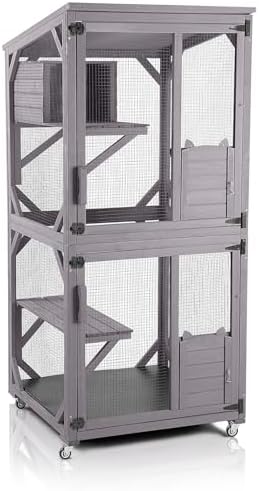
    Height for cat enclosures is the vertical distance from the floor to the top of the unit, measured in inches. You need to choose a height that provides enough vertical clearance for your cat’s movement while ensuring the structure does not interfere with your room’s ceiling or nearby furniture.

    Which Cat Enclosure Height Suits Your Situation?

    Which Cat Enclosure Height Suits Your Situation?
    If this is you The Height that suits you Why
    You have a small apartment or a room with low ceilings. 6.3 to 30 in Lower profiles prevent the enclosure from looming over your living space or hitting overhead fixtures.
    You want a floor-based play area for a kitten. Under 18 in Short heights provide a stable, accessible base for younger cats who are still developing their balance.
    You want to maximize vertical space in a standard room. 30 to 60 in Mid-range heights offer a balance of climbing surfaces and floor space without dominating the room’s volume.
    You want a floor-to-ceiling style tower for an active cat. 60 to 77 in Taller units provide the verticality required for cats that prefer to observe the room from a high vantage point.

    Cat Enclosures we have reviewed in detail

    Each of the 3 shown here has its own full review on this site; they run from $165.99 to $399.99.

    How Do I Measure the Correct Height for My Cat Enclosure?

    To establish your required height, you must first measure the available vertical clearance in the specific area where the cat enclosure will sit. Use a standard metal tape measure to find the distance from the floor to the lowest obstruction, such as a coffee table, a shelf, or the ceiling. If you are placing the unit against a wall, ensure there is at least 2 inches of clearance above the top of the enclosure to allow for airflow and easy cleaning.

    Beyond height, you should also research the proper length for cat enclosures to ensure enough running room.

    How to measure cat enclosure height and surrounding furniture clearance

    Most manufacturers state the height as a single figure in the product specifications, typically listed in inches. Look for the “Height” or “Vertical Span” metric in the product’s description. Because different manufacturers may use different base designs, always confirm the total height including any top-mounted accessories or platforms. If you are unsure of the space, measure the height of the tallest piece of furniture you plan to place next to the enclosure and subtract 4 inches to ensure the cat enclosure does not create a visual or physical blockage.

    Choosing cat enclosure height based on a cat’s preferred jumping spots

    When calculating your needs, consider the height of your cat’s favorite jumping spots. If your cat currently prefers a specific counter or chair, measure that height. Does your cat prefer to sit on top of the highest point? If so, you should look for an enclosure that provides a top surface at least 3 inches higher than that current spot to provide a new, more appealing vantage point. If your cat prefers to hide in lower cubbies, a shorter height that focuses on floor-level accessibility is more appropriate for your specific household.

    Don’t forget to determine the ideal width for cat enclosures so your pets have plenty of space to turn around.

    What Happens If I Choose a Height That Is Too Tall or Too Short?

    Choosing a height that is too tall can lead to structural instability and spatial interference. If the enclosure exceeds the vertical clearance of your room, you may be forced to place it in a corner where it blocks walkways or creates a hazard near light fixtures. Furthermore, extremely tall units without a wide base can become top-heavy. If the center of gravity is too high, the unit may wobble or tip when a cat makes a sudden leap toward the top level.

    Why short cat enclosures may lead to redirected climbing behaviors

    A height that is too short may fail to provide the verticality that active cats require for exercise and mental stimulation. If a cat is restricted to a low-profile unit, they may underutilize the space and seek out less stable alternatives, such as jumping onto kitchen counters or wardrobes. This lack of vertical options can lead to redirected behaviors because the enclosure does not meet the cat’s natural instinct to climb and survey their environment from above.

    Beginners can start by learning what a cat enclosure is and how it works.

    Ensuring a wide base supports the stability of tall cat enclosures

    The most common mistake occurs when a buyer ignores the “footprint” of the height. A tall cat enclosure often requires a wider base to remain stable. If you select a 77 in height but the base is narrow, the unit may sag or sway. To avoid this, ensure that the height you select is supported by a base that occupies enough floor space to keep the unit steady during use. If the unit feels shaky, it is often because the height-to-width ratio is too extreme for the weight of the cat.

    What Should I Do if My Space Falls Between Two Height Options?

    If your measured space falls between two common height values, such as 40 in and 50 in, you should prioritize the lower value. Selecting a height that is slightly shorter than your maximum clearance ensures that you can still move around the unit and clean the area easily. A tight fit can make it difficult to reach the top of the enclosure to remove hair or dust, which is a primary maintenance task for any cat enclosure.

    For a high-end aesthetic, view our review of the wooden catio to see the build quality.

    Selecting cat enclosure height based on the cat’s preferred reach

    When choosing between two sizes, consider the “reach” of the cat. If you are choosing between a 60 in unit and a 70 in unit, ask yourself: Does my cat need to reach the very top to feel secure? If the answer is yes, the taller unit is the correct choice regardless of the slight loss in clearance. However, if the cat primarily uses the middle tiers, the shorter unit provides a more stable and accessible experience for the animal.

    Using modular layouts to solve height conflicts in low ceiling spaces

    In cases where two requirements conflict—such as needing a tall unit but having a low ceiling—you may need to consider a modular layout. If a single tall unit cannot fit, you can sometimes place two shorter, adjacent units to create a multi-level experience. This allows you to achieve the height requirements for the cat’s behavior without the physical constraints of a single tall structure. Always check the manufacturer’s dimensions to ensure the total height of the unit, including any feet or base plates, is accounted for in your measurements.

  • Aquarium Water Chiller Explained: What It Is and How It Works

    An aquarium water chiller is a mechanical cooling system that removes heat from a fish tank to maintain a constant water temperature. You need a chiller when your aquarium’s water temperature fluctuates by more than 2 degrees Celsius during peak summer heat or when your livestock requires a stable environment that ambient air cannot provide.

    How aquarium water chillers maintain stable temperatures in closed environments

    Aquariums are closed environments where biological processes, lighting, and external weather create significant thermal loads. In many climates, a standard aquarium setup can quickly overheat, leading to oxygen depletion and stress for aquatic life. A chiller provides a consistent heat sink, ensuring that the water temperature stays within the narrow range required for specific species, regardless of the room’s ambient temperature.

    How an Aquarium Water Chiller Works

    The operation of an aquarium water chiller follows a thermodynamic cycle designed to move heat from the water to the outside air. The process occurs in the following sequence:

    If you are setting up a smaller setup, see the best small aquarium water chiller for 20 gallon tanks.

    • The system draws in water from the aquarium through an intake point.
    • The water passes through an evaporator coil where it loses heat to a refrigerant fluid.
    • The refrigerant absorbs this heat and travels to a condenser coil.
    • A fan or air system blows over the condenser coil, dissipating the captured heat into the surrounding room air.
    • The cooled water returns to the aquarium, maintaining a stable thermal state.

    Aquarium Water Chillers we have reviewed in detail

    Prices across these 3 run from $169.99 to $299.99; each one has a full review here.

    Parts and Standards of an Aquarium Cooling System

    Several internal components and engineering standards determine the efficiency and capacity of an aquarium cooling system. Each part plays a specific role in how the unit manages the heat load of your tank.

    Keep your living space peaceful by browsing the best quiet aquarium water chiller for home use.

    Compressor vs. Thermoelectric (Peltier) Cooling

    The cooling method defines the hardware’s capability and energy efficiency. Compressor systems use a mechanical pump to circulate refrigerant, which provides high-capacity cooling for larger volumes and maintains stability even in extreme heat. Thermoelectric or Peltier systems use electricity to create a temperature difference across a ceramic plate; these are generally suited for very small volumes and offer less cooling power than a compressor unit.

    Open Loop vs. Closed Loop Systems

    The configuration dictates whether the chiller unit is submerged or connected via external hoses and pumps. In an open loop system, water is pumped out of the tank, through the chiller, and back into the aquarium. A closed loop system involves a separate heat exchanger submerged in the tank, where only the cooling fluid inside the machine is circulated, keeping the aquarium’s main water body isolated from the chiller‘s internal mechanics.

    Heat Exchanger and Coil Mechanics

    The heat exchanger transfers heat from the water to the cooling medium, acting as the bridge between the two environments. This process relies on two specific coils: the evaporator coil, which absorbs heat from the circulating water, and the condenser coil, which dissipates heat into the surrounding air. The efficiency of these coils determines how quickly the system can lower the temperature of a large body of water.

    Specialty keepers can find the best aquarium water chiller for axolotls in our dedicated comparison.

    What an Aquarium Water Chiller Changes in Practice

    Having a chiller changes the aquarium from a reactive environment to a controlled one. In practical terms, this means you no longer have to rely on ice blocks or frequent water changes to drop the temperature during a heatwave. The chiller works constantly to counteract the heat produced by high-intensity lights and heaters, providing a steady state that prevents the “sawtooth” temperature spikes that stress fish.

    Why aquarium chillers do not replace filtration or aeration systems

    However, a chiller does not change the water chemistry or the oxygen levels of the tank. It is a thermal management tool, not a filtration or aeration system. If your tank is overcrowded, a chiller will keep the water cool, but it will not solve the biological issues caused by high waste levels. Furthermore, a chiller does not replace the need for proper ventilation; it simply ensures that the heat remains out of the water.

    For a compact cooling solution, see our full 100W Aquarium Chiller review.

    Frequently Asked Questions about Aquarium Cooling

    How does the cooling speed compare to larger, more expensive industrial chillers?

    Cooling speed is determined by the cooling capacity, which measures the volume of water the unit can lower by a specific temperature in a set timeframe. Smaller units have lower cooling capacities and will take longer to lower the temperature of a large tank compared to industrial chillers. If you have a very large volume, a smaller unit might struggle to bring the temperature down quickly, though it can still maintain that temperature once reached.

    Is this better than just using a regular aquarium fan?

    A fan provides evaporative cooling, which relies on the water turning into vapor to carry heat away. This is effective in dry environments but fails in high-humidity rooms where evaporation slows down. An aquarium water chiller provides active cooling regardless of humidity levels, making it a more reliable solution for consistent temperature control in tropical climates or enclosed spaces.

    How does this compare to a larger chiller if I decide to upgrade my tank later?

    If you upgrade to a larger tank, the cooling capacity of your current unit may no longer meet the requirements of the new volume. A chiller’s capacity is a fixed limit on the amount of heat it can remove per hour.

    Specialized owners can see our full Usoraszkt Aquarium Chiller review for specific needs.

    How much is it going to cost to run this every day?

    The daily cost depends on the power output, which measures the amount of electrical energy consumed by the device. Because chillers must work harder as the ambient room temperature rises, electricity consumption fluctuates based on the environment. To estimate costs, you must check the wattage of the unit and compare it to your local electricity rates.

    Will it struggle to keep the water cool if the room gets really hot?

    A chiller will struggle if the ambient room temperature is higher than the target water temperature, as it must move heat against a steep gradient. The efficiency of the condenser coil depends on the surrounding air temperature; if the room is very hot, the unit must work much harder to dissipate heat. For extreme heat, you may need a unit with a higher cooling capacity to compensate for the increased load.

    Check out our full Poafamx 16gal Chiller review for a detailed spec breakdown.

    Who Needs an Aquarium Water Chiller

    You need an aquarium water chiller if you keep tropical fish in a climate where summer temperatures regularly exceed 28 degrees Celsius. It is also necessary for reef tanks where even a 2-degree fluctuation can cause coral bleaching or stress. If you live in a region with high humidity, a chiller is a more reliable choice than fans because it does not rely on evaporation.

    When a large scale aquatic system requires a dedicated cooling unit

    You do not need an aquarium water chiller if you keep temperate fish in a climate with mild summers, or if your aquarium is small enough that a simple fan provides sufficient cooling. If your primary goal is to maintain a stable temperature in a small desktop tank, the cost of a chiller may outweigh the benefits. However, if you are running a large-scale aquatic system or live in a tropical zone, a chiller is a fundamental requirement for stability.

  • Interior Width for Dog Grooming Tubs: How to Choose Yours

    Interior width for a dog grooming tub is the measurement of the space between the inner side walls of the basin. You need to select a width that accommodates your specific dog’s shoulder span while leaving enough room for you to reach across the tub to wash the animal.

    For easier access, you can view our roundup of dog grooming tubs with ramps.

    Which Interior Width Suits Your Situation?

    Which Interior Width Suits Your Situation? – Dog Grooming Tub
    If this is you The Interior Width that suits you Why
    You own a small breed like a Yorkie or a Maltese 18 to 20 inches Small dogs require less space, and a narrower tub allows you to keep the animal centered and stable during a bath.
    You own a standard-sized dog like a Beagle or a Cocker Spaniel 21 to 24 inches This range provides the median space for most household pets, ensuring the dog is not cramped while allowing for easy reach.
    You own a large breed like a Golden Retriever or a Labradoodle 25 to 28 inches Large dogs need a wider base to prevent them from feeling squeezed, which reduces anxiety and helps them stand comfortably.
    You plan to groom large, heavy-set breeds professionally 28 inches or more Maximum width provides the necessary clearance for the largest breeds and allows for more complex movements during the grooming process.

    Where these choices show up in our reviews

    Each of the 3 shown here has its own full review on this site; they run from $285.99 to $709.

    Owners of tiny breeds should browse the best dog grooming tub for small pets.

    For maximum durability, research the best stainless steel dog bathing station.

    How do you measure the correct interior width before ordering?

    The interior width of a dog grooming tub is usually stated as a single figure in the manufacturer’s description, often found in the technical specifications or the product dimensions section. To find the correct value for your needs, you must measure the widest point of your dog’s body while they are standing on all four legs. Specifically, measure the distance from the outer edge of one shoulder to the outer edge of the opposite shoulder.

    Some owners prefer a step-up design, so see our guide to the best dog grooming tub with stairs.

    If you are bathing at home, find the best dog washing station for home use.

    Adding 3 to 4 inches of clearance beyond a dog’s shoulder span

    Compare this shoulder measurement to the interior width of the tub. You should aim for a tub that is at least 3 to 4 inches wider than your dog’s shoulder span. This extra clearance ensures the dog can move its front legs slightly without hitting the side walls. If you are unsure of the exact measurement, look for the “Interior Width” or “Basin Width” on the listing, as these terms refer to the same internal dimension. Avoid using the exterior width for your calculations, as the thickness of the steel and the plumbing fittings can reduce the usable space inside by several inches.

    For a commercial-grade feel, look at the best professional pet wash station for home.

    Once you have the width, learn how to choose your tub length.

    What happens if the interior width is too small or too large?

    Choosing a dog grooming tub with an interior width that is too small results in a cramped environment where the dog cannot stand naturally. When a dog is squeezed into a narrow basin, it often tries to turn around or shift its weight constantly to find a comfortable position. This movement can lead to the dog slipping, splashing water excessively, or becoming agitated and resistant to the bath. If the dog’s shoulders are pressed against the sides, you will also find it harder to reach around the body to wash the underside or the hindquarters effectively.

    To understand your budget, see what dog grooming tubs cost and price levels.

    You can learn about different designs by viewing the different types of dog grooming tubs.

    How a wide dog grooming tub creates balance risks for small pets

    Conversely, an interior width that is too large for a small dog can create a safety risk. If the basin is significantly wider than the dog’s footprint, the animal may lose its sense of balance while standing on the floor of the tub. A dog that can slide sideways or tip over because it has too much room to move becomes difficult to manage and can lead to a stressful experience for both the owner and the pet. For smaller dogs, a compact tub provides a more secure “nest” that helps them feel stable while the water is running.

    New owners should start by learning how a dog grooming tub works.

    Protect your investment by checking the dog grooming tub warranties.

    What should you do if your dog falls between two width sizes?

    Deciding between two interior width options when your dog’s measurements fall in the middle depends on the dog’s temperament and your physical reach. If you have a dog that is prone to anxiety or becomes restless during baths, you should choose the larger of the two available interior widths. Extra space provides a buffer that helps the dog feel less confined, which can significantly improve the grooming experience. A larger tub offers the freedom for the dog to shift its weight without feeling trapped by the walls.

    For a detailed breakdown, see our full PioneerWorks Grooming Tub review.

    You can find a detailed analysis in our full MERXENG Grooming Tub review.

    Choosing between narrow and wide pet wash stations based on dog temperament

    If your dog is calm and stays still during a bath, you can safely opt for the smaller interior width. A narrower tub allows you to work closer to the dog‘s body, which can make the washing process faster and more efficient. In cases where you are unsure, check the return policy of the seller before completing your purchase. Because interior width is a fixed dimension of the metal construction, it cannot be adjusted once the unit arrives at your home. Selecting the larger option is the safer choice for most owners, as it provides a wider range of utility for different types of pets over time.

    See the technical data in our full OLIPIC Dog Washing Station review.

    For a complete breakdown, read our full SGOLAN Washing Station review.

  • Dog Kennel Explained: What It Is and How It Works

    A dog kennel is a physical enclosure that provides a designated space for a dog to rest, sleep, or stay contained. You need a kennel when you require a secure area for a pet that is separate from the main living space or for transport. You should measure your dog’s length and height to determine the minimum interior dimensions required for the animal to stand up and turn around comfortably.

    How a dog kennel provides a safe and comfortable environment

    The primary problem a kennel solves is the need for a controlled environment that balances safety with comfort. Without a dedicated enclosure, dogs may experience anxiety in unfamiliar settings or lack a consistent “den” to retreat to during high-activity periods. A well-sized kennel prevents the dog from feeling trapped while ensuring it remains within a designated boundary, which is essential for both house training and preventing escape during travel or outdoor storage.

    If you prefer a rustic look, see our guide to the best wooden dog kennels.

    How a Dog Kennel Functions Mechanically

    A dog kennel functions by creating a physical barrier that defines a usable interior volume. The process of containment and use follows a specific sequence of mechanical interactions:

    • The structure establishes a perimeter using rigid materials like wire, plastic, or wood to define the boundaries of the space.
    • The Door Latch Mechanism, which ensures the kennel remains securely closed and prevents accidental escapes, allows a human to grant or deny entry.
    • Airflow enters through the structure’s openings, where Ventilation Grates facilitate consistent airflow and prevent heat buildup inside the crate.
    • The dog occupies the interior space, where the floor provides a stable surface for the animal to lie down or stand.
    • The Base Tray provides a removable surface for easy cleaning and waste management, allowing the user to remove debris without moving the entire structure.

    Dog Kennels we have reviewed in detail

    Prices across these 3 run from $129.86 to $249.99; each one has a full review here.

    Budget-conscious owners can find affordable kennels for small dogs under $150.

    Parts and Materials That Impact Performance

    The materials and components of a dog kennel determine how much visibility the dog has and how durable the enclosure is against different types of wear. Choosing the right material often involves a trade-off between how much the dog can see and how well the structure resists chewing or environmental damage.

    Nervous pets may benefit from the best dog kennels for high anxiety dogs.

    Comparing wire, plastic, and wood kennel material benefits

    The choice of material follows the standard of Wire vs. Plastic vs. Wood, which determines the trade-off between visibility, chew-resistance, and aesthetic integration. Wire provides maximum visibility and airflow but can be prone to bending if not heavy-gauge. Plastic offers a solid barrier that is easy to wipe down but limits the dog’s view of its surroundings. Wood provides a natural aesthetic and high chew-resistance but requires more maintenance to keep clean and can block airflow if not designed with specific gaps.

    Why IATA compliant kennels are required for air travel

    Safety standards like IATA Compliance ensure the kennel meets international aviation regulations for cargo and cabin transport. This standard focuses on the structural integrity of the latch and the dimensions of the opening to ensure the animal cannot squeeze through. If you plan to fly with a pet, verifying that a kennel meets these specific regulations is a requirement for most commercial carriers.

    To ensure a proper fit, see how to choose your interior width.

    How interior length, width, and height dictate kennel size

    The interior layout is defined by three specific measurements. Interior Length measures the longest straight distance inside the floor space. Interior Width measures the shortest straight distance across the floor space. Interior Height measures the vertical distance from floor to ceiling. These three numbers dictate the “living room” of the kennel; if a dog cannot stand up fully, the height is insufficient. If the dog cannot turn around, the width or length is too short.

    How a Dog Kennel Changes Daily Use

    Having a dog kennel changes the way you manage a pet’s behavior and your own home environment. In a house training scenario, the kennel acts as a “safe zone” where a dog learns to remain calm. It provides a predictable space where the dog knows it is expected to stay, which reduces anxiety during loud events or when the owner is away.

    Determine your needs by checking the weight capacity for dog kennels.

    Using a dog kennel as a weather resistant outdoor shelter

    In an outdoor setting, the kennel provides a weather-resistant shelter. It protects the dog from rain and wind while providing a shaded area to prevent overheating. However, the difference in use depends on the environment. In a backyard, the kennel might serve as a permanent home; in a garage, it might only be used for crate training. The physical presence of the kennel creates a boundary that helps a dog understand where its personal space begins and ends.

    Learn more about your options by seeing the different types of dog kennels.

    Why proper kennel sizing prevents dog distress and cramping

    The kennel does not change the dog’s behavior if the space is improperly sized. If a dog is forced into a space that is too small, it may experience muscle cramping or distress. Conversely, a kennel that is too large can make a dog feel insecure because they cannot reach the corners. The goal is a space where the dog feels tucked away but not confined.

    Frequently Asked Questions About Dog Kennels

    How does the price of this compare to a standard metal wire crate?

    The price of a dog kennel varies based on the material and the complexity of the door latch. A standard metal wire crate is often the most affordable option because it uses basic wire and a simple hinge. Kennels made of wood or heavy-duty plastic typically cost more due to the manufacturing of the panels and the weight of the materials.

    For a stylish home option, see our full Boldbone Dog Crate review.

    How does the ventilation on three sides compare to a full-mesh crate?

    Ventilation on three sides provides a balance between airflow and structural privacy. A full-mesh crate offers 360-degree airflow and maximum visibility from all angles. If you are concerned about heat buildup, a full-mesh option provides more air volume, but a three-sided design may offer a sense of security for a dog that feels exposed by too much visibility.

    Is this a better deal than a solid panel kennel for the same price?

    A solid panel kennel offers more privacy and a more “furniture-like” look but limits the dog’s ability to see out. For the same price, a wire or mesh kennel usually provides better airflow and visibility. You must decide if the priority is the dog’s ability to see its surroundings or the aesthetic of the kennel in your home.

    You can find a detailed breakdown in our full Vari Pets Kennel review.

    How does the noise level compare to metal wire crates?

    The noise level depends heavily on the material used for the walls. Metal wire crates can rattle or vibrate if the dog moves against them. Plastic and wood panels are much quieter and absorb more sound, making them better for indoor use where you want to minimize noise from the dog moving inside the enclosure.

    Large breeds have specific needs that you can see in our Cage for Large Dogs review.

    How easy is it to actually clean the inside if my dog has an accident?

    Ease of cleaning is determined by the presence of a Base Tray and the material of the floor. A removable tray allows you to lift out waste and wash it separately. Plastic and smooth-coated metal are easier to sanitize than wood or textured surfaces, which can absorb odors and liquids if they are not properly sealed.

    Who Needs a Dog Kennel and Who Does Not

    A dog kennel is necessary for owners who need to house-train a puppy or provide a secure space for a dog during travel. It is also a requirement for households that need to contain a dog in a backyard or garage while maintaining a safe environment. If you need to transport a pet via air, a kennel meeting specific transport standards is a requirement.

    For a massive outdoor space, see our full PawHut Dog Kennel review.

    A dog kennel is not necessary for owners of very small dogs that can be safely contained in a small carrier or for those who do not need to separate their dog from the main living area. If your dog does not require a designated “den” for rest and you do not have a need for a portable transport solution, a full-sized kennel may not be a requirement for your situation.

  • Cooling Capacity for Aquarium Water Chillers: How Much You Actually Need

    Cooling capacity for aquarium water chillers should range from 10 to 100 Gallons depending on the specific volume and temperature requirements of the aquatic environment. You need to select a unit that provides a cooling rate capable of offsetting the heat generated by your lights, heaters, and surrounding room temperature to maintain your target degree.

    Recommended Cooling Capacity by Use Case

    Recommended Cooling Capacity by Use Case – Aquarium Water Chiller
    Use Case Recommended Cooling Capacity Why this number
    Keep a saltwater reef tank cool 10 to 30 Gallons This range covers the heat load for standard reef volumes where rapid temperature shifts are risky.
    Cool a freshwater fish tank 20 to 50 Gallons A 20 to 50 Gallon capacity handles the thermal mass of common community tanks.
    Maintain a stable temperature for an axolotl 10 to 30 Gallons Axolotls require precise, lower temperatures that a 10 to 30 Gallon capacity can stabilize quickly.
    Cool a shrimp breeding setup 5 to 15 Gallons Small breeding containers require low-capacity cooling to prevent over-cooling of small volumes.
    Prevent algae growth by lowering temp 10 to 40 Gallons Lowering the ambient water temperature effectively limits algae reproduction in moderate-sized systems.
    Cool a large hydroponic reservoir 50 to 100 Gallons High-volume reservoirs require 50 to 100 Gallons of capacity to move large amounts of water.

    Products in this category with a full review here

    Prices across these 3 run from $124.22 to $299.99; each one has a full review here.

    If you are scaling up your setup, see the best aquarium water chiller for 60 gallon tanks.

    What happens if you under-buy or over-buy Cooling Capacity?

    Under-buying cooling capacity means the aquarium water chiller cannot remove heat as fast as the environment adds it. If the heat load from your lights or the room exceeds the unit’s rated capacity, the water temperature will continue to rise despite the chiller running constantly. This leads to a failure to reach the target temperature, which can stress aquatic life or cause a system crash in hydroponic setups. A unit that is too small will often run at 100% duty cycle, leading to premature mechanical wear and potential motor failure because it never reaches its goal.

    Risks of over-buying aquarium chiller cooling capacity for fish health

    Over-buying cooling capacity involves selecting a unit with a much higher Gallon rating than your system requires. While a larger unit will reach the target temperature faster, it can cause the water to drop too quickly if the thermostat is not calibrated correctly. Rapid temperature fluctuations are stressful for fish and can shock the biological balance of a reef tank. Furthermore, over-buying results in a higher initial cost for a machine that provides more performance than your specific setup can ever utilize.

    Beginners should start by learning how an aquarium water chiller works to understand the basic cooling mechanics.

    What is the mistake most buyers make with Cooling Capacity?

    The most common mistake buyers make is equating the total volume of the tank with the required cooling capacity of the aquarium water chiller. If you have a 50 Gallon tank, buying a chiller with a 50 Gallon cooling capacity does not guarantee the water will stay cool. Cooling capacity measures the rate of heat removal, not the total amount of water the unit can hold. You must account for the “heat load,” which is the amount of energy entering the water from external sources like high-intensity LED lights or heaters.

    For a deeper dive into that specific model, view our full Poafamx 1/3 HP Chiller review.

    Calculating aquarium chiller needs based on environmental heat loads

    Instead of only looking at the tank size, you should optimize for the heat load of your specific environment. A small 20 Gallon tank placed in a hot garage with powerful grow lights may require a higher cooling capacity than a 50 Gallon tank kept in a climate-controlled room with minimal lighting. Calculate your needs by identifying the maximum temperature the water reaches when the lights are on and determining how many degrees you need to drop it by. If the water rises 5 degrees in an hour under full lights, you need a chiller that can remove that specific amount of heat within that same hour.

    How does Cooling Capacity interact with other deciding specs?

    Cooling capacity interacts with the power output of the aquarium water chiller to determine how much electricity the unit draws to perform its task. A high cooling capacity usually requires a higher power output, which translates to higher energy consumption. If you choose a high-capacity unit for a small tank, you may pay for a high power draw that you do not need. Conversely, a low-power unit might have a cooling capacity that is too low to handle a large volume of water, resulting in the unit running indefinitely without cooling the tank.

    You can find more details in our full DYRABREST Water Chiller review for specific performance data.

    Matching aquarium chiller cooling capacity to specific tank volume limits

    Cooling capacity is also limited by the tank volume compatibility of the system. Even if a chiller has a massive cooling capacity, it cannot effectively cool a tank that exceeds its supported volume. If the water volume is too large for the unit’s design, the heat exchange surface area will be insufficient to move the energy out of the water quickly enough. You must ensure the cooling capacity is sufficient for the heat load while the tank volume compatibility matches the physical size of your reservoir.

    We have provided a detailed analysis in our full Poafamx POA-100 Chiller review for smaller systems.

    The sequence of selecting the right capacity

    A buyer first identifies the total volume of their water and the specific temperature goal they need to maintain. They then estimate the heat added by external factors like lights or room temperature to determine the required heat removal rate. Finally, they select an aquarium water chiller with a cooling capacity that exceeds that heat load while staying within a reasonable power output for their home’s electrical limits.

    A practical example of heat load calculation

    A reef tank owner with a 30 Gallon system uses high-intensity lights that raise the water temperature by 4 degrees every hour. To maintain a steady temperature, they need a chiller with a cooling capacity that can remove that 4-degree rise in under 60 minutes. They select a unit with a 30 Gallon cooling capacity to ensure they have enough overhead to handle the heat load without the motor running at maximum capacity all day.

    Take a closer look at the hardware in our full GOSHET YSZY-02 Chiller review.

    When cooling capacity meets its limits

    In a large hydroponic reservoir, a chiller with a 50 Gallon cooling capacity might be insufficient if the water is exposed to direct sunlight. The solar energy hitting the surface of the water can add heat faster than a mid-range unit can remove it. In this case, the buyer must choose a unit with a higher cooling capacity, even if the water volume itself is relatively small, to compensate for the extreme external heat source.

  • Power Output for Aquarium Water Chillers: How Much You Actually Need

    Power output for an aquarium water chiller should typically range between 72 and 200 Watts depending on the specific volume and temperature requirements of the aquatic environment. You need to select a unit that provides enough wattage to maintain your target temperature against the ambient heat of your room and the biological heat generated by your fish and equipment.

    Recommended Power Output for Aquarium Water Chillers

    Recommended Power Output for Aquarium Water Chillers
    Use Case Recommended Power Output Why this number
    Small nano tanks (under 40 litres) 72 – 100 Watts Small volumes require less energy to move heat, but need consistent power to counter room temperature fluctuations.
    Standard hobbyist tanks (40 – 100 litres) 100 – 150 Watts This range provides sufficient cooling capacity for mid-sized systems without excessive electrical draw.
    Large reef systems (100 – 250 litres) 150 – 200 Watts Higher volumes require more wattage to maintain stable temperatures in high-bioload environments.
    High-heat environments (e.g. tropical locations) 150 – 200 Watts Increased ambient temperatures require the chiller to work harder to reach the set point.
    Heavy livestock/High-light setups 150 – 200 Watts High-intensity lighting and large fish populations generate significant internal heat that must be removed.

    Aquarium Water Chillers we have reviewed in detail

    From $169.99 to $299.99: 3 of the 9 in this category we have reviewed in full.

    If noise is a concern, explore the best quiet aquarium water chiller for home use to find a peaceful setup.

    What happens if you under-buy or over-buy power?

    Under-buying power output means the aquarium water chiller will struggle to reach the set temperature during the hottest parts of the day. If the wattage is too low for the water volume, the unit may run constantly without ever reaching the target, which can lead to a cycle of heat buildup. This puts stress on the cooling mechanism and can cause the system to fail to keep the fish safe in extreme conditions.

    Specialized pet owners can view the best aquarium water chiller for axolotls to ensure proper thermal stability.

    Why excessive chiller wattage leads to temperature overshooting and higher costs

    Over-buying power output involves selecting a unit with a much higher wattage than your specific setup requires. While a more powerful unit might reach the target temperature faster, it does not necessarily mean it will hold it more accurately. A chiller with excessive power can lead to “overshooting,” where the water temperature drops too quickly and then fluctuates as the unit cycles on and off. Additionally, higher wattage units often result in higher electricity costs over the life of the product.

    Beginners should start by learning how an aquarium water chiller works to understand the basic cooling mechanics.

    The common mistake with power output and what to optimize instead

    A common mistake is assuming that a higher Watt rating directly translates to a faster cooling speed for your specific tank. While power output is a component of the system, it is not the only factor determining how quickly heat is removed from the water. Buyers often focus on the Watt figure while ignoring the actual cooling capacity of the unit.

    Calculating cooling capacity and heat loads for optimal chiller selection

    You should instead optimize for the cooling capacity, which measures the volume of water the unit can lower by a specific temperature in a set timeframe. For example, a system designed to cool 100 litres of water by 2 degrees in 10 minutes is more useful than a high-wattage unit that lacks the specific heat exchange surface area to do the same. Ensure you calculate the total heat load of your room, your lights, and your heaters before choosing the Wattage.

    For a detailed analysis of the smaller unit, see our full Poafamx 16gal Chiller review for technical specs.

    How power output interacts with other aquarium water chiller specs

    Power output is often limited by the tank volume compatibility of the aquarium water chiller. If you have a 200 Watt unit but the device is only rated to maintain a 50 litre volume, the high power output is wasted because the heat exchange surface is too small to process the water effectively. The cooling capacity is the true bottleneck in these scenarios.

    You can find a comprehensive breakdown of the Poafamx 1/3 HP Chiller spec review to see its cooling output.

    Balancing compressor horsepower and electrical wattage for efficient heat movement

    Another critical interaction is between power output and the compressor horsepower. The horsepower determines the mechanical power of the cooling motor, while the Watts represent the electrical energy consumed. A high-wattage unit with a low-horsepower motor may consume significant electricity but lack the mechanical strength to move heat efficiently in high-demand situations. You should look for a balance where the wattage supports the required cooling capacity without exceeding the electrical limits of your home’s circuit.

    Get a technical overview of the DYRABREST Water Chiller review to see how it handles heat loads.

    How limited heat transfer surface area affects large reef tank cooling

    Consider a setup where you have a large reef tank with high-intensity LED lighting. How much power will it take to keep the water at 25 degrees? If your tank exceeds the supported volume of a 200 Watt unit, no amount of extra power will compensate for the lack of surface area for heat transfer.

    We provide a detailed analysis of the Poafamx POA-100 Chiller review to help you evaluate its performance.

    Comparing compressor and thermoelectric cooling methods for different water volumes

    Lastly, power output is influenced by the cooling method, such as a compressor versus a thermoelectric system. Compressor-based units typically offer more efficient power-to-cooling ratios for larger volumes. If you are using a smaller system, a lower Wattage unit might be more than sufficient if it is designed specifically for the smaller volume of water you need to maintain.

  • Aquarium Water Chiller Alternatives: Other Ways to Get the Same Result

    Aquarium water chillers maintain specific water temperatures by removing heat from the water through a heat exchange system. You need a chiller when your environment exceeds 28°C or when your livestock requires a stable range below 25°C to prevent thermal stress. Measure your room’s peak temperature and your tank’s total volume before deciding if a dedicated cooling unit is necessary for your setup.

    Can fans provide enough aquarium cooling?

    Fans provide aquarium cooling by moving air across the water surface to facilitate evaporative cooling. This method relies on the latent heat of vaporization, where water turns into vapor and carries heat away from the system. If you are maintaining a small tank in a room with high airflow and low humidity, fans can maintain temperatures within 2-3°C of the ambient air. This method costs significantly less than a compressor-based system because it requires only a standard household fan rather than a specialized heat exchanger.

    How room temperature and humidity affect fan cooling efficiency

    Fans beat buying a chiller when the ambient room temperature stays consistently below 26°C. In these conditions, the energy required to move air is minimal, and the cost of electricity is negligible compared to running a motorized compressor. However, this method stops making sense when the room temperature exceeds 30°C or when humidity levels are high. In high humidity, the rate of evaporation drops significantly, meaning the fan will move air but fail to pull sufficient heat out of the water.

    Why cooling the room is necessary before using fans

    A common mistake is assuming a fan can compensate for a room that is already too hot. If the air entering the room is 32°C, a fan will simply circulate 32°C air over the water, failing to lower the temperature. You must ensure the room itself is cooled to a manageable level before relying on surface evaporation.

    For a deeper dive into that specific model, see our full DYRABREST Water Chiller review.

    Where these choices show up in our reviews

    3 options shown here, $138.92 to $149, each with its own full review behind its name.

    How does evaporative cooling work for aquatic systems?

    Evaporative cooling for aquatic systems works by passing water through a wet media, such as foam or pads, where a fan blows air through the moisture. This creates a “swamp cooler” effect that can drop air temperatures by 5-10°C depending on the local humidity. This sits between a simple fan and a full chiller in terms of cost and complexity, often requiring a dedicated housing and a water pump.

    How arid climates make evaporative cooling a viable alternative

    Evaporative cooling beats buying a chiller in arid climates where the dry air can facilitate rapid evaporation. It is a cost-effective way to drop the temperature of the air surrounding the tank, which in turn cools the water. This method stops making sense in humid environments, such as coastal regions, where the air cannot absorb more moisture. In such cases, the cooling effect drops toward zero, and the unit becomes a source of unnecessary humidity and potential condensation buildup.

    You can see the technical details in our full Poafamx POA-100 Chiller review.

    You should calculate the humidity of your room before choosing this route. If your local humidity stays above 60% for most of the day, an evaporative system will provide very little temperature drop for your aquarium.

    Is buying secondhand a viable way to get a chiller?

    Buying secondhand allows you to acquire an aquarium cooling system at a fraction of the retail price by purchasing used equipment from private sellers or liquidators. This route requires a thorough inspection of the compressor’s operation and the condition of the heat exchanger coils. Because these units are durable, a well-maintained used model can provide the same cooling capacity as a new unit for 40-60% less initial cost.

    Benefits and risks of purchasing a secondhand aquarium chiller

    Buying secondhand beats buying new when you have a specific budget constraint and are willing to perform basic maintenance, such as cleaning the condenser coils or replacing seals. It is a viable path for hobbyists who understand how to troubleshoot mechanical components. This route stops making sense if the unit shows signs of “short-cycling,” where the compressor turns on and off rapidly. Short-cycling indicates a unit that is undersized for the tank volume or has a failing internal component, both of which lead to premature motor failure.

    Detailed performance data is available in our full GOSHET YSZY-02 Chiller review.

    When looking at used units, verify the rated cooling capacity matches your tank volume. If a previous owner used a 1/10 HP unit for a 300-litre tank, the compressor may have been overstressed, shortening its remaining lifespan.

    Can you manage without an aquarium water chiller?

    Managing without an aquarium water chiller involves using passive cooling methods like shading, water changes, and increasing water volume to buffer temperature swings. Shading the tank with opaque covers blocks solar radiation, which is the primary cause of rapid temperature spikes in indoor setups. Increasing the water volume provides a higher thermal mass, meaning the water takes longer to heat up during the warmest parts of the day.

    When maintaining stable water temperatures without a chiller is possible

    Doing without a chiller beats buying one when your room temperature naturally stays between 22°C and 26°C. In these conditions, the thermal mass of the water is usually sufficient to maintain stability without active mechanical intervention. This is the most cost-effective route as it requires zero electricity and zero maintenance. However, this method stops making sense the moment your ambient room temperature consistently exceeds 28°C or if you live in a climate with extreme daily heat fluctuations.

    Detailed specifications are available in our full 100W Aquarium Chiller review.

    If you find your tank temperature rising by more than 3°C in a single afternoon, passive methods are likely insufficient. At that point, the heat gain from the environment is faster than the water’s ability to dissipate it naturally.

    Comparison of cooling alternatives for aquarium water

    Comparison of cooling alternatives for aquarium water – Aquarium Water Chiller
    Route Who it suits Main advantage Where it breaks down
    Fans Small tanks in cool rooms Lowest cost High humidity or hot rooms
    Evaporative Users in arid climates Moderate cooling/cost High humidity environments
    Secondhand Budget-conscious owners Lower entry price Risk of mechanical wear
    Doing without Stable indoor environments Zero cost Hot climates or large volumes

    When is buying an aquarium water chiller the right answer?

    Buying an aquarium water chiller is the right answer when you require precise temperature control regardless of the outside environment or humidity levels. If your livestock requires a specific range, such as 24-26°C, and your room frequently hits 30°C, a compressor-based chiller is the only way to guarantee those parameters. These units provide a consistent heat exchange that does not rely on evaporation, making them reliable in all climates.

    Why a dedicated chiller is necessary for high-value livestock

    A chiller is necessary when the cost of losing livestock due to a heat spike outweighs the initial investment of the hardware. If you are keeping high-value species that are sensitive to even 1°C fluctuations, the reliability of a dedicated cooling system provides a level of security that fans or evaporative pads cannot offer. It is the correct choice for large volumes where the thermal mass is too great for passive methods to counteract rapid environmental heating.

  • Interior Length for Dog Kennels: How to Choose Yours

    Interior length for dog kennels is the measurement of the longest straight distance inside the floor space of the unit. You decide the required value based on the physical size of the dog and the specific movement requirements of the animal’s daily routine.

    If you are planning a flight, see our guide to the best dog crates for airline travel.

    Which Interior Length Suits Your Dog?

    Which Interior Length Suits Your Dog? – Dog Kennel
    If this is you The Interior Length that suits you Why
    You own a small breed or a toy dog that spends most of its time resting. 21 in to 30 in Small dogs require minimal floor space to turn around and lie down comfortably.
    You have a medium-sized dog that needs to stand up and sit down frequently. 30 in to 42 in This range allows a medium dog to shift positions without feeling cramped.
    You own a standard-sized dog that requires space to stretch out fully. 42 in to 60 in A 42 in median provides a balanced floor area for standard breeds to lie flat.
    You have a large or extra-large breed that requires significant legroom. 60 in to 96 in Large dogs need extended floor space to prevent muscle cramping during long stays.

    Dog Kennels we have reviewed in detail

    From $129.99 to $154.99: 3 of the 15 in this category we have reviewed in full.

    Budget-conscious owners can find affordable kennels for small dogs under $150.

    How do I measure the correct interior length before ordering?

    To establish your own value, you must measure the floor space your dog currently occupies when lying down in its most relaxed position. Use a tape measure to find the distance from the front of the kennel’s interior to the back. This measurement must be a straight line along the floor. Do not include the thickness of the walls or the space taken up by the door hinge. Most manufacturers state this measurement in inches (in) in the technical specifications section of the listing. You should look for the term “Interior Length” or “Inner Length” specifically. Many listings omit this detail, so confirming the measurement before purchase ensures the space matches your requirements.

    Nervous pets may require you to find the best dog kennels for high anxiety dogs.

    Why a 42 inch interior length provides clearance for movement

    Does your dog need more room than its body length? A dog requires additional space beyond its actual body length to turn around and change positions. For a dog that is 30 in long, a 42 in interior length provides enough clearance for movement. The 111 dog kennel listings we evaluated show a median interior length of 42 in. This confirms that 42 in is a common standard for mid-sized requirements.

    Beginners can learn more by reading the dog kennel explained overview.

    What happens if the interior length is too small or too large?

    A value that is too small leads to structural and physical discomfort for the animal. If the interior length is insufficient, a dog may experience muscle cramping because it cannot stretch out. This often results in the dog pacing or showing signs of agitation. It can also lead to a structural breach if the dog attempts to force its way out of a cramped space. You can see the consequences of poor sizing in the way a dog’s posture changes when it cannot lie flat.

    For a stylish home setup, view our full Boldbone Dog Crate review.

    How oversized kennel floor space can cause dog anxiety

    Choosing an interior length that is too large presents a different set of issues. A kennel that is significantly larger than the dog’s needs can prevent the animal from feeling secure. Dogs often seek out smaller, enclosed spaces to feel safe. If the floor space is excessive, the dog may wander to the corners or feel exposed. This mismatch can lead to anxiety or a refusal to enter the kennel. Proper sizing ensures the dog feels contained but not restricted.

    You can see the specs in our full PawHut D02-011 Kennel review.

    What should I do if my dog falls between two interior length values?

    When a dog’s requirements fall between two standard values, you should select the larger interior length. It is safer to provide slightly more floor space than to risk the animal being unable to turn around. If a dog is 36 in long, choosing a 42 in interior length provides a buffer for movement. This extra space ensures the dog can shift its weight without hitting the walls. A larger interior length accommodates growth and allows for different bedding configurations.

    We also provide a full review of the BOLDBONE Dog Crate for your consideration.

    Measuring dog dimensions to ensure a functional resting space

    The decision to go larger is based on the physical movement of the animal. A dog that cannot turn 180 degrees within the floor space is in a kennel that is too small. If you are unsure about the exact measurement, prioritize the ability of the dog to lie down fully. This ensures the kennel remains functional as a resting space rather than just a holding area. Since returns on large items can be difficult, confirming the interior length against your dog‘s actual dimensions is the most reliable way to ensure a correct fit.

    Check out our full Hzuaneri Dog Crate review for a detailed breakdown.

  • Aquarium Water Chiller Terms and Specs, Explained in Plain English

    Aquarium water chillers are systems that remove heat from aquatic environments to maintain stable temperatures. You need a chiller when your aquarium’s ambient temperature exceeds 28°C (82°F) or when your specific livestock requires a consistent range that your current cooling method cannot provide. Before purchasing, you must measure your total water volume in liters or gallons to ensure the unit’s cooling capacity matches your needs.

    If you are on a tight budget, see our list of budget reef tank chillers.

    Choosing Between Compressor and Thermoelectric Systems

    The cooling method determines how the aquarium cooling system manages heat and how much electricity it consumes. Most hobbyists assume all chillers work the same way, but the internal mechanics create a significant divide in performance and cost.

    Larger setups require more power, so view our comparison of 60 gallon tank chillers.

    • Compressor – This method uses a sealed refrigeration cycle to move heat from the water to the outside air; a larger horsepower (HP) rating indicates a more powerful motor capable of cooling larger volumes of water quickly.
    • Thermoelectric (Peltier) – This method uses electricity to create a temperature difference between two ceramic plates; these are often smaller and quieter but are generally less efficient than compressor units for large tanks.
    • Heat Exchanger – This component transfers heat from the water to the cooling medium, such as a refrigerant or a water circuit; a larger surface area allows for faster heat transfer.
    • Condenser Coil – This part of the system dissipates heat into the surrounding air; its placement determines how much ventilation the room needs to prevent the unit from overheating.
    • Evaporator Coil – This component absorbs heat from the circulating water; its efficiency is tied to the flow rate of the water passing through it.

    Where these choices show up in our reviews

    Each of the 3 shown here has its own full review on this site; they run from $119.99 to $329.99.

    Before buying, you should learn about the different types of aquarium chillers.

    Closed Loop vs. Open Loop Configurations

    The configuration of an aquarium cooling system dictates whether the unit sits inside your tank or stays on a nearby shelf. Each setup changes the physical footprint and how you manage the water flow.

    Beginners can start by learning how an aquarium water chiller works.

    • Open Loop – This setup connects the chiller to the aquarium via external hoses and pumps; it allows you to place the unit away from the tank, which is useful for managing heat dissipation in small rooms.
    • Closed Loop – This system is often submerged or integrated directly into the water path; it simplifies the plumbing but requires the unit to be physically near or inside the water source.
    • External Water Pump – This device circulates water from the tank to the chiller; you must ensure the pump’s flow rate (liters per hour) meets the requirements of the chiller’s evaporator coil.
    • Inlet and Outlet Hoses – These connect the aquarium to the cooling unit; you must verify the diameter of these hoses matches the ports on the chiller to ensure a leak-proof fit.
    • Temperature Controller – This device automates the power cycle based on real-time readings; a high-precision controller prevents the temperature from swinging wildly between “on” and “off” states.

    Understanding Cooling and Power Specifications

    Technical specifications tell you how much work the aquarium water chiller can do and how much it will cost to run. You should prioritize the capacity figures over the brand names to ensure the device can handle your specific environment.

    If a chiller is too expensive, explore the alternatives to an aquarium chiller.

    Safety is paramount, so review the chiller certifications and safety standards.

    • Cooling Capacity – This measures the volume of water the unit can lower by a specific temperature in a set timeframe; a higher number means the unit can handle a larger tank or a hotter environment.
    • Power Output – This measures the electrical energy consumed by the device, often stated in Watts; a lower wattage for the same cooling capacity indicates a more energy-efficient unit.
    • Tank Volume Compatibility – This is the maximum total water volume the device is designed to maintain; you must ensure your total tank volume, including substrate and decorations, stays below this limit.
    • Compressor Horsepower – This measures the mechanical power output of the cooling motor; a higher HP rating generally allows the unit to reach target temperatures faster in high-heat conditions.
    • Hose Length – This is the length of the included tubing; if the stated length is shorter than the distance between your tank and your intended chiller location, you will need to purchase additional tubing.
    • Circulation Function – This indicates if the unit moves water internally; if a unit lacks this, you must provide a separate pump to move water through the heat exchanger.
    • LED Indicator – This provides a visual status of the unit’s operation; it does not affect cooling performance but helps you monitor if the unit is currently active.

    Terms That Often Cause Confusion

    Several terms in the aquarium cooling industry sound similar but describe very different physical properties or capabilities. Understanding these differences prevents you from buying a unit that cannot handle your tank’s specific requirements.

    For a specific unit analysis, see our full GOSHET YSZY-02 Chiller review.

    Cooling Capacity vs. Power Output

    Cooling capacity describes the actual work done on the water, while power output describes the electricity the machine pulls from your wall. A unit can have a high power output but a low cooling capacity if the heat exchanger is poorly designed. You should prioritize cooling capacity for your tank size and use power output to estimate your monthly electricity costs.

    You can find more data in our spec breakdown of the 100W Aquarium Chiller.

    How Horsepower and Watts differ in aquarium chiller specifications

    Horsepower refers specifically to the mechanical strength of the compressor motor, whereas Watts measure the total electrical consumption of the entire device. A 0.2HP compressor does not mean the unit uses 200 Watts; it only describes the size of the cooling motor. You need the Horsepower figure to determine if the motor is strong enough for your volume, and the Wattage to understand your power bill.

    Axolotl owners can find a full review of the Usoraszkt Aquarium Chiller.

    Open Loop vs. Closed Loop

    Open loop refers to the plumbing layout where hoses carry water to a separate unit, while closed loop refers to a system where the cooling happens within a self-contained circuit. If you have limited space near your tank, an open loop system is usually the better choice because it allows you to place the chiller elsewhere. If you have a very large setup where plumbing is difficult, a closed loop system might be more practical.

    Check out our full DYRABREST Water Chiller review for more details.

  • Length for Cat Enclosures: How to Choose Yours

    Length for cat enclosures is the measurement of the longest horizontal dimension of the base in inches. You decide the necessary length based on the number of cats you own and the amount of floor space available in your room.

    Large cats need extra room, so consider the best large outdoor catio with ramps.

    Which Cat Enclosure Length Suits Your Home?

    Which Cat Enclosure Length Suits Your Home?
    If this is you The Length that suits you Why
    You have a single cat and limited floor space 16.5 to 30 in Smaller units fit into corners or narrow hallways without obstructing walking paths.
    You have one or two cats and a standard living area 30 to 60 in This range provides enough horizontal space for multiple cats to move past each other comfortably.
    You have three or more cats or a large dedicated room 60 to 100 in Longer enclosures allow for distinct zones where multiple animals can occupy different areas simultaneously.
    You want a large-scale multi-level structure 100 to 130 in Extended lengths support wider platforms and more complex internal layouts for high-occupancy homes.
    You need a massive walk-through enclosure Above 130 in These dimensions are typically reserved for custom builds or industrial-scale cat habitats.

    Cat Enclosures covered by our own reviews

    Prices across these 3 run from $104.49 to $399.99; each one has a full review here.

    To save space in your living room, view our indoor hide-away furniture options.

    How to Measure Your Space for a Cat Enclosure

    To establish your required length, you must measure the floor area where the cat enclosure will sit. Use a metal tape measure to find the longest horizontal dimension of the intended footprint. Do not measure the height or the width, as these figures do not dictate how much floor space the base occupies.

    For a more spacious experience, see our best walk in cat house with platforms.

    Marking the floor footprint ensures the cat enclosure fits the space

    Identify the specific wall or corner where the unit will reside. Mark the start and end points of the footprint on the floor with painter’s tape. This ensures you account for the physical footprint of the base rather than just the usable interior space. Does the area have any obstacles like radiator pipes or door swings? The data shows that the median length for these products is 63 in, which serves as a common mid-range starting point for standard rooms.

    Once you know the length, you should also learn about how to choose the right width.

    Comparing manufacturer length measurements to taped floor areas ensures fit

    Check the manufacturer’s listing for the “Length” or “Depth” value, which usually refers to the longest side of the base. Compare this to your taped-off area. If your taped area is 50 in and the enclosure is 50 in, the unit will fit perfectly. If the enclosure is 51 in, it will not fit.

    You must also determine the proper height for cat enclosures to ensure enough head clearance.

    What Happens if the Length is Too Small or Too Large?

    Choosing a length that is too small for your needs creates a high-density environment that can lead to territorial friction. If the enclosure is too short to allow multiple cats to pass one another, they may feel trapped or crowded. This often results in stress-induced behavior or physical altercations between pets.

    For a complete overview of pricing, see what cat enclosures cost at every price level.

    Small cat enclosure lengths limit internal features and flight space

    A length that is too small also limits the variety of internal features. Smaller bases often cannot support wide shelves or sprawling walkways, forcing cats to use the same small area for both resting and playing. This lack of “flight space” is a common issue in compact enclosures.

    New owners can learn more by viewing the different types of cat enclosures explained.

    Oversized cat enclosures create tripping hazards and block room access

    Conversely, a length that is too large for your room creates a physical hazard for humans. If the enclosure extends into a walking path, it becomes a tripping hazard or blocks access to other furniture. A unit that is too long for the room may also force you to place it against a wall where it cannot be accessed from both sides, making cleaning more difficult.

    Beginners can start by learning how a cat enclosure works and functions.

    Large cat enclosure components require extra floor space for assembly

    Large units also require more significant floor space for assembly. If you do not have the room to lay the pieces flat during construction, a very long enclosure may be impossible to build in your home. You must ensure you have the clearance to manage the components before they are joined.

    If a full enclosure isn’t right, look at various cat enclosure alternatives for similar results.

    What to Do if Your Space Falls Between Two Lengths?

    If your measured space allows for a range of sizes, such as 40 to 50 inches, you must decide whether to prioritize floor space or internal volume. If you have a high number of cats, choose the larger of the two available lengths. More length typically translates to more surface area for levels and platforms, which reduces the density of the animals inside.

    You can see our full analysis of the PawHut enclosure with a weather protection roof.

    Smaller cat enclosure footprints keep room walkways open and accessible

    If you have only one cat and want to keep the room feeling open, select the smaller length. A smaller footprint leaves more of your floor visible and accessible for other uses. The difference between 40 inches and 50 inches might seem small, but it can significantly change how much of a walkway is obstructed.

    For a detailed breakdown, see our full Oneluck OK-649 Enclosure review.

    Choosing the correct orientation helps fit long enclosures in narrow rooms

    When requirements conflict, such as needing a long enclosure but having a narrow room, consider the orientation of the unit. Some enclosures are designed to be long and narrow, while others are deep and wide. If you cannot clear the length, you must find a model where the “Length” measurement fits your specific wall dimension.

    We provide a detailed breakdown of the ITENT 3-Tier Enclosure spec analysis.

    Trading horizontal length for vertical levels maximizes cat play space

    If you are truly stuck between two specific measurements, look at the number of levels the unit offers. A shorter enclosure with more vertical levels can sometimes provide the same amount of “play space” as a longer unit with fewer levels. This allows you to trade horizontal length for vertical height to meet your space requirements.

    For a unique design, see our full wooden cat enclosure review.

  • Dog Grooming Tub Terms and Specs, Explained in Plain English

    A dog grooming tub is a specialized basin designed to hold a pet while it is washed, typically featuring a drainage system and a way to contain water. You need a tub that matches your dog’s weight and size to ensure the basin does not flex or tip during use. Measure your available floor space and your dog’s weight before ordering, as a tub that is too small will cause the dog to struggle and a tub that is too large may be difficult to manage.

    If a tub isn’t right for you, explore the dog grooming tub alternatives available.

    Physical Dimensions and Interior Capacity of a Dog Grooming Tub

    • Interior Width – This measures the distance between the inner side walls of the basin. A larger number provides more room for the dog to stand or lie down without hitting the sides.
    • Tub Length – This is the distance from the front to the back of the interior. Longer tubs are necessary for larger breeds to ensure they can lie down fully.
    • Weight Capacity – This is the maximum weight the tub can safely hold. You should choose a tub with a capacity that exceeds your dog’s weight by at least 50 lbs to account for the weight of the water and the dog moving inside.
    • Folding Design – This describes a tub that can collapse for storage. A folding design is useful if you have limited storage space but do not reduce the usable interior dimensions.
    • Stainless Steel Grade – This refers to the chemical composition of the metal, with 304 Grade being a common standard for corrosion resistance. Higher grades generally offer better protection against the chemicals in pet shampoos.

    Where these choices show up in our reviews

    Each of the 3 shown here has its own full review on this site; they run from $259.99 to $749.99.

    For a deeper look at that specific model, see our full OLIPIC Dog Washing Station spec breakdown.

    How Walk-in Ramps and Step Entries Affect Pet Tub Accessibility

    • Walk-in Ramp – This is a sloped surface leading into the tub. It is the best option for senior dogs or breeds with mobility issues that cannot navigate steep inclines.
    • Step Entry – This provides a series of vertical steps into the basin. It is a common alternative to ramps but requires the dog to be able to lift its paws onto each level.
    • Stairs – These are fixed steps that lead into the tub. Like step entries, they provide a clear path for dogs that cannot jump into a basin.
    • Door Opening Direction – This specifies whether the access door swings to the left or right. You should choose a direction that allows the door to open into your workspace without hitting walls or other equipment.

    Integrated Plumbing and Drainage Features for Professional Pet Wash Stations

    • Integrated Drain – This is a drainage hole built directly into the floor of the tub. A clear drainage path is essential to prevent standing water from becoming a hygiene issue.
    • Integrated Faucet – This is a water source mounted directly onto the tub. It simplifies the setup by keeping the water source and the basin in a single unit.
    • External Hose Connection – This allows you to attach a standard hose to the tub. This setup is often easier to install in home environments where permanent plumbing is not available.
    • Drainage Grate – This is a cover over the drain that prevents hair from clogging the pipe. A grate with wide enough spacing is necessary to ensure water flows freely even when hair is present.

    Essential Accessories Like Grooming Nozzles and Drying Cages

    • Grooming Nozzle – This provides a concentrated spray for targeted cleaning. You need a nozzle that can attach to your specific faucet or hose type.
    • Drying Cage – This is a separate enclosure for high-velocity drying. It is used after the bath to remove moisture from the coat safely.
    • Soap Dispenser – This keeps cleaning agents organized and accessible. It should be positioned near the tub to minimize the time spent moving between the basin and the supply.

    Non-Slip Surfaces and Side Entry Doors for Dog Bath Safety

    • Non-Slip Floor Surface – This is a textured bottom that prevents the dog from sliding. A high-traction surface reduces the dog’s stress and prevents them from slipping while you scrub.
    • Side Entry Door – This is a built-in gate that allows for easy access and containment. It ensures the dog remains in the tub while you work.

    Which Entry Method Is Best For My Dog?

    The best entry method depends entirely on your dog’s mobility and age. Walk-in ramps provide the most accessible path for senior dogs or heavy breeds because they eliminate the need for the dog to lift its weight vertically. Step entries and stairs are suitable for younger, more mobile dogs that can navigate a sequence of levels. If your dog struggles with balance, a ramp is the safest choice to prevent falls during the transition into the water.

    You can view the technical details in our full SGOLAN Washing Station review.

    What Is The Difference Between 201 and 304 Stainless Steel?

    The difference between 201 and 304 stainless steel is the chemical composition and its resistance to corrosion. 304 Grade is the industry standard for pet products because it resists pitting and rust when exposed to constant water and harsh cleaning chemicals. 201 Grade is often used in lower-cost items but may react with pet shampoos over time, leading to surface pitting and making the tub difficult to sanitize. For a tub that stays in a wet environment, 304 Grade is the preferred material.

    More information is available in our full WSSEY Dog Bathtub spec breakdown.

    How Does An Integrated Faucet Differ From An External Hose?

    An integrated faucet is a fixed fixture mounted to the tub, while an external hose connection allows you to plug in a standard garden or utility hose. Integrated faucets offer a more permanent, professional look and are easy to reach. External hose connections provide more flexibility for home users who may not have a dedicated water line nearby. You must ensure your chosen connection type matches the plumbing available in your workspace before you purchase.

    See our detailed analysis in our full 34” Dog Washing Station review.

  • Dog Grooming Tub Explained: What It Is and How It Works

    A dog grooming tub is a specialized basin designed to hold a pet securely while it is being washed, providing a dedicated space for bathing that keeps water contained. You need a dedicated grooming station if you wash a dog larger than 30 lbs or if you find that bathing a pet in a standard bathtub causes the animal to slip or creates a mess in your primary bathroom. Measure the length and width of your intended washing area to ensure you have enough clearance for the tub’s footprint and the space required for the dog to enter safely.

    How dedicated dog grooming tubs prevent skin irritation and bacteria

    Standard household tubs often fail because they lack the necessary grip for a wet dog, leading to “scooting” which can cause skin irritation or bruising. A dedicated tub solves this by providing a controlled environment where the water level, drainage, and surface texture are optimized for pet hygiene. Without a dedicated basin, water often splashes onto floors and walls, and the lack of a proper drainage system can leave a pet standing in stagnant water, which is a primary cause of skin infections and bacteria buildup in grooming environments.

    For those seeking a high-end experience, see the best professional pet wash station for home.

    How a Dog Grooming Tub Works

    The operation of a dog grooming tub follows a specific sequence to ensure the pet remains calm and the area remains dry.

    • Water is introduced into the basin through either a high-pressure spray, an internal faucet, or a hose connection.
    • The pet enters the tub, where the floor surface provides friction to keep the animal’s paws from sliding.
    • The owner applies shampoo and uses a sprayer or handheld wand to coat the fur, allowing the basin to contain all runoff.
    • Gravity pulls the soapy water toward the drainage point at the base of the tub.
    • The drainage grate allows the water to exit the basin into a plumbing line or a collection system, leaving the pet in a dry environment once the water is cleared.

    Dog Grooming Tubs we have reviewed in detail

    Prices across these 3 run from $749.99 to $1298; each one has a full review here.

    Understanding your budget is essential, so review what dog grooming tubs cost and price levels provide.

    Parts and Standards of a Dog Grooming Tub

    Several specific components and standards determine how a dog grooming tub performs for the user and the pet.

    Why a properly pitched drainage grate prevents hair clogs

    The Drainage Grate is the component that prevents hair from clogging the pipe and ensures proper water flow. If the grate is too small or improperly pitched, hair will build up quickly, leading to standing water and hygiene issues. A well-designed grate ensures that the tub can be emptied quickly after each use.

    Selecting the right size is critical; learn how to find the correct tub length for dog grooming tubs.

    A Non-Slip Floor Surface is a requirement for pet safety, as it prevents the dog from sliding during washing and reduces stress. This is often achieved through textured materials or high-friction coatings that remain effective even when covered in soap and water.

    To see different styles available, look at the different types of dog grooming tubs.

    The Side Entry Door allows for easy access and containment of the pet during the bath. This feature is particularly useful for preventing a dog from jumping out of the tub while the owner is scrubbing its back or sides.

    How walk-in ramps and step entries affect senior dog accessibility

    When choosing a setup, the Walk-in Ramp vs. Step Entry standard determines the accessibility level for senior dogs or breeds with mobility issues. A ramp allows a dog to walk into the tub at a gradual incline, while a step entry requires the dog to clear a vertical height, which may be difficult for older pets.

    If a tub isn’t right for you, browse dog grooming tub alternatives for pet washing.

    Differences between integrated faucets and external hose connections for plumbing

    The Integrated Faucet vs. External Hose Connection standard dictates the plumbing complexity and ease of setup for home vs. commercial use. An integrated faucet provides a fixed point of water delivery within the tub’s structure, whereas an external hose connection allows for more flexibility in where the tub is placed relative to the water source.

    What a Dog Grooming Tub Changes in Practice

    Owning a dog grooming tub changes the physical location and the logistical flow of pet maintenance. In a home setting, it allows you to move the bathing process out of the main bathroom, which prevents water damage to household fixtures and keeps the bathroom floor dry. It creates a dedicated “zone” for grooming, which helps train the dog to remain calm in that specific space.

    For a deeper dive into that specific model, read our full YITAHOME 50′ stainless steel dog bathing station review.

    How professional grooming tubs improve safety for large and high-shedding breeds

    The difference shows up most clearly when dealing with large breeds or high-shedding dogs. A dog that weighs 70 lbs is much easier to manage in a tub with a non-slip floor than in a slippery plastic container. However, a grooming tub does not change the amount of time it takes to dry the dog; it only improves the efficiency and safety of the wetting phase. If you have a small puppy that is comfortable in a sink, a professional tub will not significantly change your daily routine, but it provides a path for scaling up as the dog grows.

    You can find a detailed breakdown in our full Yokrawpet Grooming Tub review.

    Frequently Asked Questions About Dog Grooming Tubs

    How does the water pressure feel compared to a standard shower head?

    The water pressure in a dog grooming tub depends entirely on the source of the water and the diameter of the spray wand. Because the water is directed at a smaller surface area (the dog) rather than a human body, a high-pressure spray can feel much more intense than a standard shower head. You should check if the system uses a regulated pressure wand to ensure the spray is effective for cleaning without being distressing to the pet.

    How does the height of this station compare to standard plastic tubs?

    The height of a professional dog grooming tub is designed to bring the pet closer to the user’s waist level, unlike standard plastic tubs which sit flat on the floor. Most professional tubs sit on a raised platform or have high sides that allow for easier reaching of the dog’s back and neck. This difference reduces back strain for the person doing the washing and provides better leverage for controlling the pet.

    For more details on that specific size, see our full YITAHOME Dog Bathtub review.

    Is this a better long-term investment than buying a plastic folding tub?

    A dog grooming tub is a better long-term investment if you plan to wash a large dog or groom pets regularly over several years. While a plastic folding tub has a lower initial cost, it lacks the structural integrity and non-slip surfaces of a dedicated basin, which can lead to frequent replacements or safety issues. The durability of a professional basin means it can withstand heavy use and heavy weights without cracking or warping.

    Is this a better investment than a plastic tub plus a separate handheld sprayer?

    A dedicated dog grooming tub is a better investment when the primary goal is containment and drainage efficiency. While a plastic tub with a sprayer handles the washing, it often lacks a proper drainage grate and a non-slip floor, which are the two most important factors for pet safety. A dedicated tub integrates these features into a single unit, reducing the risk of the dog slipping or the tub overflowing.

    Check out our full WSSEY Dog Bathtub review for a complete spec breakdown.

    Who Needs a Dog Grooming Tub

    You need a dog grooming tub if you own a large breed, a senior dog with mobility issues, or a high-shedding breed that requires frequent deep cleaning. It is also a necessary purchase for anyone who wants to separate pet grooming from the rest of the household’s plumbing and flooring. If you only own a small dog that is comfortable being bathed in a standard sink or a small portable basin, a full-sized grooming tub may not be necessary for your current needs.

  • Dog Kennel Warranties: What to Check Before You Buy

    Dog kennel warranties typically span a range of 1 to 3 years, with the most common reason for a claim refusal being evidence of structural breach caused by excessive bite force or improper weight distribution. You should check the specific warranty length for your selected model, as a 1-year period is standard for entry-level wire and plastic units, while heavier steel structures may offer 2-year protections. Before purchasing, identify the maximum weight capacity of the kennel to ensure it matches your dog’s weight, as exceeding this limit is a primary trigger for voiding coverage.

    What does a dog kennel warranty normally cover?

    A dog kennel warranty normally covers manufacturing defects in the materials and assembly of the unit. This includes structural failures that occur during normal use, such as a weld point failing or a hinge snapping without external impact. If a kennel fails because a factory-applied coating peels or a pre-drilled hole cracks, the warranty typically facilitates a repair or a replacement of the affected component. Like a car warranty that covers the engine but not the tires, a kennel warranty covers the “skeleton” of the product rather than the wear and tear of daily use.

    If you are planning a flight, see our roundup of the best dog crates for airline travel.

    • Manufacturing defects in welds and joints
    • Failures in the primary structural frame
    • Defects in the factory-applied powder coating or finish
    • Faulty door hinges or latch mechanisms from the factory
    • Material degradation due to manufacturing flaws

    Damage from chewing or scratching by dogs is not covered

    Warranty coverage usually excludes any damage resulting from the environment or the behavior of the animal. Because dogs can exert significant force, damage caused by chewing, scratching, or biting is rarely covered. This is because such damage is considered a result of use rather than a defect in the manufacturing process. If a dog manages to bend a wire mesh through repeated biting, the warranty will not cover the replacement of that mesh.

    Budget-conscious owners can browse the best dog kennels for small dogs under $150.

    • Damage from animal chewing, scratching, or biting
    • Structural breaches caused by exceeding the weight capacity
    • Corrosion from improper cleaning or exposure to chemicals
    • Modifications made by the owner, such as drilling new holes
    • Damage from extreme weather events or accidents
    • Wear and tear on moving parts like door latches

    Examples from this category, each with its own review here

    3 options shown here, $129.99 to $229.98, each with its own full review behind its name.

    How does the purchase location affect the warranty?

    The purchase location affects the warranty by determining who manages the claim and how quickly you receive a resolution. If you buy a dog kennel directly from the maker, the claim goes straight to the source, which often results in the fastest replacement of defective parts. This is the most direct route for a warranty claim because the manufacturer has full control over the replacement process.

    Nervous pets may need to see our comparison of the best dog kennels for high anxiety dogs.

    How buying from an authorised retailer affects a kennel claim

    Buying from an authorised retailer means the shop acts as a middleman for the warranty. You must first contact the retailer, who then verifies the claim with the manufacturer before issuing a refund or a new unit. This can add several days to the process as the retailer must document the defect before they are willing to accept the return. If the retailer is out of stock, you may be forced to wait for a new shipment before receiving your replacement.

    New owners should start by reading how a dog kennel works and what it is.

    Risks of purchasing a dog kennel from a marketplace seller

    A marketplace seller, such as those on large e-commerce platforms, adds a layer of complexity to the claim process. You may have to navigate the platform’s internal dispute system to prove the item arrived defective or failed prematurely. If the marketplace seller is a third-party entity that no longer exists, you may find it impossible to get a replacement from the manufacturer without original proof of purchase. This situation can result in a total loss of the investment if the seller cannot be reached.

    To understand technical specifications, view our guide on dog kennel terms and specs.

    Shorter warranty periods for refurbished or open-box dog kennels

    Refurbished or open-box sellers typically offer a different, often shorter, warranty than new products. These units may have a 30-day to 90-day limited warranty that only covers major mechanical failures. If the kennel shows signs of previous use, the warranty may be restricted to the specific components that were tested before resale. You should verify if the warranty is transferable from the original owner to you before completing the purchase.

    Why grey-market sellers provide the highest risk for warranty claims

    An importer or grey-market seller provides the highest risk for warranty claims because the product may not be intended for your region. These sellers often cannot provide a valid warranty from the manufacturer because the product was not sold through official channels. If a structural failure occurs, the importer may offer no assistance, leaving you with a broken kennel and no path to a replacement. You risk losing the full cost of the unit if it fails and the seller refuses to take responsibility.

    Proper sizing is essential, so learn how to choose the correct interior length.

    What actions void the dog kennel warranty?

    Actions that void the dog kennel warranty include any modification of the original structure or the use of the kennel beyond its stated limits. If you drill extra holes for a different type of leash attachment or cut the wire mesh to widen the door, the manufacturer can refuse a claim for any structural failure. These modifications change the load distribution of the kennel, making it impossible for the maker to guarantee the integrity of the frame.

    Ensure a comfortable fit by learning how to choose the right interior width.

    Using a dog kennel for heavy storage voids the warranty

    Using the kennel for purposes other than housing a dog also voids the coverage. If the kennel is used as a heavy-duty storage rack for heavy tools or equipment, the weight may exceed the intended load capacity. This can lead to a structural breach where the base of the kennel buckles or the roof sags. Because the manufacturer designed the unit for a specific weight limit, they will not cover failures caused by using it as a heavy-duty storage unit.

    Different materials offer different durability, so see how to choose the right material type.

    How improper maintenance and moisture exposure void kennel warranties

    Improper maintenance and environmental exposure are also grounds for voiding the warranty. If a kennel is left in a high-moisture area without proper drainage and begins to rust, the resulting structural weakness is not a manufacturing defect. The warranty usually requires the owner to maintain the product according to the provided instructions, such as keeping the metal dry and clean. If the metal corrodes due to neglect, the warranty will not cover the replacement of the rusted components.

    What should you do before buying to ensure a valid claim?

    To ensure a valid claim, you should document the condition of the kennel the moment it arrives at your home. Take clear photos of the entire structure, specifically focusing on the welds, the door hinges, and any powder coating. If you notice a small crack or a loose bolt upon delivery, report it immediately to the seller. This creates a paper trail that proves the defect existed before you began using the kennel.

    We provide a detailed look at the Hzuaneri XL Dog Crate spec breakdown.

    • Take photos of the kennel from all angles upon delivery
    • Check all hinges and latches for smooth movement immediately
    • Verify the weight capacity against your dog‘s weight
    • Keep the original digital receipt and order confirmation
    • Record the serial number or manufacturing ID from the frame
    • Register the product on the manufacturer’s website if available

    Checking the specific duration and limitations of a kennel warranty

    You should also verify the specific warranty duration and what it covers before completing the purchase. Look for the “limited warranty” document, which often contains the fine print regarding what is excluded. If the warranty is only for 12 months, ensure that you are comfortable with that timeframe for a long-term investment. Knowing these limits helps you decide if you need to seek out a model with a longer protection period.

    You can find a detailed breakdown in our full EasyCom Dog Crate review.

    When is an extended warranty worth it for a dog kennel?

    An extended warranty is worth it for a dog kennel if you are purchasing a high-end model with complex moving parts or specialized materials. If the kennel features heavy-duty sliding doors, automated latches, or complex multi-panel systems, the likelihood of a mechanical failure over three years increases. In these cases, an extended warranty provides a safety net for the more expensive components that are prone to wear. If the kennel is a simple, static wire or plastic cage with no moving parts, an extended warranty is rarely worth the extra cost.

    For a closer look at this popular option, see our full Vari Pets Kennel review.

    Why extended warranties offer little value for standard dog kennels

    An extended warranty is not worth it for standard, fixed-frame kennels that rely on basic welding and basic materials. These products have very few points of failure other than the ones covered by the standard 1-year warranty. Since the primary risk for these units is animal-inflicted damage (which is never covered), paying for extra years of protection on the frame offers little practical value. You are better off investing that extra money into a higher-quality material like heavy-gauge steel rather than an extended service plan.

  • Material Type for Dog Kennels: How to Choose Yours

    Dog kennel material types are the physical substances—such as wire, plastic, or wood—that form the structure of the enclosure. The specific material you choose depends on your dog’s size, bite force, and whether the kennel will be used indoors or in an outdoor environment.

    Which Material Type Suits Your Dog Kennel Needs?

    Which Material Type Suits Your Dog Kennel Needs?
    If this is you The Material Type that suits you Why
    You have a small dog or a puppy that does not chew on furniture Plastic or light-gauge wire These materials provide a lightweight, easy-to-clean structure that is sufficient for smaller animals.
    You need a kennel for a medium-sized dog with moderate chewing habits Heavy-duty wire or reinforced plastic These options balance structural integrity with weight, preventing the dog from bending the frame.
    You own a large-breed dog or a breed known for high bite force Heavy-gauge steel or thick-walled plastic These materials resist structural breaches from powerful jaws and maintain the kennel’s shape under pressure.
    You want a kennel that blends into your home decor or provides a cozy feel Wood or composite materials Wood provides a natural aesthetic and a solid feel that many owners prefer for indoor use.
    You are placing the kennel in a high-traffic outdoor area with heavy weather Powder-coated steel or heavy-duty plastic These materials are designed to withstand moisture and UV exposure without degrading or rusting quickly.

    Where these choices show up in our reviews

    From $107.99 to $180.49: 3 of the 15 in this category we have reviewed in full.

    New owners can start by viewing our guide on what a dog kennel is and how it works.

    How to Measure and Check Material Durability Before Ordering

    To establish the correct material value for your dog kennel, you must identify the specific gauge or thickness listed in the product specifications. Most manufacturers list the wire gauge (where a lower number like 10 or 12 indicates thicker wire) or the wall thickness for plastic and wood components. Check the product description for terms like “heavy-gauge” or “reinforced,” but look specifically for the numerical standard provided by the manufacturer.

    Different needs require different styles, so explore the various types of dog kennels available today.

    Verifying the weight capacity of dog kennel materials

    You should also verify the weight capacity of the material. Does the material support a dog of your weight? A material that is too thin may bow or warp when a large dog stands inside, creating a cramped space and potential safety issues. If the listing does not state a specific weight capacity for the material, you must assume the material is intended for a smaller animal than the maximum size of the kennel’s interior dimensions.

    Protective coatings that extend the life of kennel materials

    Look for material coatings in the specifications. For metal, check for powder-coating or galvanization, which prevents rust. For plastic, look for UV-resistant ratings if the kennel will sit in the sun. For wood, check for the type of sealant or finish used to prevent rot. Identifying these specific treatments ensures the material will last in your specific environment.

    If a traditional cage isn’t right for you, research dog kennel alternatives for the same result.

    What Happens When You Choose the Wrong Material Type?

    Choosing a material with a gauge that is too low for your dog‘s size leads to a structural breach. This occurs when a dog with high bite force can bend or puncture the wire or plastic, leading to a breach of the enclosure. This mistake manifests as a sagging roof or a door frame that no longer aligns, making it difficult to secure the latch.

    For a stylish indoor option, see our full BOLDBONE Dog Crate analysis.

    How heavy kennel materials create logistical and cleaning problems

    Conversely, choosing a material that is unnecessarily heavy or thick can create logistical problems. If you select a heavy-gauge steel kennel for a small dog, the unit may become difficult to move or clean. It may also occupy more floor space than necessary due to the thickness of the frame. You might find that the heavy material makes the kennel nearly impossible to reposition for cleaning purposes.

    This specific piece of furniture is covered in our full Hzuaneri Dog Crate review.

    Environmental demands and the risk of thin kennel materials failing

    A material that is too thin for outdoor use will also fail. This often happens when plastic becomes brittle from sun exposure or wire begins to flake and rust. These failures result in the material cracking or breaking under the weight of the dog, which can lead to a sudden escape or injury. Selecting a material that matches the environmental demands is just as important as matching it to the dog’s size.

    What to Do When You Fall Between Two Material Types?

    When your requirements fall between two material types, such as choosing between heavy-duty wire and a full-body plastic kennel, you should prioritize the dog’s behavior. If your dog is a “chewer,” the priority shifts toward the material’s resistance to teeth. If your dog is calm but large, the priority shifts toward the material’s ability to support weight without warping.

    You can find a detailed breakdown in our full Boldbone Dog Crate review.

    Choosing higher-grade materials when kennel thickness is borderline

    In cases where the material thickness is borderline, it is safer to choose the higher-grade option. A slightly heavier gauge of wire or a thicker plastic wall will not make the kennel unusable, but a thinner material that fails under pressure will be useless. If you are unsure, look for a material that includes a reinforced frame or extra-thick door hinges.

    Check out our full Hzuaneri XL Dog Crate review for a comprehensive look at this larger model.

    Selecting indoor kennel materials based on cleaning requirements

    If you are choosing between wood and metal for an indoor kennel, consider the cleaning requirements. Wood is often easier to style but may be harder to sanitize than metal or plastic. If your dog has frequent accidents, the easier-to-clean surface of a metal or plastic material is the correct choice even if it lacks the aesthetic of wood. Choose the material that solves your most frequent daily problem.

  • Interior Width for Dog Kennels: How to Choose Yours

    Interior Width for dog kennels is the measurement of the shortest straight distance across the floor space from one side to the other. You must choose a width that provides enough clearance for your dog to turn around comfortably while ensuring the unit fits within your available floor space.

    Which Interior Width Suits Your Dog?

    Which Interior Width Suits Your Dog? – Dog Kennel
    If this is you The Interior Width that suits you Why
    You own a small breed like a Yorkie or Chihuahua 17.3in to 22in These smaller dogs require less floor space to pivot and sit comfortably.
    You own a medium breed like a Beagle or Cocker Spaniel 22in to 28in This range allows a medium-sized dog to turn without hitting the side walls.
    You own a large breed like a Labrador or Golden Retriever 28in to 36in Larger dogs need substantial width to lie down fully extended or rotate their bodies.
    You own an extra-large or giant breed like a Great Dane 36in to 48in Giant breeds require maximum width to prevent muscle cramping and allow for full movement.
    You have limited floor space in a small apartment or laundry room 17.3in to 24in Narrower widths allow for a smaller footprint while still accommodating smaller pets.

    Where these choices show up in our reviews

    Each of the 3 shown here has its own full review on this site; they run from $134.99 to $154.99.

    If you are on a budget, see budget-friendly small dog kennels under $150.

    How do you measure the correct Interior Width?

    The Interior Width of a dog kennel is usually stated as a single figure in the product specifications, often appearing alongside the interior length and height. To find your required value, you must measure the specific area where the kennel will live and the physical dimensions of your dog.

    Nervous pets may require a specialized space, so view our comparison of best dog kennels for high anxiety dogs.

    Measuring dog shoulder width ensures enough space to turn 180 degrees

    Start by measuring the width of your dog when they are standing in a natural position. Note that a dog’s shoulder width is the primary factor for the kennel’s interior floor space. For most dogs, you want a width that allows them to turn 180 degrees without their shoulders touching the sides. If a dog cannot turn around, they may experience restricted movement or become frustrated in the enclosure.

    Large breeds require extra-strength structures; see our list of heavy duty dog kennels for large dogs.

    Subtracting wall thickness from available floor space ensures a proper fit

    Next, measure the available floor space where the kennel will be placed. Because the Interior Width only measures the inside of the unit, the exterior footprint will be larger due to the thickness of the walls and the door frame. If your available floor space is 30in wide, you cannot select a kennel with an Interior Width of 28in, as the outer walls will likely exceed your 30in limit. Always subtract at least 2 to 4 inches from your available floor space to account for the thickness of the kennel’s construction materials.

    Once you have the width, you should also determine the proper interior height for dog kennels.

    Verifying interior width measurements prevents ordering a kennel that is too large

    Check the listing for the “Interior Width” or “Inner Width” specifically. Do not rely on “Width” alone, as some manufacturers may use that term to describe the exterior footprint. Look for the figure that corresponds to the internal floor area to ensure the dog has the space they need.

    New owners can start by learning how a dog kennel works.

    What happens if the Interior Width is too small or too large?

    Choosing an Interior Width that is too small leads to a failure mode known as structural breach or physical restriction. If a dog is forced into a space where it cannot turn around, it may attempt to push against the walls with high force. In wire or plastic kennels, this constant pressure can lead to the dog eventually pushing through the material or damaging the frame. A dog that cannot move freely often develops muscle cramping or becomes distressed because it cannot adjust its posture.

    Ensure your choice is structurally sound by checking the weight capacity for dog kennels.

    Narrower kennel widths provide a sense of security for anxious dogs

    Conversely, an Interior Width that is too large can create a sense of insecurity for the animal. Dogs often feel safest when they can touch the walls of their kennel with their bodies. If the interior is too wide, the dog may feel exposed in the center of the space, which can lead to anxiety or a refusal to enter the kennel. A dog that feels “lost” in a large crate may pace the floor rather than resting.

    If a traditional crate isn’t the right fit, explore various dog kennel alternatives.

    Verifying dimensions before purchase avoids the cost of returning large kennels

    The cost of an incorrect width is often a return of the product. Because kennel sizes are specific, a unit that is 2 inches too wide for a hallway or 2 inches too narrow for a dog’s turn radius becomes unusable. Many retailers have specific return policies for large items, so verifying these numbers before purchase is the only way to ensure the kennel fits your specific environment.

    Understanding your budget helps narrow your choices; see what dog kennels cost at different price levels.

    What should you do if your dog falls between two Interior Widths?

    When your dog’s measurements fall between two standard sizes, you should prioritize the larger Interior Width. It is much easier to manage a slightly larger kennel in a room than it is to force a dog into a space that is too tight. If a dog is at the upper limit of a smaller size, they will likely outgrow that space as they develop muscle and weight.

    For a stylish home option, see our full Boldbone Dog Crate review.

    A 26in to 30in interior width suits many medium sized breeds

    The median Interior Width among the 111 dog kennel listings we evaluated is 26in. This represents a common middle ground for many medium-sized breeds. If you are unsure, starting at the 26in to 30in range provides a balance between maneuverability and a compact footprint. This range accommodates a wide variety of household pets without taking up excessive floor space.

    If you need a larger furniture piece, view our full Hzuaneri XL Dog Crate review.

    Increasing kennel length compensates for a narrow interior width

    If the larger width is physically impossible to fit in your home, you must reconsider the breed’s requirements. A dog that is too large for a small kennel will eventually experience physical discomfort. In these cases, look for a kennel with a longer Interior Length to compensate for a narrower width, as some dogs can turn more easily if they have more room to move forward and backward.

    This specific piece offers a sleek look; see our full EasyCom Dog Crate review.

    The range of available Interior Widths

    The dog kennels we evaluated show a wide variety of options, with Interior Widths ranging from 17.3in to 48in. This range allows for specialized solutions depending on your specific needs. Smaller options near the 17.3in mark are designed for compact living, while the 48in options are reserved for heavy-duty containment of the largest breeds.

    For a versatile portable option, check our full Vari Pets Kennel review.

  • Width for Cat Enclosures: How to Choose Yours

    Width for a cat enclosure measures the shorter horizontal dimension of the base in inches. You determine the correct width based on the available floor space in your room and the specific number of cats you intend to house.

    Which Cat Enclosure Width Suits Your Space?

    Which Cat Enclosure Width Suits Your Space?
    If this is you The Width that suits you Why
    You have a small apartment or a dedicated corner for a single cat. 21.5 to 30 in Smaller widths allow the unit to fit into narrow hallways or beside furniture without obstructing walking paths.
    You want a standard-sized enclosure for one or two cats in a living area. 31 to 45 in The median width of 34 in provides a balanced footprint that offers enough floor space for movement while remaining portable.
    You are creating a large multi-cat play area or a “catio” in a backyard. 46 to 82.68 in Wider bases provide more surface area for multiple cats to occupy different zones simultaneously without crowding.
    You need to maximize vertical climbing and have a very large open room. Over 82 in Extra-wide dimensions are necessary for expansive structures that prioritize horizontal sprawling over compact footprints.

    Cat Enclosures covered by our own reviews

    Prices across these 3 run from $104.49 to $399.99; each one has a full review here.

    How do you measure the correct width for your cat enclosure?

    To measure the correct width for your cat enclosure, you must identify the specific area of your floor where the unit will sit. Use a metal tape measure to record the distance between the two nearest obstacles, such as walls, doorways, or heavy furniture. Because cat enclosures often have a footprint that extends outward, subtract at least 2 inches from your total available space to ensure the unit can be positioned without touching the walls.

    For residents with limited floor space, explore the best wall mounted cat playpen.

    Identifying the width measurement in cat enclosure product descriptions

    The width measurement is usually stated in the product description as the shorter side of the base. If a listing provides multiple dimensions like 30 x 40 in, the 30 in figure represents the width. Check the manufacturer’s specifications for the “Width” or “Depth” value to confirm how it compares to your measured floor space. If a listing does not state a specific width, you should contact the manufacturer to verify the base dimensions before ordering.

    What happens if the cat enclosure width is too small or too large?

    Choosing a width that is too small results in a cramped environment where cats cannot move freely or stretch out. If the base is too narrow for the number of cats, they may experience stress from constant proximity, and the enclosure may become a bottleneck in your room. This mistake often leads to the cat using the enclosure less frequently because it does not provide enough usable floor space.

    You can see a detailed spec breakdown in our full Aivituvin Window Catio review.

    How an oversized cat enclosure width affects home placement

    A width that is too large can make the enclosure difficult to move or position within your home. If the unit exceeds your available floor space, you may find it impossible to clear a path to the door or place it near its intended power source or heat source. This error often results in the need for a return or a costly shipping fee to send the oversized unit back to the seller.

    What should you do if your space falls between two width options?

    If your measured space falls between two common width options, such as 30 in and 34 in, you should prioritize the smaller width. Choosing the smaller option ensures the unit will fit into the space with room to spare, whereas a larger unit might be a fraction of an inch too wide to clear a doorway or a piece of furniture. It is safer to have a slightly smaller footprint that fits perfectly than a larger one that cannot be placed in the intended location.

    Check out our full Aivituvin CAT CATIO review to see the full specifications.

    Balancing cat enclosure width with available floor space constraints

    When two requirements conflict, such as a need for a wide base for multiple cats versus a narrow space in a hallway, you must decide on the primary use. If the enclosure is for a high-traffic area, a narrower width is the priority to keep the walkway clear. If the enclosure is for a dedicated room where space is less of a concern, prioritize the wider dimension to provide more surface area for the animals.

  • Cat Enclosure Explained: What It Is and How It Works

    A cat enclosure is a secure, outdoor or indoor structure that provides a designated space for a cat to live, play, and rest while remaining contained. You need a dedicated space for your cat when you want to provide outdoor access without the risk of the animal wandering away or encountering hazards. Before choosing a structure, you should measure the available footprint and determine if you require a fixed or portable layout, as these dimensions dictate the maximum size of the enclosure you can safely house.

    How cat enclosures balance feline freedom with safety

    The primary problem these structures solve is the balance between feline freedom and safety. Outdoor environments present risks from traffic, predators, and toxic plants, while indoor environments can lead to boredom or restricted movement. A cat enclosure creates a controlled “safe zone” where a cat can experience the sights and sounds of the outdoors—or the extra space of a large room—while remaining within a physical boundary that prevents them from escaping or getting into trouble.

    If you need extra space for your pet, browse our guide to large outdoor catios with ramps.

    How a Cat Enclosure Functions

    A cat enclosure functions by establishing a physical perimeter that defines a safe zone through a sequence of structural barriers and access points.

    • The outer frame establishes the footprint and structural integrity of the space.
    • The mesh or siding creates a transparent or semi-transparent wall that allows for airflow and visibility while blocking entry to the cat.
    • The entry point, usually a door or gate, provides a controlled transition between the interior of the enclosure and the outside world.
    • Internal surfaces, such as shelves or platforms, provide vertical space for the cat to navigate.
    • Fastenings secure the entire unit to the ground or a wall to prevent the structure from shifting or tipping.

    Cat Enclosures we have reviewed in detail

    Prices across these 3 run from $219.99 to $339.99; each one has a full review here.

    For those seeking hidden storage solutions, see our comparison of indoor hide-away cat furniture.

    Parts and Standards That Matter to a Buyer

    The construction of a cat enclosure relies on specific materials and engineering choices that change how much weight the unit can hold and how long it lasts in different environments.

    Finding a mobile setup is easy when you view how to choose the best outdoor cat enclosure with wheels.

    How Mesh Gauge Determines Cat Enclosure Wall Strength

    Mesh Gauge determines the strength and durability of the enclosure walls. A higher gauge number typically indicates thinner wire, while a lower number indicates thicker, more robust wire. If the mesh is too thin, it may sag under the weight of a cat or be easily compromised by large birds or small predators. For a long-lasting enclosure, the gauge must be sufficient to maintain the tension of the walls without bowing over time.

    How Mounting Hardware Ensures Cat Enclosure Stability

    Mounting Hardware ensures the structure remains stable against wind and weight. Because cats can be heavy and move quickly, the hardware must be rated for the weight of the animal plus the force of environmental factors like high winds. Proper hardware includes heavy-duty bolts, brackets, or ground anchors that prevent the enclosure from sliding or overturning.

    Understanding your budget is easier when you see what cat enclosures cost at every price level.

    How a Door Latch Prevents Cat Escapes

    A Door Latch prevents accidental escapes or unauthorized entry. A secure latch must be easy for a human to operate but impossible for a cat to manipulate with their paws or nose. If a latch is too simple, a curious cat may learn to nudge it open, defeating the purpose of the enclosure.

    Proper dimensions are vital, so check how to choose the correct length for cat enclosures.

    Modular vs. Fixed Frame Options

    Buyers must choose between permanent structures that bolt to walls or modular units that allow for reconfiguration. A fixed frame provides a permanent footprint that is often more stable but cannot be moved once installed. A modular system allows you to add sections or change the layout as your needs evolve, which is useful if you need to move the enclosure to different parts of a yard or patio.

    Wood vs. PVC/Metal Material Choices

    Wood vs. PVC/Metal material choice dictates the weight of the unit and its resistance to moisture and UV degradation. Wood provides a traditional look but requires treatment to prevent rot or warping from rain and sun. Metal and PVC offer higher resistance to moisture and are often lighter, making them easier to move, though they may require specific coatings to stay cool in direct sunlight.

    To ensure enough room to turn around, see how to choose the correct width for cat enclosures.

    What a Cat Enclosure Changes in Practice

    Having a cat enclosure changes the daily routine of pet ownership by creating a “supervised freedom” zone. In practice, this means you can leave your cat in a designated area while you are busy with other tasks, knowing they cannot leave the perimeter. It allows for the inclusion of vertical space, such as climbing levels, which many indoor-only cats lack. However, the difference does not show up in terms of the cat‘s primary needs for social interaction or active play with a human; the enclosure is a space for autonomy, not a replacement for engagement.

    How cat interactions change within a mesh enclosure

    The difference also shows up in how the cat interacts with the environment. In an enclosure, a cat can watch birds or insects safely without the risk of being attacked or getting lost. Conversely, the enclosure does not change the fact that the cat still needs a clean environment and regular feeding. If the enclosure is placed in a high-traffic area, the cat may still feel stressed by noise, even if they are physically safe inside the mesh.

    Before buying, it helps to learn the different types of cat enclosures explained.

    Frequently Asked Questions About Cat Enclosures

    How does the weight of this unit compare to other outdoor cat condos?

    The weight of a cat enclosure varies significantly depending on whether the frame is made of wood, metal, or PVC. Wood and metal structures are generally heavier and provide more stability against wind, while PVC and lightweight aluminum options are much easier to transport. If you need to move the enclosure frequently, you should look for materials that prioritize low weight over heavy-duty mass.

    For a detailed breakdown of the specific model, see our full PawHut Cat Enclosure spec breakdown.

    Is the wire mesh large enough that my cat won’t get their paws stuck or squeezed through?

    The wire mesh must have a hole size that is smaller than the width of your cat’s head to prevent them from squeezing through. At the same time, the gaps must be large enough to allow for proper airflow and visibility. Standard enclosures use mesh designed to keep cats in while keeping larger predators out, but you should verify the specific opening dimensions to ensure they are safe for your cat’s size.

    Is this better than a standard wire mesh cage for my cat’s safety?

    A cat enclosure is often safer than a standard wire mesh cage because it is designed specifically for feline movement and visibility. While a cage can feel restrictive and may have sharp corners or small openings that trap paws, an enclosure provides a larger volume of space and better-engineered entry points. An enclosure focuses on providing a “room” rather than a “crate,” which reduces stress for the animal.

    You can see the specific design features in our full Wooden Cat Enclosure review.

    Is this a better deal than a plastic enclosure or a pre-built wooden unit?

    A cat enclosure’s value depends on your intended use and how often you need to move it. Pre-built wooden units often offer a more finished look and higher durability for permanent backyard installations. Plastic enclosures are usually the most budget-friendly and portable option but may lack the structural strength of wood or metal. If the enclosure will stay in one place for years, a wood or metal structure typically offers a better long-term return on investment.

    For a deep dive into the specs, look at our full Oneluck OK-387D-FBA review.

    How does the price compare to other insulated outdoor shelters?

    The price of a cat enclosure is generally lower than fully insulated outdoor shelters because enclosures focus on containment rather than climate control. While an insulated shelter is designed to keep a cat warm in freezing temperatures, an enclosure provides a larger space for movement and activity. If you live in a climate with extreme cold, you may need to supplement a standard enclosure with internal bedding or a dedicated heated shelter.

    Who Needs a Cat Enclosure and Who Does Not

    A cat enclosure is necessary for owners who want to provide their pets with outdoor access but cannot risk the cat wandering away or entering dangerous areas like roads. It is also a requirement for households with multiple cats where a large, shared play space is needed to prevent territorial friction. If you have a cat that is prone to “bolting” or if you live in an area with high predator activity, a secure enclosure is a primary safety requirement.

    To see how the design performs, view our full Aivituvin Catio spec review.

    When a cat enclosure is not a necessary purchase

    A cat enclosure is not necessary for owners who prefer to keep their cats strictly indoors in a house with plenty of vertical climbing space and window perches. It is also unnecessary for those who only need a small, temporary transport carrier or a small indoor condo for sleeping. If your cat is content with a small footprint and does not require the extra square footage of a dedicated enclosure, a simpler indoor furniture piece is a more practical choice.

  • The Types of Aquarium Water Chillers, Explained

    Aquarium water chillers come in three primary types defined by their heat exchange method: compressor-based, thermoelectric, and industrial-grade systems. A buyer needs to match the cooling capacity to the specific volume of water and the ambient temperature of the room to prevent the system from short-cycling. You should first measure the total volume of your water body in litres to determine the necessary cooling rate before selecting a unit.

    Compressor-based Aquarium Water Chillers

    Compressor-based aquarium water chillers use a closed-loop refrigeration cycle, similar to a household refrigerator, to move heat from the water to the outside air. This method is the standard for maintaining stable temperatures in large volumes because the compressor provides high cooling capacity and high energy efficiency. These units are designed for users who require consistent temperature control for large aquatic environments where the heat load from lighting and livestock is significant.

    How compressor systems handle high-capacity cooling with moving parts

    The primary advantage of a compressor system is its ability to handle high-capacity cooling without excessive power draw. Because the refrigerant gas moves heat efficiently, these units can maintain a steady temperature even when the ambient room temperature rises. The main compromise is the physical footprint and the presence of a moving mechanical part, which requires periodic maintenance to ensure the refrigerant lines remain clear and the compressor remains lubricated.

    New hobbyists can start by learning how an aquarium water chiller works to understand the basic cooling mechanics.

    Why compressor systems are the standard for large water volumes

    These systems typically sit in a mid-to-high price band relative to other cooling methods. They are the standard choice for reef tanks and large freshwater displays where a failure to maintain temperature could lead to rapid environmental shifts. If the water volume exceeds 500 litres, a compressor system is often the only viable method to prevent the unit from running constantly without reaching the target temperature.

    Where these choices show up in our reviews

    Prices across these 3 run from $169.99 to $329.99; each one has a full review here.

    If your budget is limited, you might want to explore the alternatives to an aquarium water chiller for cooling your tank.

    How Thermoelectric Aquarium Cooling Units Use Semiconductor Plates

    Thermoelectric aquarium cooling units, also known as Peltier chillers, use electricity to create a temperature difference between two surfaces of a semiconductor plate. This method is most effective for small, localized cooling tasks where the total volume of water is low and the required temperature drop is modest. These units are ideal for small desktop tanks or specific point-of-use cooling where a large compressor is impractical.

    Compact size and limited cooling capacity of thermoelectric units

    The main advantage of a thermoelectric unit is its compact size and lack of moving parts, which simplifies the internal mechanics. Because they are solid-state, they are often easier to integrate into small spaces. However, they give up significant cooling capacity and energy efficiency. They require a large amount of power to move a relatively small amount of heat, making them less effective as the water volume increases or as the difference between the water and air temperature grows.

    Low cost and power limitations of thermoelectric aquarium chillers

    Thermoelectric options sit in the lowest price band of the category. They are suitable for small hobbyist setups but may struggle to keep a large tank cool in a warm room. If a user selects a thermoelectric unit for a large volume, the unit may run 100% of the time without ever reaching the set point, leading to a high electricity bill and potential hardware failure.

    To protect your investment, be sure to examine aquarium water chiller warranties to understand the manufacturer’s coverage limits.

    How Industrial Grade Chillers Provide Reliability and Precision

    Industrial grade chillers, such as those produced by Hailea or EcoTech, serve as the benchmark for reliability and precision in the aquatic cooling industry. These units are designed for high-capacity, continuous operation and often feature heavy-duty construction and advanced controls. They are intended for professional installations, large-scale public displays, or high-value aquatic environments where temperature stability is non-negotiable.

    Extreme durability and precision of industrial grade chillers

    The primary advantage of an industrial grade chiller is its extreme durability and precision. These units are built to withstand long-term operation under heavy loads, often featuring larger heat exchangers and more robust compressors than consumer-grade models. The trade-off is the significant size and the high cost associated with industrial-grade components and manufacturing. These units are often used in situations where the cost of a temperature spike outweighs the high initial investment in hardware.

    This compact unit is highly rated, so see how the 100W Aquarium Chiller performs in our detailed analysis.

    High cost and high-capacity output of industrial cooling units

    Industrial chillers sit at the highest price point in the category. While consumer-grade models provide adequate cooling for standard home use, industrial units provide the redundancy and capacity needed for large-scale systems. They are the reference point for performance; while the other models on this page may provide sufficient cooling for smaller volumes, they do not offer the same industrial-grade longevity or high-capacity output found in these benchmark units.

    Aquarium Water Chiller Comparison

    Aquarium Water Chiller Comparison
    Type Best-fit Buyer Main Advantage Main Compromise
    Compressor Chiller Large reef or freshwater tanks High cooling capacity Larger footprint
    Thermoelectric Unit Small desktop tanks Compact size Low cooling capacity
    Industrial Chiller Professional/Large-scale displays Extreme reliability High cost

    Which Aquarium Water Chiller Type Suits Your Needs?

    You should choose a compressor-based aquarium water chiller if your total water volume exceeds 300 litres or if you are maintaining a reef tank with high-intensity lighting. These systems provide the necessary heat removal capacity to keep large volumes stable without constant operation. If you have a large volume but choose a lower-capacity unit, you risk short-cycling, where the unit turns on and off rapidly, leading to compressor burnout and unstable water temperatures.

    When to select a thermoelectric unit for small aquarium tanks

    You should select a thermoelectric aquarium cooling unit if you are managing a small tank under 50 litres and only need to lower the temperature by a few degrees. These units are best for situations where space is limited and the heat load is minimal. If you use these for large volumes, you may find the water temperature never reaches the desired level, wasting electricity and failing to protect your aquatic life.

    Owners of these unique pets can see our full Usoraszkt Aquarium Chiller review to see how it handles specific heat loads.

    Why industrial grade chillers suit professional-grade aquatic displays

    You should consider an industrial grade chiller if you are running a professional-grade display or a system where even a 1-degree fluctuation is unacceptable. These units provide the highest level of precision and are built for 24/7 operation under heavy loads. If your requirements involve high-volume water and extreme reliability, the industrial benchmark provides the necessary infrastructure that consumer units cannot match.

    What Happens if You Choose the Wrong Cooling Capacity?

    Selecting a chiller with a cooling capacity lower than your water’s heat load results in a system that runs constantly but fails to lower the temperature. This leads to a high electricity bill and premature hardware failure due to constant operation. If the unit is too small, the water temperature will fluctuate wildly as the chiller struggles to keep up with the ambient heat.

    For high-capacity cooling needs, check out our full Poafamx 1/3 HP Chiller review for a complete spec breakdown.

    Steps to measure tank volume and select the correct chiller

    A user starts by measuring their tank volume and calculating the heat load from lights and heaters. They then select a chiller based on the recommended cooling rate for that volume. Finally, they install the unit and monitor the temperature stability over a 24-hour cycle to ensure the system is sized correctly for their environment.

    If the water feels warm despite the chiller running, the unit is likely undersized for the volume of water. You must then determine if the issue is the cooling capacity of the unit or if the ambient room temperature is too high for the heat exchanger to dissipate heat effectively.

  • Aquarium Water Chiller Warranties: What to Check Before You Buy

    Aquarium water chiller warranties typically span a range of 12 to 24 months, with the most common reason for a refused claim being evidence of water ingress into the electronic control housing. You need to verify the specific coverage period on the manufacturer’s documentation before purchase, as these figures vary by region and production batch. Measure your local power requirements and ensure your electrical circuit can support the unit’s peak amperage to avoid electrical damage that voids standard protections.

    What does an aquarium water chiller warranty normally cover?

    An aquarium water chiller warranty normally covers manufacturing defects in the cooling system and the electronic control components. This coverage typically applies to the internal mechanical parts that facilitate heat exchange, such as the compressor and the evaporator coils. If a component fails due to a material flaw within the first year, the manufacturer usually replaces the part or the entire unit. This is similar to a car’s powertrain warranty, which covers the engine’s internal mechanics but not the tires or the oil.

    Specific cooling needs vary by species, so see the best aquarium water chiller for axolotls to find a compatible unit.

    • Compressor motor failure due to internal manufacturing defects
    • Leaking evaporator or condenser coils resulting from factory welds
    • Faulty internal sensors or thermostat logic boards
    • Defective coolant lines or internal plumbing connections
    • Shipping damage occurring before the unit is powered on

    Environmental factors and user damage can void aquarium chiller warranties

    Warranty exclusions for an aquarium water chiller typically focus on environmental factors and user-induced damage. Because these units operate in high-humidity environments, the distinction between “internal” and “external” components is the primary point of contention during a claim. If a component fails because it was exposed to conditions outside of the specified operating parameters, the claim is usually denied.

    • Corrosion or mineral buildup on heat exchange surfaces due to poor water maintenance
    • Water ingress into the control box caused by improper placement or lack of ventilation
    • Damage from power surges or lightning strikes without a dedicated surge protector
    • Physical damage to the housing, including dents, cracks, or forced entry
    • Use of non-approved refrigerants or incompatible electrical configurations
    • Failure caused by the unit being operated outside of its rated cooling capacity

    Examples from this category, each with its own review here

    3 options shown here, $119.99 to $329.99, each with its own full review behind its name.

    For smaller setups, you can find the best small aquarium water chiller for 20 gallon tanks to ensure adequate cooling.

    How does where you buy the chiller affect your warranty?

    How where you buy the chiller affects your warranty depends on the legal relationship between the seller, the manufacturer, and the logistics chain. A purchase made directly from the manufacturer often provides the most straightforward path to a claim, as the company handles the replacement directly without a middleman. However, these units are often shipped from central hubs, which can increase the time a replacement unit takes to reach your location.

    How buying from an authorised retailer simplifies the return process

    Purchasing from an authorised retailer provides a secondary layer of support where the retailer may handle the initial troubleshooting or return logistics. In this scenario, the retailer acts as the buffer; they receive the faulty unit and coordinate with the manufacturer for a replacement. This can simplify the process for the buyer, as the retailer may provide a local shipping label or a replacement unit from their own stock while they wait for the manufacturer’s approval.

    To minimize noise in your living space, consider the best quiet aquarium water chiller for home use for a peaceful environment.

    Risks of purchasing aquarium water chillers from marketplace sellers

    Buying from a marketplace seller involves a complex chain where the seller may not be the actual distributor of the goods. In these cases, the warranty is often tied to the seller’s store policy rather than the manufacturer’s direct support. If the marketplace seller disappears or refuses to facilitate the claim, the buyer may have to provide proof of purchase to the manufacturer, which can be difficult if the seller’s documentation is incomplete or lacks a valid serial number.

    Short warranty periods for refurbished or open-box cooling units

    Refurbished or open-box sellers usually offer a significantly shorter warranty period, often ranging from 30 to 90 days. These units have been previously owned or returned, and the seller typically only covers the unit’s functionality during a brief “burn-in” period. If a failure occurs after this window, the buyer often has no recourse, as the original manufacturer’s warranty may have already expired or been voided by the previous owner.

    Larger systems require more power, so look at the best aquarium water chiller for 60 gallon tanks for high-capacity models.

    Why manufacturers refuse warranties on grey-market aquarium chillers

    An importer or grey-market seller provides a unit that was intended for a different geographic region or distribution channel. These units may lack local language manuals or the specific regional certifications required for local safety standards. Most importantly, the manufacturer will often refuse to honour a warranty on a grey-market unit because it was not sold through an official distribution channel in the buyer’s country.

    To manage your living environment, learn how much noise a water chiller actually produces before making a final decision.

    What actions void an aquarium water chiller warranty?

    What actions void an aquarium water chiller warranty usually involves any modification to the internal electrical system or the cooling loop. If a buyer opens the control housing to attempt a repair or to bypass a safety sensor, the warranty is typically voided instantly. Manufacturers view the control box as a sealed unit; once the seal is broken, the liability for the electrical safety of the device shifts to the user.

    How poor airflow and high humidity void chiller warranties

    Operating the unit in an environment that exceeds the rated humidity or temperature limits also voids the warranty. If the chiller is placed in a space where it cannot “breathe,” the heat exchange efficiency drops, and the compressor may overheat. If the compressor burns out due to lack of airflow, the manufacturer will cite environmental mismanagement as the cause of failure. This can result in a total loss of the investment, as the unit may require a full replacement rather than a simple repair.

    For a deeper dive into that specific model, see our full Poafamx POA-100 Chiller review for a detailed spec breakdown.

    Incorrect electrical installation and voltage mismatches void warranties

    Incorrect electrical installation is a primary cause of denied claims. If a unit is wired into a circuit that lacks a ground or is connected to a voltage that exceeds the rated input, any resulting damage is the responsibility of the owner. A buyer should ensure their power source matches the requirements on the nameplate exactly before plugging in the device. A mismatch in voltage can fry the control board in seconds, and such damage is almost never covered by standard manufacturing warranties.

    What should you do before buying to ensure a future claim works?

    What you should do before buying to ensure a future claim works involves documenting the condition of the unit the moment it arrives. A buyer should record a video of the unboxing and the first power-up to prove that any shipping damage or “dead on arrival” issues were not caused by the user. This video serves as the primary evidence if a marketplace seller or retailer disputes a return request.

    You can find more technical details by viewing our full GOSHET YSZY-02 Chiller review to see how it performs.

    • Capture a clear photo of the serial number and the manufacturing date sticker
    • Verify the specific warranty duration in writing from the seller before payment
    • Confirm the shipping weight and dimensions to ensure the unit fits the intended space
    • Check that the power requirements (voltage and amperage) match your home’s circuit
    • Register the product on the manufacturer’s website if a registration option exists
    • Keep all original packaging and internal mounting brackets for at least 30 days

    Steps to verify aquarium chiller functionality before the return window

    A buyer should first confirm the specific warranty figures on the documentation provided with the product. They then inspect the unit for any physical damage or signs of previous use. Finally, they power the unit and monitor the temperature drop to ensure the cooling system is functional before the return window closes. If the unit fails to cool within the first hour, the buyer initiates a return immediately to avoid the complications of a long-term warranty claim.

    When is an extended warranty worth it for an aquarium water chiller?

    An extended warranty is worth it for an aquarium water chiller if the unit is used in a high-value reef tank where a cooling failure could result in the loss of expensive livestock. In these cases, the cost of the extended warranty is a small insurance premium against the total value of the aquarium’s contents. If the aquarium is a standard freshwater setup with low-cost fish, the extended warranty is often not worth the cost, as the unit’s primary lifespan is usually covered by the standard manufacturer’s period.

    Detailed performance metrics are available in our full Ritabiity YSZY-02 Chiller review for prospective buyers.

    When extended warranties provide extra protection against poor seller support

    The warranty is also worth it if the manufacturer’s standard coverage is known to be difficult to claim or if the unit is purchased from a third-party marketplace. If the seller has a history of poor support, an extended warranty from a reputable third-party provider offers a layer of protection against the seller’s potential disappearance. However, if the product is purchased directly from a reputable manufacturer with a strong service history, the standard warranty is usually sufficient for most users.

  • Noise Level for Aquarium Water Chillers: How Much You Actually Need

    Noise level for aquarium water chillers should range between 30 dB and 50 dB depending on the proximity of the unit to living spaces. You should aim for a 40 dB threshold if the aquatic cooling system sits in a shared room or a bedroom where sleep quality is a priority.

    Recommended Noise Levels for Aquarium Water Chillers

    Recommended Noise Levels for Aquarium Water Chillers
    Use Case Recommended Noise Level Why this number
    Bedroom or Nursery 30 – 35 dB Matches the sound of a whisper or a quiet library to prevent sleep disruption.
    Home Office or Living Room 35 – 45 dB Comparable to a hum of a refrigerator or a steady dishwasher.
    Garage or Dedicated Shed 45 – 60 dB Allows for higher mechanical output where ambient noise masks the chiller.
    Industrial or Commercial Space 60+ dB Prioritizes high-capacity cooling over acoustic comfort in non-habitable areas.

    Aquarium Water Chillers covered by our own reviews

    3 options shown here, $119.99 to $329.99, each with its own full review behind its name.

    Small setups have unique requirements; find the best small aquarium water chiller for 20 gallon tanks to suit your space.

    What happens if you go under or over on noise requirements?

    The consequences of selecting a unit with a lower noise level

    A lower noise level, specifically under 40 dB, often indicates a system designed with high-quality insulation or a low-speed compressor. While these units provide a quieter environment, they may have lower cooling capacity because the hardware is constrained by the need to remain silent. If you require a high-volume cooling rate for a large reef tank, a very quiet unit might struggle to maintain temperature stability during peak heat. You need to balance the desired decibel level against the total volume of water you intend to cool.

    For larger setups, view our analysis of the best aquarium water chiller for 60 gallon tanks to ensure adequate cooling.

    The costs of overbuying on noise level capacity

    Overbuying on noise level capacity refers to paying a premium for a silent unit when the chiller is placed in a location where noise is not a factor. If an aquarium cooling system is installed in a detached garage or a basement, a unit producing 55 dB is perfectly acceptable. Spending extra on a 35 dB model in that same space is a waste of budget because the acoustic difference will be imperceptible. The cost of “silent” operation is often baked into the price of the motor and the housing materials, making it a luxury rather than a necessity for non-habitable spaces.

    New hobbyists should start by learning how an aquarium water chiller works to understand the basic mechanics of cooling.

    What is the mistake most buyers make with noise level?

    The most common mistake is prioritizing a low decibel rating without first confirming the cooling capacity required for the specific tank volume. A chiller might be rated at a very quiet 35 dB, but if its cooling capacity is only 100 watts, it will be unable to keep a 200-litre tank cool in a warm room. This leads to a situation where the unit runs constantly at its maximum output to keep up, which can actually increase the perceived noise over time as the motor works harder. Instead of looking only at the dB rating, you should optimize for the cooling rate needed for your specific water volume first.

    For specialized pet care, check out our full Usoraszkt Aquarium Chiller review for specific performance data.

    How noise level interacts with other aquarium water chiller specs

    The relationship between power output and acoustic output

    Power output measures the amount of electrical energy consumed by the device, and there is a direct correlation between high power draw and noise. High-capacity chillers often require more powerful compressors, which generate more vibration and mechanical sound. If you need a high cooling rate, you may have to accept a noise level closer to 50 dB. A chiller with a 1,000-watt power draw will almost always be louder than a 200-watt unit because the motor must move more refrigerant or water to achieve that output.

    This compact model is highly rated; see our full Poafamx 16gal Chiller review for the complete spec breakdown.

    Why cooling capacity is the real limit for noise performance

    Cooling capacity measures the volume of water the unit can lower by a specific temperature in a set timeframe. This is the most important metric for your setup. If your tank requires a cooling capacity of 500 watts, a chiller that provides this capacity but only produces 45 dB is an ideal find. However, if you choose a chiller with a 30 dB noise level that only offers 100 watts of cooling, it will fail to maintain your temperature. The noise level is a comfort metric, but the cooling capacity is the functional requirement that determines if the aquarium cooling system actually works.

    High-capacity needs are covered in our full Poafamx 1/3 HP Chiller review regarding its cooling power.

    How to check your environment for noise requirements

    To decide on the right noise level, you must measure the ambient noise of the room where the chiller will sit. Stand in the intended location and record the decibel level during a normal day; if the room is already at 40 dB due to a television or fan, you can safely choose a chiller that produces 45 dB. If the room is silent, you should look for a unit that stays below 35 dB. How many decibels of background noise are currently in your room? If your room sits at 40 dB, a chiller rated at 45 dB will blend into the environment without being noticeable. If the room is under 30 dB, any chiller above 40 dB will be a constant distraction.

    You can find a detailed analysis of the DYRABREST Water Chiller review to see how it handles specific loads.

    A practical example of noise in a home office

    Consider a home office where an aquarium cooling system is placed on a desk next to a computer. In this setting, a unit producing 50 dB would be as noticeable as a loud air conditioner running in the same room. To avoid this, a buyer would need to select a unit specifically rated for 35 dB or lower. This ensures that the constant hum of the compressor does not interfere with concentration or phone calls during the workday.

  • Platform Count for Cat Enclosures: How Much You Actually Need

    Platform count for a cat enclosure should range from 2 to 6 count depending on the number of cats and the intended use of the space. You need at least 4 to 6 count to house a large multi-cat family, whereas a high-density lounging area requires only 2 to 4 count.

    Proper dimensions are vital, so learn how to determine the correct length for cat enclosures for your space.

    Recommended Platform Count for Cat Enclosures

    Recommended Platform Count for Cat Enclosures
    Use Case Recommended Platform Count Why this number
    House a large multi-cat family 4 to 6 count Provides distinct territory for multiple cats to avoid conflict.
    Provide a vertical climbing circuit 3 to 5 count Requires enough steps to create a continuous upward path.
    Create a multi-level outdoor play area 3 to 5 count Allows for varied heights and observation points outside.
    Offer a high-density lounging area 2 to 4 count Focuses on horizontal surface area for resting.
    Provide a tiered outdoor sanctuary 3 to 5 count Supports a structured, multi-level outdoor environment.
    Provide a multi-level indoor hideaway 2 to 4 count Offers basic verticality for indoor use.
    Offer a wall-mounted climbing path 2 to 4 count Optimizes vertical space for a specific path.
    Provide a multi-level walk-in space 3 to 5 count Ensures enough internal levels for a walk-in structure.
    Provide a multi-level outdoor space 3 to 5 count Supports a large-scale outdoor enclosure layout.

    Where these choices show up in our reviews

    Each of the 3 shown here has its own full review on this site; they run from $165.99 to $179.99.

    Ensure your pets have enough room to turn around by finding the ideal width for cat enclosures for comfort.

    What happens if you choose too few or too many platforms?

    Selecting a platform count below your needs leads to congestion and potential territorial disputes between cats. If you have three cats but only a 2 count enclosure, the cats will compete for the limited surfaces. This often results in one cat being pushed out of the structure entirely. Do you have enough space for every cat to sit at once? You need a count that matches your total cat population plus one extra surface to prevent forced interaction.

    Vertical clearance matters for jumping, so check the proper height for cat enclosures before you buy.

    How excessive platform counts increase costs and risk structural sagging

    Overbuying on platform count introduces unnecessary costs and can complicate the physical footprint of the cat enclosure. A high count of platforms in a small footprint creates cramped, narrow levels that are difficult for a cat to navigate. You pay for materials and manufacturing that your cats may never reach. High platform counts also increase the weight of the unit, which can lead to structural sagging if the frame is not reinforced for the extra load.

    If a full enclosure isn’t right for you, explore the alternatives to a cat enclosure for similar results.

    What is the most common mistake with cat enclosure platform counts?

    Buyers often prioritize the total number of platforms over the usable surface area of each individual level. A cat enclosure with 10 platforms that are only 10 cm wide is less functional than a 4 count enclosure with large, stable platforms. You should optimize for the “landing zone” size first. If a platform is too small for a cat to turn around on, the platform count is effectively useless for lounging.

    For a detailed breakdown of the wood construction, see our full GUTINNEEN AIR22 Enclosure review for technical specs.

    Why platform count cannot compensate for small surface areas

    Check the surface area of the largest platform. If the surface area is less than 30 cm by 30 cm, the platform count will not compensate for the lack of usable space. You should aim for a balance where every platform provides enough room for a cat to lie down fully without hanging off the edge.

    To see how this piece blends into your home decor, view our full Hide-Away Cabinet review for furniture specs.

    How does platform count interact with other cat enclosure specs?

    Platform count interacts directly with the enclosure height and the structural material of the frame. A high platform count requires a greater vertical height to maintain functional spacing between levels. If the height is limited, adding more platforms forces the levels closer together, which can block a cat’s line of sight or movement. You need to ensure the vertical distance between platforms allows for a cat to stand upright.

    For a rugged outdoor option, see our full GDLF Outdoor Cat House review to see how it handles the elements.

    Why 4 to 6 platforms provide the best stability for home units

    The material of the cat enclosure also limits the maximum platform count. Wood and metal frames can support higher counts, but thin wire or plastic structures may sag under the weight of multiple levels. We found that 69 of 118 cat enclosure listings state a platform count between 2 and 21. The median count is 4. While some products offer up to 21 count, these are often specialized structures where the platform count is high because the footprint is extremely large. For a standard home unit, a count of 4 to 6 provides the most versatile balance of verticality and stability.

    If you need a weather-ready setup, see our full PawHut Outdoor Cat Enclosure review for a detailed spec breakdown.

  • What Aquarium Water Chillers Cost, and What Each Price Level Gets You

    Aquarium water chillers come in four price levels where the primary change as cost increases is the median power output and the median compressor horsepower. You should choose a model based on your specific tank volume and the required cooling capacity to maintain stable temperatures.

    Aquarium Water Chiller Price Levels at a Glance

    Aquarium Water Chiller Price Levels at a Glance
    Price level Price range Products Median rating
    Entry level $119.99 to $137.17 3 2.6
    Lower mid-range $138.92 to $149 3 4.3
    Upper mid-range $169.99 to $199.97 3 3.5
    Top end $279.99 to $435 4 3.8

    Products in this category with a full review here

    From $124.22 to $149: 3 of the 9 in this category we have reviewed in full.

    What do entry level aquarium water chillers cost?

    Entry level aquarium water chillers cost between $119.99 and $137.17, with a median price of $124.22. At this price point, the median power output is 100 Watts. These units are designed for small aquatic cooling systems where the volume of water to be cooled is relatively low.

    Specialized species require specific temperatures, so explore the best aquarium water chiller for axolotls.

    Entry level aquarium chillers provide basic cooling for small setups

    If you have a small setup, such as a 10-gallon display tank, an entry level model provides the basic cooling required to prevent overheating in warm rooms. However, these units offer the lowest cooling capacity in the category. Because the power output is limited to 100 Watts, these chillers may struggle to maintain temperatures during peak summer heat if the surrounding ambient temperature is high.

    Limited power in entry level units restricts larger water volumes

    The trade-off for this price point is a lack of overhead. While they function for small volumes, they lack the power to handle larger water volumes or rapid temperature spikes. If your tank exceeds a small hobbyist size, you may find these units cycling constantly without reaching the target temperature. Moving to the lower mid-range provides a significant jump in power output to 200 Watts, which allows for better stability in larger environments.

    Before making a final purchase, be sure to examine aquarium water chiller warranties for peace of mind.

    What do lower mid-range aquarium water chillers cost?

    Lower mid-range aquarium water chillers cost between $138.92 and $149, with a median price of $149. These units offer a median power output of 200 Watts, doubling the capacity found at the entry level.

    200 Watt cooling systems offer reliable stability for medium tanks

    This price level suits hobbyists who need more reliable temperature control than a basic unit provides but do not require industrial-scale cooling. A 200 Watt output allows for more consistent heat removal in medium-sized aquatic cooling systems. If you are managing a 30-gallon tank, this power level provides a safer buffer against external heat sources like aquarium lights or heaters.

    Beginners can start by learning how an aquarium water chiller works to understand the cooling process.

    Lower mid-range aquarium chillers provide consistent cooling for hobbyists

    Compared to the entry level, these units provide a more consistent cooling rate. However, they still rely on lower power draws compared to the top end of the market. If your requirements involve large volumes of water or high-intensity cooling needs, you may still need to consider the upper mid-range or top end where compressor horsepower becomes a primary factor.

    What do upper mid-range aquarium water chillers cost?

    Upper mid-range aquarium water chillers cost between $169.99 and $199.97, with a median price of $196.49. This tier focuses on higher cooling capacity and more robust build quality for larger aquatic cooling systems.

    Upper mid-range cooling capacity supports larger home aquarium volumes

    This level is suitable for larger home aquariums where maintaining a steady temperature is critical for sensitive livestock. At this price point, the cooling capacity is sufficient to manage larger water volumes more efficiently than the lower mid-range options. It provides a balance between power and cost for users who need reliable performance without moving into high-capacity industrial specifications.

    If these units are outside your price range, explore the alternatives to an aquarium water chiller.

    Higher power output in upper mid-range units handles larger heat loads

    The primary advantage here over the lower mid-range is the increased capacity to handle larger heat loads. While the power output is higher, the jump in price reflects the improved components required to move larger volumes of water. If you are running a large reef tank, this level provides the necessary cooling stability that lower-cost units cannot maintain over long periods.

    What do top end aquarium water chillers cost?

    Top end aquarium water chillers cost between $279.99 and $435, with a median price of $314.99. These units feature a median compressor horsepower of 0.3HP.

    Safety is paramount, so review the required certifications and safety standards before buying.

    0.3HP compressors provide high-demand cooling for large aquatic systems

    The top end of the market is designed for large-scale aquatic cooling systems and high-demand environments. A 0.3HP compressor provides significant mechanical power to move and cool large volumes of water quickly. This is the level required for large fish tanks or setups where the cooling rate must be high enough to counteract significant heat gains.

    Top end aquarium chillers offer the highest cooling capacity available

    These units provide the highest cooling capacity in the category. If you are managing a large volume of water, the 0.3HP motor ensures the system does not fall behind during heat spikes. While this is the most expensive tier, it offers the most robust hardware for heavy-duty cooling. Compared to the upper mid-range, the top end provides the mechanical power necessary for the largest supported tank sizes.

    For a detailed spec breakdown, see our full Ritabiity YSZY-02 Chiller review.

    Where does paying more stop buying more for an aquarium water chiller?

    The point where paying more stops buying more depends on your specific tank volume and the resulting cooling capacity requirements. In the lower price brackets, the jump from $124.22 to $149 provides a significant increase in power output from 100 Watts to 200 Watts.

    Diminishing returns occur when buying top end units for small tanks

    As you move toward the top end, the price increases more sharply, but the gains in cooling capacity begin to flatten for standard home use. The jump from the $196.49 median to the $314.99 median is primarily for those who need the specific mechanical power of a 0.3HP compressor. If your tank volume is small enough that 200 Watts is sufficient, spending the extra $100+ on a top-end unit provides diminishing returns in terms of daily performance.

    High cost of top end hardware reflects heavy duty compressor power

    The cost per unit of cooling capacity remains high at the top end because you are paying for the heavy-duty hardware of the compressor. For most hobbyists, the most efficient use of budget occurs in the mid-range where power output is doubled for a relatively small price increase. Only when you reach the limit of what a 200 Watt system can cool do the top-end prices become a necessary investment for your specific volume.

    You can find a performance breakdown in our full Albott ACE001 Chiller review.

    What should you budget for on top of the aquarium water chiller?

    Budgeting for an aquarium water chiller requires accounting for several necessary accessories that are not included with the cooling unit itself. These components are essential for the system to function and must be matched to the specific dimensions of your setup.

    External water pumps and hoses are required for chiller circulation

    You will need an External Water Pump to circulate water from the tank to the chiller. The pump’s flow rate must be sufficient to move the volume of water your tank holds within your desired timeframe. You must also budget for Inlet and Outlet Hoses to connect the aquarium to the cooling unit. These hoses must match the diameter of the chiller’s ports and your pump’s connections to ensure a leak-proof seal.

    For specific requirements, look at our full Usoraszkt Aquarium Chiller review.

    Temperature controllers automate power cycles for precise aquarium cooling

    A Temperature Controller is another necessary cost for many users. This device automates the power cycle based on real-time readings, ensuring the chiller only runs when the water temperature exceeds your set point. Without a controller, you would need to manually monitor and toggle the power. All these components must be compatible with your specific chiller model’s fittings and power requirements.

    How do you tell if an aquarium water chiller is a fair price?

    Determining a fair price for an aquarium water chiller involves calculating the price per unit of cooling capacity relative to the medians. You should compare the cost of the unit against the specific power output or compressor horsepower it provides for your required volume.

    Check out our full Poafamx 16gal Chiller review to see if it fits your needs.

    A fair price is one where the cost aligns with the median for that performance tier. For example, if you find a unit with a 200 Watt output for significantly less than the $149 median, it represents a high value. Conversely, if a unit lacks a 0.3HP compressor but is priced near the $314.99 median, it may not offer the power you need for a large tank.

    To decide, identify your required cooling capacity based on your tank size. Compare that requirement to the median power output or horsepower of the price levels. A fair price is a unit that provides the specific power needed for your volume at a point on the price curve that matches the median for that performance level. These prices were checked in November 2026 and retail prices move.

  • Cat Enclosure Warranties: What to Check Before You Buy

    Cat enclosure warranties typically span a range of 1 to 3 years, with the most common reason for a refused claim being structural damage caused by excessive weight or improper assembly. You should check the specific warranty document for the product you intend to purchase to confirm the exact coverage period and conditions. If you own more than three adult cats, you need to verify that the warranty covers the specific weight load of your household before making a purchase.

    What does a cat enclosure warranty normally cover or exclude?

    A cat enclosure warranty normally covers manufacturing defects in the materials and the structural integrity of the frame. This means the coverage applies to the components that make up the core of the unit, such as the wood, metal, or plastic used in the build. If a joint fails or a pre-drilled hole cracks under normal use, these are the types of issues the warranty is designed to address.

    If you need extra space, see our list of large outdoor catios with ramps.

    The scope of coverage is often limited to the structural skeleton of the enclosure rather than the interactive elements or aesthetic finishes. Because these items experience high-frequency contact and friction, they are frequently excluded from standard protection plans.

    If you prefer to keep your pets inside, explore our best indoor cat enclosure hide-away furniture.

    • Structural frame defects
    • Material manufacturing flaws
    • Faulty hardware or fasteners
    • Warping of primary load-bearing beams
    • Failures in pre-drilled assembly points

    Warranty exclusions typically focus on wear and tear or environmental damage that occurs after the unit is placed in a home. Because cat enclosures are subject to constant physical interaction, many parts are considered consumable or high-wear items that do not qualify for replacement.

    • Surface scratches or bite marks
    • Fading or UV degradation of finishes
    • Damage from pet-related accidents
    • Modifications or aftermarket additions
    • Natural wear on climbing surfaces
    • Failure due to overloading beyond rated limits

    Distinguishing between structural failure and superficial surface wear on cat enclosures

    Think of a warranty like a car’s bumper-to-bumper coverage: it covers the engine’s internal components but not the dents you get while driving. In the same way, a cat enclosure warranty covers the internal structural integrity but not the superficial marks left by the animal. If a buyer fails to distinguish between structural failure and surface wear, they may spend months attempting to claim a replacement for a scratch that the manufacturer considers normal usage.

    Before purchasing, you should see what cat enclosures cost at every price level.

    Examples from this category, each with its own review here

    3 options shown here, $100.09 to $189.99, each with its own full review behind its name.

    To ensure your pet has enough room to climb, check our guide on how many platforms you actually need.

    How does the purchase location affect the cat enclosure warranty?

    The purchase location determines who handles the claim and which legal protections apply to the transaction. When you buy from different sources, the chain of responsibility shifts from the manufacturer to the middleman or the individual seller.

    Faster warranty processing when buying cat enclosures directly from manufacturers

    Buying directly from the manufacturer typically provides the most straightforward path for a claim. In this scenario, the manufacturer owns the product and the warranty, meaning you deal with the entity that produced the item. This often results in faster processing because there is no third party to verify the defect or manage the shipping of replacement parts.

    Beginners can start by reading how a cat enclosure works and functions.

    How authorised retailers handle cat enclosure warranty claims and extensions

    Purchasing from an authorised retailer involves a middleman that has a formal agreement with the manufacturer. The retailer may act as the first point of contact, but they will often refer you back to the manufacturer for structural claims. You should check if the retailer offers their own extended protection, which might sit on top of the manufacturer’s standard warranty.

    If a full structure isn’t right for you, explore various alternatives to a traditional cat enclosure.

    Risks of limited warranty coverage from marketplace and individual sellers

    Buying from a marketplace seller introduces a layer of complexity where the seller may not be the manufacturer or an authorised dealer. In these cases, the warranty is often only as good as the seller’s willingness to facilitate a return. If the seller is an individual, you may find it difficult to get a replacement, as the manufacturer may refuse to honour a warranty for a product sold outside their official channels.

    Reduced warranty periods for refurbished or open-box cat enclosures

    A refurbished or open-box seller provides a unit that has been previously owned or returned. These units often come with a significantly reduced warranty period, sometimes as short as 30 to 90 days. You must confirm whether the original manufacturer’s warranty transfers to a second owner, as many brands explicitly state that the warranty is non-transferable.

    Different styles exist for different needs, so view the various types of cat enclosures available.

    Lack of local support for imported or grey-market cat enclosures

    Imported or grey-market sellers provide products intended for different regions or markets. These units may lack the local support infrastructure needed to process a warranty claim. If a component fails, the manufacturer may refuse to provide a replacement because the product was not sold in your specific country or region.

    To ensure your cat can stand comfortably, see how to choose the right enclosure height.

    What actions specifically void a cat enclosure warranty?

    Actions that void a cat enclosure warranty involve any modification or use that deviates from the manufacturer’s provided assembly instructions. Because these units rely on specific weight distributions, any change to the structural design can disqualify a claim.

    Make sure the dimensions are sufficient by viewing how to choose the right enclosure length.

    How drilling or cutting wood voids the cat enclosure warranty

    Modifying the frame by drilling new holes or cutting the wood to fit a specific space is a primary reason for voiding coverage. If a structural failure occurs at a point where the material was cut or altered by the user, the manufacturer will typically refuse the claim. This is because the structural integrity of the wood or metal was compromised by a non-factory modification.

    Exceeding the stated weight capacity voids the cat enclosure warranty

    Overloading the unit beyond the stated weight capacity also voids the warranty. If an enclosure is rated for 50 kg and the owner places 80 kg of weight on it, any resulting sag or collapse is considered a result of misuse. Manufacturers rely on these limits to ensure the safety of the product, and exceeding them removes the manufacturer’s liability for the outcome.

    For a deeper dive into that specific model, view our full PawHut Cat Enclosure review.

    Environmental exposure and moisture damage voiding the cat enclosure warranty

    Exposure to extreme environments, such as placing an indoor-only enclosure in a high-moisture area or outdoors, will also void the warranty. Wood and certain finishes are not designed to withstand constant humidity or direct rain. If the material begins to rot or warp due to environmental exposure, the warranty will not cover the replacement of the unit.

    You can find a detailed analysis of that model in our full Aivituvin Window Catio review.

    What should you keep and do before buying to ensure a future claim works?

    To ensure a future claim works, you must document the condition of the enclosure at the moment of delivery and retain all original documentation. This creates a paper trail that proves the defect was present at the time of purchase rather than caused by your own usage.

    • Take photos of the unit in its original packaging upon arrival
    • Save the digital or physical copy of the warranty certificate
    • Keep the original receipt or invoice showing the date of purchase
    • Record the specific model name and any serial numbers provided
    • Document the assembly process with photos of each major step
    • Verify the weight capacity limits in writing before the unit arrives

    Evidence sequence to prove manufacturing defects in cat enclosures

    A buyer follows a sequence of steps to secure their investment. First, they purchase the unit and save the receipt. Second, they photograph the item immediately upon unboxing to confirm no shipping damage occurred. Third, they complete the assembly according to the manual, taking a photo of the finished structure. If a problem arises later, they provide this sequence of evidence to the manufacturer to prove the issue is a manufacturing defect.

    Check out our full Oneluck OK-387D-FBA spec breakdown to see if it fits your needs.

    When is an extended warranty worth it for a cat enclosure?

    An extended warranty is worth it for a cat enclosure if you plan to keep the unit for more than three years or if the unit features complex moving parts. For a simple, static wooden structure, the added cost of an extended warranty often provides little value because the primary risk is structural failure, which is usually covered by the initial manufacturer’s warranty.

    We provide a detailed analysis of that specific unit in our full Aivituvin Catio review.

    Why extended warranties benefit cat enclosures with moving mechanical parts

    If the enclosure includes mechanical components like rotating platforms, motorized elements, or complex pulley systems, an extended warranty becomes more practical. These moving parts are prone to mechanical wear that may occur after the standard one-year period ends. In these cases, the cost of the extended warranty is a hedge against the high cost of replacing complex internal hardware. For a basic multi-level climbing tower, the risk of a major structural failure after three years is lower than the cost of the extra insurance, making the extension less necessary.

  • Cat Enclosure Terms and Specs, Explained in Plain English

    Cat enclosures are outdoor or indoor structures that provide a secure, contained space for cats to move freely while remaining separated from other animals or the environment. You need to decide between a fixed structure that integrates into your home’s architecture or a modular unit that offers flexibility in layout. Measure your available floor space and identify the height of your ceiling; a cat enclosure should ideally provide at least 60 inches of vertical clearance to allow for full-body movement and jumping.

    If you need a large footprint, see our roundup of large outdoor catios with ramps.

    How physical dimensions and layout define usable cat enclosure volume

    Length, width, and height define the usable volume of the enclosure and determine whether your cat has enough room to move without feeling cramped.

    For those seeking a solution for stray animals, view our comparison of the best outdoor cat house for feral cats.

    • Length – This measures the longest horizontal dimension of the base, with 63 inches being the median value across the listings we screened. A larger length provides more horizontal running space for active cats.
    • Width – This measures the shorter horizontal dimension of the base, with 34 inches being the median value across the listings we screened. A wider base allows for more furniture-like features like wide walkways.
    • Height – This measures the vertical distance from the floor to the top, with 69 inches being the median value across the listings we screened. You should ensure the height accommodates the highest jump your cat typically makes.
    • Platform Count – This measures the total number of distinct levels or surfaces, with 4 being the median count across the listings we screened. A higher platform count provides more varied heights for a cat to occupy.
    • Resting Box Count – This measures the number of enclosed sleeping areas, with 2 being the median count across the listings we screened. More boxes allow for multiple cats to have private sleeping spots simultaneously.
    • Scratching Post Count – This measures the number of vertical posts included, with 2 being the median count across the listings we screened. A higher count helps distribute wear across multiple points to extend the life of the material.

    Where these choices show up in our reviews

    Each of the 3 shown here has its own full review on this site; they run from $100.09 to $339.99.

    You can find furniture that doubles as a shelter in our guide to indoor cat enclosure hide-away furniture.

    Material and Build Standards

    The materials used in a cat enclosure dictate how much maintenance it requires and how well it stands up to environmental stressors like moisture or sunlight.

    To ensure your pet stays dry, browse our list of the best cat house with waterproof roof.

    Space-conscious owners can find the best wall mounted cat playpen options for their homes.

    • Wood – This is the most common material, appearing in 73 of the 118 listings we screened. Wood provides a natural aesthetic but requires regular treatment to prevent rot or warping in outdoor settings.
    • Metal – This material appears in 16 of the 118 listings we screened. Metal structures offer high durability and are often easier to sanitize than porous wood surfaces.
    • Fir – This specific wood type appears in 10 of the 118 listings we screened. Fir is often used for its straight grain and structural integrity in outdoor furniture.
    • Cedar – This wood type appears in 10 of the 118 listings we screened. Cedar is naturally resistant to rot and insects, making it a popular choice for outdoor cat enclosures.
    • PVC – This plastic material appears in 1 of the 118 listings we screened. PVC is highly resistant to moisture and UV light, making it a low-maintenance alternative to wood.
    • Modular vs. Fixed Frame – This describes whether the structure is a permanent build or a configurable system. A fixed frame bolts to a wall for stability, while a modular frame allows you to rearrange panels to fit your specific space.
    • Wood vs. PVC/Metal – This choice determines the weight of the unit and its resistance to moisture and UV degradation. Wood feels more natural but may require more maintenance than metal or PVC.

    Weather and Protection Features

    Weatherproofing determines how much time the enclosure can remain outdoors during rain, snow, or intense sun without the interior becoming unusable.

    For a broader overview of options, explore the different types of cat enclosures available today.

    • Weatherproofing – This indicates if the manufacturer has treated the materials to resist the elements, which is stated in 91 of the 118 listings we screened. Without stated weatherproofing, wood can warp and metal can rust quickly.
    • Tarp Roof – This type of roof appears in 20 of the 118 listings we screened. A tarp provides a lightweight, often removable cover that protects against rain but may move in high winds.
    • Asphalt Roof – This roof type appears in 11 of the 118 listings we screened. Asphalt provides a heavy, durable, and waterproof top that stays in place during storms.
    • Hardtop – This refers to a rigid, non-fabric roof, appearing in 9 of the 118 listings we screened. Hardtops provide the most permanent protection against heavy snow and debris.
    • Waterproof Roof – This status appears in 6 of the 118 listings we screened. A waterproof rating ensures that water will not penetrate the top surface of the enclosure during heavy rainfall.
    • Privacy Screening – This refers to mesh or fabric panels that reduce visual stress for the cat. It allows the cat to see out while remaining hidden from external movement.
    • Weatherproof Tarp – This accessory provides overhead protection from rain and snow. It must be sized to match the roof dimensions of the enclosure to ensure full coverage.
    • Replacement Mesh – This is a spare material used for repairs after wear or predator damage. You should ensure the replacement mesh matches the gauge and material of the original enclosure walls.

    How mounting and mobility options affect cat enclosure safety

    How the enclosure is positioned determines its safety against tipping and its ease of movement within your home or yard.

    Consider exploring the alternatives to a standard cat enclosure if your space is limited.

    • Freestanding – This means the enclosure stands on its own and is not attached to a wall, appearing in 99 of the 118 listings we screened. Freestanding units are easier to move but require a stable base to prevent tipping.
    • Wall-Mounted – This means the structure is bolted to a wall, appearing in 5 of the 118 listings we screened. Wall-mounted units save floor space and provide maximum stability against wind or weight.
    • On Wheels – This mobility feature appears in 28 of the 118 listings we screened. Wheels allow you to move the enclosure to different areas of the yard or house easily.
    • Mounting Hardware – These are the bolts and brackets that ensure the structure remains stable against wind and weight. Proper hardware is essential for preventing structural sagging or tipping.
    • Door Latch – This mechanism prevents accidental escapes or unauthorized entry. A secure latch is necessary to keep the cat inside the enclosure when you are not supervising them.

    Common terms and measurements that confuse cat enclosure buyers

    Buyers often confuse measurements and material types that sound similar but serve different functions in a cat enclosure.

    Before purchasing, review what to check for in cat enclosure warranties.

    Differences between length and width in cat enclosure base measurements

    Length measures the longest horizontal dimension of the base, while width measures the shorter horizontal dimension. You should identify which side of your space is the “long” side before ordering to ensure the enclosure fits your layout.

    Budget planning is easier when you see what different price levels of cat enclosures offer.

    Proper sizing starts by understanding how to choose the correct length for cat enclosures.

    Comparing hardtop and tarp roof options for cat enclosures

    A hardtop is a rigid, permanent structure like asphalt or wood, whereas a tarp is a flexible fabric cover. A hardtop offers better protection against heavy snow, while a tarp is often easier to remove for cleaning.

    Selecting the right footprint requires knowing how to choose the correct width for cat enclosures.

    Differences between modular and freestanding cat enclosure construction

    Freestanding refers to how the unit sits on the ground (unattached to a wall), while modular refers to how the unit is built (in sections that can be rearranged). A unit can be both freestanding and modular, meaning it sits on the ground but can be reconfigured.

    For a deeper dive into specific features, see our full PawHut Cat Enclosure spec breakdown.

    The cost of a mistake in these measurements can be high; an enclosure that is 2 inches too wide for a hallway cannot be adjusted without removing the entire structure. Always double-check your clearance measurements before purchase.

    For a detailed look at wood materials, see our full Wooden Cat Enclosure spec breakdown.

  • Cat Enclosure Alternatives: Other Ways to Get the Same Result

    Cat enclosures provide a dedicated space for cats to rest, play, and observe their surroundings. Buying a manufactured unit is one way to achieve this, but other methods provide similar results by utilizing existing furniture, outdoor structures, or open floor plans. You need to decide if your goal is a vertical climbing space, a secure outdoor area, or simply a designated zone, as the best route depends on the available square footage and your specific safety requirements.

    How do indoor cat trees compare to cat enclosures?

    Indoor cat trees compare to cat enclosures by providing verticality and specialized climbing surfaces within a single footprint. A cat tree typically consists of a weighted base, vertical pillars, and multiple platforms at varying heights. These units are often more compact than full enclosures, making them suitable for apartments where floor space is limited. You should choose a cat tree if your primary goal is to increase the vertical territory available to a cat without installing permanent structures.

    Space-conscious owners can browse the best wall mounted cat playpen to maximize vertical square footage.

    Cat trees offer high vantage points but less privacy than enclosures

    The cost of a cat tree is generally lower than a full-scale enclosure because it requires less material and a smaller footprint. While a large enclosure might occupy several square meters of floor space, a cat tree can provide a high-reaching vantage point in a corner. However, cat trees do not offer the same level of privacy or “room” feel that a dedicated enclosure provides. If you have a cat that prefers to hide or sleep in a secluded spot rather than sit on an open perch, a cat tree may not meet that specific need.

    A common mistake is choosing a cat tree with a base that is too narrow for the height of the structure. If the base does not have a wide enough footprint or sufficient weight, the tree can tip when a cat jumps to the highest level. Ensure the base dimensions are large enough to provide a stable center of gravity for the maximum height you intend to provide.

    Before making a purchase, it is wise to review cat enclosure warranties to ensure your investment is covered.

    Where these choices show up in our reviews

    3 options shown here, $167.19 to $299.99, each with its own full review behind its name.

    Is outdoor pet fencing a viable cat enclosure alternative?

    Outdoor pet fencing is a viable cat enclosure alternative that creates a large, secure perimeter for cats to roam outside. This method involves installing a physical barrier, such as a chain-link fence or a wooden perimeter, often reinforced with hardware cloth or mesh. Unlike an enclosure which is a self-contained unit, fencing utilizes the existing yard or garden as the primary space. This is the preferred route for owners who want their cats to experience a wide range of scents and sights while remaining safe from predators.

    Proper sizing is crucial, so learn how to choose the correct width for cat enclosures for your space.

    Outdoor pet fencing provides maximum territory for a lower cost

    The cost of outdoor pet fencing varies based on the linear footage of the perimeter and the type of material used. It is often more expensive than a single indoor unit but cheaper than building a fully enclosed outdoor “catio” structure. Fencing beats a standard enclosure when the goal is maximum territory, as it allows the cat to roam across a large area rather than being confined to a single structure. However, fencing stops making sense if the area is not fully secured against predators or if the cat is prone to escaping through small gaps in the mesh.

    To understand your options, explore the different types of cat enclosures available on the market today.

    Small mesh sizes prevent predator breaches in outdoor fencing

    When installing fencing, the mesh size is a critical safety factor. To prevent a predator breach, the mesh should be small enough that a cat’s head cannot pass through, while also being dense enough to prevent a predator from reaching through to grab a cat. If the fencing does not meet these mesh density requirements, it fails to provide the security of a proper enclosure.

    What are the benefits of used enclosures?

    Used enclosures offer a way to acquire a large, high-quality structure at a lower price point than a new unit. These are often sourced from local marketplaces or community groups where owners are moving or no longer have pets. Because enclosures are often made of heavy-duty materials like treated wood or thick metal, they retain their structural integrity well over time. This route is ideal for those who need a large amount of space but have a strict budget for the initial purchase.

    Beginners can start by learning how a cat enclosure works to ensure the design meets your needs.

    Used enclosures offer high-tier materials at a lower price point

    The cost of a used enclosure is significantly lower than a new one, often representing a fraction of the original retail price. This allows for the purchase of higher-tier materials, such as rot-resistant hardwoods, that might be out of reach for a new purchase. However, used enclosures require a thorough inspection for structural sagging and signs of UV degradation. If the wood is cracking or the mesh is torn, the cost of repairs may diminish the savings of the used purchase.

    Checking fasteners and joints ensures structural integrity of used units

    A buyer should check the fasteners on a used unit to ensure they are not stripped or rusted. Loose fasteners can lead to structural sagging, where the weight of the cat causes the platforms or roof to bow over time. If the enclosure is made of wood, look for signs of moisture damage in the joints, as these are the first points of failure in an outdoor setting.

    Ensuring your pet has enough headroom is easy when you choose the best height for cat enclosures.

    Can free-roaming replace a cat enclosure?

    Free-roaming is a method where cats have access to the entire indoor living space without a dedicated enclosure. In this setup, the “enclosure” is the home itself, and the cat utilizes furniture, shelves, and floor space as its territory. This is the most common way to house cats in urban environments. It provides the cat with the most variety of surfaces and environments to interact with throughout the day.

    You can see the specific design details in our full Aivituvin CAT CATIO review.

    Free-roaming provides a budget-friendly alternative to physical cat enclosures

    Free-roaming has no additional purchase cost beyond the existing home layout, making it the most budget-friendly option. It beats a physical enclosure when the owner wants the cat to be part of the household’s daily activity and doesn’t need a specific, secluded area. However, free-roaming stops making sense if the cat requires a high-security zone to stay away from other pets or children, or if the cat is a “hider” that needs a consistent, private space to feel safe.

    Wall-mounted shelves create vertical space for free-roaming cats

    To make free-roaming effective, owners often use “verticality” by installing wall-mounted shelves. This mimics the height of an enclosure without taking up floor space. If a cat is prone to getting under appliances or into dangerous areas, free-roaming may require additional measures like baby gates to create “safe zones” within the home.

    Check out our full Aivituvin Catio review to see how this window unit performs.

    Comparison of cat enclosure alternatives

    Comparison of cat enclosure alternatives
    Alternative Who it suits Main advantage Where it breaks down
    Indoor cat trees Apartment dwellers with limited floor space Provides vertical height in a small footprint Does not offer privacy or a “room” feel
    Outdoor pet fencing Owners with yards who want maximum territory Allows for a large roaming area Requires extensive perimeter maintenance
    Used enclosures Budget-conscious buyers seeking high-quality materials Lower cost for high-tier materials Requires inspection for structural damage
    Free-roaming Owners who want the cat integrated into the home No additional cost or footprint required Lacks a dedicated, private sanctuary

    When is buying a new cat enclosure the right choice?

    Buying a new cat enclosure is the right choice when you require a specific combination of structural integrity, specialized materials, and a guaranteed safety standard. If you need a unit that is guaranteed to be free of UV degradation or predator breaches, a new purchase provides a verifiable starting point. It is the correct choice when you have the budget to prioritize a specific material, such as rot-resistant wood, and want a design that fits a precise spatial layout in your home or yard. If you require a dedicated, private space that is separate from the rest of the house or yard, a purpose-built enclosure provides the most reliable solution.

  • The Types of Dog Kennels, Explained

    Dog kennels come in three primary types defined by interior length: small to medium, large heavy duty, and extra large or villa models. You need to select a kennel based on your dog’s physical dimensions and the specific space requirements of your environment, starting with a measurement of the longest straight distance inside the floor space. Measuring the interior length ensures the dog can stand and turn comfortably without the risk of muscle cramping caused by inadequate space.

    Dog Kennel Types Among the Listings We Screened

    Dog Kennel Types Among the Listings We Screened
    Type What sets it apart Listings we screened Price range Median weight capacity
    Small to Medium Kennels interior length up to 40in 6 $111.99 to $256.49 60 lbs
    Large Heavy Duty Kennels interior length 40 to 48in 6 $139.99 to $209 185 lbs
    Extra Large / Villa Kennels interior length 48in and up 1 $209.99 –

    Counted over the 111 listings this site screened; a listing that does not state the figure a type is defined by is not counted under any type.

    If you are planning a trip, view our roundup of the best dog kennels for travel.

    Where these choices show up in our reviews

    Prices across these 3 run from $129.86 to $229.98; each one has a full review here.

    Small to Medium Dog Kennels

    Small to medium dog kennels are defined by an interior length of up to 40 inches. These units serve owners of smaller breeds or those who require a compact footprint for indoor storage or transport. They provide a manageable footprint that fits into standard hallways or laundry rooms while providing a secure enclosure for a dog that does not require significant running room.

    Nervous pups may benefit from our comparison of the best dog kennels for high anxiety dogs.

    Portable dog kennels offer easy placement but limited interior volume

    The primary advantage of this type is its portability and ease of placement in residential spaces. These kennels often use lighter materials to maintain a smaller footprint, which makes them easier to move during cleaning or reorganization. However, they offer less interior volume, which limits their use for large breeds or for dogs that require high-activity space during their stay.

    New owners should start by viewing how a dog kennel works.

    The price band for these models is the most accessible of the three categories. Because they use less material and occupy less space, they represent the entry point for most pet owners seeking a basic containment solution.

    Large Heavy Duty Dog Kennels

    Large heavy duty dog kennels are defined by an interior length between 40 and 48 inches. These are designed for medium-to-large breeds that require more floor space to move freely and turn around. They provide a balance between a large internal volume and a footprint that can still fit in a garage or a dedicated outdoor storage area.

    If a crate isn’t right, explore the alternatives to a dog kennel.

    Heavy duty dog kennels provide structural integrity for large breeds

    These kennels prioritize structural integrity and floor space. They are often chosen when a dog has a high bite force or a larger frame that would compromise thinner materials. This type gives up some of the ease of movement found in smaller units, as the larger footprint requires more clearance for door swings and placement. They sit in a mid-range price point, reflecting the increased material costs for larger dimensions and heavier-duty construction.

    Before purchasing, review how dog kennel warranties work.

    Selecting a kennel that is too small for a large breed can lead to the dog feeling insecure or experiencing physical discomfort. A dog that cannot turn around comfortably may develop muscle cramping or become restless, which can lead to behavioral issues or a need to replace the unit entirely.

    Extra Large or Villa Dog Kennels

    Extra large or villa dog kennels are defined by an interior length of 48 inches and up. These units are intended for large breeds or for owners who want to provide a multi-functional living space for their dog. They offer the most interior volume, allowing for maximum movement and a sense of space that mimics a room rather than a crate.

    To understand your budget, see what different dog kennel price levels offer.

    Villa style dog kennels provide maximum floor space for long term housing

    The main advantage of the villa style is the sheer amount of floor space, which reduces the feeling of confinement for the animal. These models are ideal for long-term outdoor housing or for large breeds that need significant room to stretch out. They give up ease of transport and a compact footprint, as these units are often heavy and require a dedicated area for placement. These are the most expensive models in the category due to the sheer volume of materials required to build them.

    Proper sizing is vital, so see how to choose your interior width.

    Comparison of Dog Kennel Types

    Comparison of Dog Kennel Types
    Dog Kennel Type Best-Fit Buyer Main Advantage Main Compromise
    Small to Medium Owners of small breeds Compact footprint Limited interior volume
    Large Heavy Duty Owners of medium-large breeds Structural durability Larger footprint requirement
    Extra Large / Villa Owners of large breeds Maximum floor space Difficult to move or transport

    How Dog Kennels Compare to Professional Standards

    The category of dog kennels is measured against benchmarks like Custom Fabrication / Professional Training Kennels and Commercial Grade Outdoor Runs. Custom Fabrication / Professional Training Kennels are known for using heavy-gauge steel and reinforced welding to withstand high-intensity environments. In comparison to the data of the products on this page, these professional units offer a level of structural reinforcement that exceeds standard residential use.

    Commercial Grade Outdoor Runs represent the upper limit of durability for large-breed containment and weatherproofing. While the products on this page provide various interior lengths and weight capacities, they are designed for different levels of containment compared to the permanent, heavy-gauge structures used in commercial settings.

    For a furniture-style option, see our full Boldbone Dog Crate review.

    How to Tell Which Dog Kennel Type You Need?

    To determine which dog kennel type fits your situation, you should first measure your dog’s length while they are standing on all four legs. If your dog’s length is under 30 inches, a small to medium kennel with an interior length of up to 40 inches will likely provide sufficient space.

    You can also read our full Vari Pets Kennel spec breakdown.

    If your dog is a large breed or requires more room to move, look for a kennel with an interior length between 40 and 48 inches. This ensures they have enough space to turn around and lie down comfortably without being cramped.

    If you have a very large breed or want to provide a “room” style environment, you should look for a kennel with an interior length of 48 inches or more. This type provides the maximum floor space available in the category, though it requires a larger area for the kennel to sit in.

    If you have a large breed, view our full Cage for Large Dogs review.

    What Happens if You Choose the Wrong Kennel Size?

    Choosing a kennel that is too small for your dog‘s size can lead to physical discomfort and the need for an immediate replacement. A dog that cannot turn around or lie down fully may experience muscle cramping, which can cause the dog to become restless or distressed. Conversely, a kennel that is significantly too large can prevent a dog from feeling secure, as they may feel exposed in a space that is not tailored to their size.

    For a large outdoor structure, see our full Stay Series Villa spec breakdown.

    When a dog is placed in a kennel that is too small, they may attempt to wedge themselves into corners, which can lead to the dog being stuck or injured. Ensuring the interior length matches the dog‘s movement requirements prevents these physical constraints and ensures the kennel remains a functional space for the animal.

  • What Dog Kennels Cost, and What Each Price Level Gets You

    Dog kennels typically cost between $104.97 and $499.99, with most buyers selecting options in the $129.99 to $199.99 range. As the price increases, the primary change is the increase in the median weight capacity, which rises from 100 lbs at the entry level to 220 lbs in the upper mid-range.

    Dog Kennel Price Levels at a Glance

    Dog Kennel Price Levels at a Glance
    Price level Price range Products Median weight capacity Median rating
    Entry level $104.97 to $129.99 27 100 lbs 4.4
    Lower mid-range $129.99 to $159.99 28 150 lbs 4.3
    Upper mid-range $159.99 to $199.99 28 220 lbs 4.4
    Top end $200.99 to $499.99 28 90 lbs 4.2

    Products in this category with a full review here

    From $129.99 to $149.99: 3 of the 15 in this category we have reviewed in full.

    For a more rustic look, browse the best wooden dog kennels available.

    What Does an Entry Level Dog Kennel Provide?

    An entry level dog kennel provides a basic containment structure for a median price of $119.99 and a median weight capacity of 100 lbs. This price point suits owners of small to medium breeds who require a simple indoor or outdoor space and do not need specialized heavy-duty reinforcement. At this level, the kennel provides a functional footprint but lacks the higher weight capacities found in more expensive tiers.

    Budget-conscious owners can find the best dog kennels for small dogs under $150.

    Entry level dog kennels lack structural support for dogs over 100 lbs

    The entry level provides a standard enclosure that meets basic containment needs. However, it lacks the increased structural support found in the lower mid-range, where weight capacities begin to scale toward 150 lbs. For a buyer with a dog that exceeds 100 lbs, an entry level kennel may lack the necessary structural integrity for long-term use.

    What Does a Lower Mid-Range Dog Kennel Provide?

    A lower mid-range dog kennel provides a median weight capacity of 150 lbs for a median price of $139.99. This level suits owners of medium-sized dogs who need a step up in durability from the basic entry models. It offers a better price per unit of weight capacity at $1.01, compared to the $1.17 seen at the entry level.

    To maintain your decor, view the best dog crate furniture for living room styles.

    The lower mid-range offers increased stability for pets that are more active or heavier than the 100 lb threshold. While it provides more durability than the entry level, it does not yet reach the 220 lb capacity found in the upper mid-range.

    Beginners should learn how a dog kennel works before purchasing.

    What Does an Upper Mid-Range Dog Kennel Provide?

    An upper mid-range dog kennel provides a median weight capacity of 220 lbs for a median price of $179.99. This level suits owners of large-breed dogs who require a high weight capacity and a more robust construction. It offers the best value in the data, with a price per unit of weight capacity of $0.86.

    Upper mid-range dog kennels provide high weight capacity under $200.99

    The upper mid-range provides the highest weight capacity available in the median data. It offers a significant jump in capacity from the 150 lbs of the lower mid-range. For a buyer with a large breed, this level provides the necessary structural support while remaining under the $200.99 threshold of the top end.

    If a crate isn’t right, explore the alternatives to a traditional dog kennel.

    What Does a Top End Dog Kennel Provide?

    A top end dog kennel provides a median price of $258.24, though the median weight capacity at this level is 90 lbs. This level suits buyers who prioritize specific premium features, specialized materials, or custom designs over raw weight capacity. At this level, the price per unit of weight capacity rises significantly to $2.61.

    You can learn more by viewing the different types of dog kennels available.

    Top end dog kennels offer specialized materials and aesthetic finishes

    The top end provides specialized features that may not be captured by weight capacity alone. While the weight capacity is lower than the upper mid-range, the higher price point often indicates more complex materials or specialized configurations. If you require a kennel with specific aesthetic finishes or high-end materials, this is the level where those features appear.

    Where Does Paying More Stop Buying More?

    Paying more stops providing additional weight capacity once you reach the upper mid-range, where the price per unit of weight capacity hits its lowest point of $0.86. Beyond this point, the value shifts from structural capacity to non-structural features. At the top end, the price per unit of weight capacity increases to $2.61, which is more than triple the cost per unit of the upper mid-range.

    Make sure you understand all common dog kennel terms and specs before buying.

    Weight capacity limits for dog kennels flatten after the $179.99 mark

    The gain in weight capacity flattens after the $179.99 mark, as the upper mid-range already offers a 220 lb capacity. If you require a weight capacity of 220 lbs, spending more than $199.99 does not result in a higher weight rating based on the median data. The jump to the top end represents a shift toward premium features rather than a linear increase in the weight the kennel can support.

    Selecting the correct size is easier when you know how to calculate the interior length for dog kennels.

    What Should You Budget for Beyond the Kennel?

    Budgeting for a dog kennel requires accounting for interior accessories and maintenance items that are not included in the base unit price. These prices were checked in November 2026 and may vary depending on the retailer.

    You will need to budget for a Divider Panel if you need to create adjustable spaces for smaller dogs or for specific crate training exercises. A Divider Panel must match the interior dimensions of the kennel to ensure it fits securely within the frame.

    For a detailed breakdown, see our full Boldbone Dog Crate review.

    Bedding mats and training treat dispensers improve kennel comfort and training

    A Bedding Mat is necessary to provide cushioning and insulation for the pet inside the kennel. The mat should match the interior floor dimensions to ensure full coverage of the floor space. You should also consider a Training Treat Dispenser to encourage positive reinforcement during the crate training process.

    You can find technical details in our full PawHut Dog Kennel review.

    How Do You Tell if a Dog Kennel Price is Fair?

    A fair price for a dog kennel is determined by the price per unit of weight capacity relative to the median figures for that price level. For example, a kennel with a 220 lb capacity at the $179.99 mark represents a value of $0.86 per unit of weight. If a kennel offers a lower weight capacity at a higher price point, it must provide specific features to justify the higher cost per unit.

    Calculating price per pound of weight capacity determines kennel value

    To determine if a price is fair for your specific needs, calculate the price divided by the weight capacity. If the result is lower than the median for that price level, the kennel offers high value for its structural capacity. If the result is higher, you should identify which specific features—such as high-end materials or specialized dimensions—justify the premium.

    View our data-driven analysis in our full Stay Series Villa review.

    A dog with a high bite force can compromise thin wire or plastic, leading to a structural breach. If your dog has a high bite force, you should prioritize a kennel with a high weight capacity, as these figures often correlate with the thickness of the materials used for containment.

    For a deep dive into the specs, see our full HIWOKK 48 Inch Heavy Duty Dog Crate review.

    A kennel that is too small causes muscle cramping, while one that is too large prevents the dog from feeling secure. Before purchasing, measure the length, width, and height of the area your dog needs to stand and turn in to ensure the interior dimensions of the kennel meet your requirements.

  • What Cat Enclosures Cost, and What Each Price Level Gets You

    Cat enclosures typically cost between $100.09 and $549.99, with most buyers selecting options in the $149.89 to $269.99 range. As the price rises, the primary change in the data is the increase in the number of platforms, which moves from a median of 3 to a median of 4 at the top end.

    Cat Enclosure Price Levels at a Glance

    Cat Enclosure Price Levels at a Glance
    Price level Price range Products Median platform count Median rating
    Entry level $100.09 to $145.99 29 3 count 4.1
    Lower mid-range $149.89 to $194.99 30 3 count 4.2
    Upper mid-range $194.99 to $269.99 29 5 count 4.2
    Top end $274.99 to $549.99 30 4 count 4.3

    Products in this category with a full review here

    From $104.49 to $299.99: 3 of the 15 in this category we have reviewed in full.

    What do entry level cat enclosures offer?

    Entry level cat enclosures provide a base for feline activity at a median price of $129.99. These units typically feature a median of 3 platforms, which allows for basic verticality in a small space. If you have a single cat and limited floor space, this level provides the necessary vertical surfaces to prevent a cat from feeling confined to the ground.

    If you are housing a stray, see the best outdoor cat house for feral cats.

    Entry level cat enclosures provide basic structures with fewer platforms

    The entry level is designed for those who need a basic structure but do not require extensive climbing routes or large footprints. Because these units often have fewer platforms, they may lack the variety of heights found in higher tiers. You might find that a cat occupies the highest point quickly, making the lower platforms less useful if the structure is not tall enough to create distinct zones.

    Compared to the lower mid-range, these models offer less vertical variety. While they provide a functional start, they may lack the specialized materials or the increased platform counts that allow for multiple cats to occupy the structure simultaneously without conflict.

    You might prefer to blend your feline space into your décor by viewing indoor hide-away furniture for cats.

    What do lower mid-range cat enclosures offer?

    Lower mid-range cat enclosures offer a balance of features at a median price of $175.09. These models maintain a median of 3 platforms but often include improved materials or larger footprints than the entry-level options. This tier suits a buyer who wants a more substantial piece of furniture that integrates into a living room while providing stable surfaces for a cat to rest on.

    Thicker materials in mid-range cat enclosures prevent structural sagging

    A common issue with lower-priced structures is structural sagging, where the wood or wire bows under the weight of a cat. Lower mid-range options often address this by using thicker materials or reinforced joints. If you have a larger breed of cat, these units provide the necessary stability to ensure the platforms remain level over time.

    Owners of multiple cats may prefer to browse our comparison of walk in cat houses with platforms.

    While the platform count remains at a median of 3, the difference from the entry level is often found in the quality of the build. These units offer a step up in durability, though they still lack the high-density climbing paths found in the upper mid-range.

    What do upper mid-range cat enclosures offer?

    Upper mid-range cat enclosures offer a significant increase in complexity at a median price of $239.99. This price level moves the median platform count to 5, providing a much denser network of surfaces for a cat to navigate. This is the point where the enclosure begins to function as a dedicated climbing gym rather than just a piece of furniture with a few shelves.

    Before making a final purchase, learn how to check cat enclosure warranties.

    Five platforms in cat enclosures create distinct territories for multiple cats

    With 5 platforms, the enclosure allows for better spatial distribution. If you have two cats, this level provides enough distinct “territories” to reduce friction between them. The increased number of surfaces means a cat can move from the floor to the highest point through multiple intermediate steps, which encourages more active use of the structure.

    At this level, you are paying for the increased complexity of the layout. While the price per platform is only slightly higher than the lower mid-range ($42.50 versus $53.33), the actual utility of the unit increases because the 5-platform design allows for more varied postures and resting spots.

    New owners should start by viewing the cat enclosure explained guide.

    What do top end cat enclosures offer?

    Top end cat enclosures offer the most expansive and durable options, with a median price of $359.99. These units feature a median of 4 platforms, but they often prioritize high-end materials and large footprints over sheer platform count. This tier is suited for owners who want a permanent, heavy-duty structure that can withstand heavy use and heavy snow or weight loads.

    Heavy-duty materials in top-end cat enclosures resist predator breaches

    The top end is where you find the most robust construction methods. These enclosures are built to resist predator breaches and structural sagging even when fully loaded. If you live in an area with predators, the heavier-duty materials and thicker mesh found at this price point are essential for safety.

    Selecting the correct dimensions is easy when you see how to choose cat enclosure height.

    Top-end cat enclosures prioritize build quality over a high platform count

    Interestingly, the platform count at the top end (4) is lower than the upper mid-range (5). This indicates that the top end focuses on the quality of the build and the size of the footprint rather than adding more shelves. You are paying for the durability of the materials and the sheer scale of the unit rather than a higher number of levels.

    Where does paying more stop buying more?

    The point where the gain flattens in cat enclosures occurs between the lower mid-range and the upper mid-range. In the lower mid-range, the price per platform is $53.33, but it drops to $42.50 in the upper mid-range as the number of platforms increases to 5. This suggests that the upper mid-range offers a more efficient use of your budget for increasing the actual number of surfaces your cat can use.

    If a full structure isn’t right for you, explore the alternatives to a cat enclosure.

    Premium materials and large dimensions drive top-end cat enclosure pricing

    Conversely, the price per platform jumps significantly at the top end to $70.00. This indicates that the final price increase is not for more platforms, but for premium materials and larger structural dimensions. If your primary goal is to get as many shelves as possible, the upper mid-range provides the best value. If your goal is a heavy-duty, large-scale structure that will last for years, the top end is where that investment is made.

    What to budget for on top of the product?

    Additional costs for a cat enclosure include necessary accessories and maintenance items. To ensure the enclosure is fully functional and safe, you should budget for privacy screening, a weatherproof tarp, and replacement mesh.

    For a detailed look at the build quality, see our full PawHut 2-Story Cat House review.

    Privacy screening reduces visual stress for cats in busy rooms

    Privacy screening reduces visual stress for the cat by blocking their view of high-traffic areas of the home. When purchasing this, you must ensure the mesh size matches the standard size of the enclosure’s openings to ensure a tight fit. Without it, a cat may feel exposed in a busy room.

    Weatherproof tarps protect outdoor cat enclosures from rain and snow

    A weatherproof tarp provides overhead protection from rain and snow, which is essential if the enclosure is kept outdoors. You must ensure the tarp’s dimensions are large enough to cover the entire top of the enclosure and that the fasteners are compatible with the frame material. For outdoor use, a tarp is a requirement for preventing moisture from rotting the internal structure.

    You can see the specific dimensions and materials in our full GUTINNEEN AIR22 Enclosure review.

    Matching replacement mesh allows for quick repairs to cat enclosures

    Replacement mesh allows for repairs after wear or predator damage. Because mesh is a high-wear item, having a matching set of mesh on hand allows for quick repairs. You must match the weave density and material of the replacement mesh to the original to ensure the structural integrity of the enclosure remains intact.

    How to tell if a cat enclosure is a fair price?

    A fair price for a cat enclosure is determined by the price per platform, calculated by dividing the total cost by the number of platforms. Based on the data, a fair price for a standard 3-platform unit is around $40.00 to $53.33 per platform, while a 5-platform unit should cost around $42.50 per platform.

    Find out how it handles the elements in our full GDLF Outdoor Cat House review.

    Use the median price per platform to see if you are getting a fair deal on the number of surfaces provided. If you are looking for a high-end build, the price per platform will naturally rise to $70.00 or more due to the use of heavy-duty hardware and rot-resistant materials.

    Upper mid-range cat enclosures offer the best value for platform count

    These prices were checked in November 2026 and retail prices move. When comparing a new unit to these medians, check if the platform count matches your needs. If you need a lot of space but a standard build, the upper mid-range offers the best data-backed value for the number of surfaces provided.

  • Compressor Horsepower for Aquarium Water Chillers: How Much You Actually Need

    Compressor horsepower for an aquarium water chiller typically ranges from 0.08 HP to 0.33 HP for most residential and hobbyist applications. You need to select a unit where the compressor output matches the specific heat load of your water volume, which you can determine by calculating the total gallons of water and the ambient room temperature.

    Recommended Compressor Horsepower by Use Case

    Recommended Compressor Horsepower by Use Case – Aquarium Water Chiller
    Use Case Recommended Compressor Horsepower Why this number
    Small desktop reef tanks 0.08 HP to 0.15 HP Small volumes require low mechanical power to maintain stable temperatures without over-cooling.
    Standard home aquariums 0.15 HP to 0.25 HP This range provides the median cooling capacity for most standard hobbyist setups.
    Large display tanks 0.25 HP to 0.33 HP Higher horsepower is required to move enough heat out of large water masses quickly.
    High-heat environments 0.33 HP or higher If the room temperature is significantly higher than the target, more power is needed to compensate for heat gain.

    Aquarium Water Chillers covered by our own reviews

    Prices across these 3 run from $169.99 to $329.99; each one has a full review here.

    Beginners should start by learning how an aquarium water chiller works to understand the cooling process.

    What happens if you under-buy or over-buy horsepower?

    Under-buying compressor horsepower means the aquatic cooling unit lacks the mechanical strength to remove heat as fast as the environment adds it. If the compressor is too weak for the water volume, the unit will suffer from short-cycling, which occurs when the motor turns on and off rapidly to reach a target. This constant cycling causes excessive wear on the compressor motor, potentially leading to premature mechanical failure and unstable water temperatures.

    Risks of over-buying compressor horsepower for small aquarium chillers

    Over-buying compressor horsepower results in a unit that is capable of cooling the water much faster than necessary. While this might seem like a safety margin, a high-horsepower compressor in a small tank can cause the temperature to drop too quickly, leading to thermal shock for the inhabitants. Furthermore, a high-output motor often consumes more electricity even when it is only running at a low duty cycle to maintain the set point. It is like using a high-powered industrial air conditioner to cool a small walk-in closet; it works, but it is inefficient and may over-cool the space before it can react to changes.

    For a deep dive into specific hardware, see our full GOSHET YSZY-02 Chiller review.

    What is the most common mistake with compressor horsepower?

    The most common mistake buyers make is assuming that a higher horsepower rating automatically translates to a faster cooling speed or a larger supported tank size. In reality, compressor horsepower is a measure of the mechanical power output of the cooling motor, not the final cooling capacity of the system. A high-horsepower motor is only useful if the heat exchange surface area and water flow rate are sufficient to move that heat into the surrounding air.

    Why cooling capacity matters more than motor horsepower for fish tanks

    You should optimize for cooling capacity rather than just the horsepower of the motor. Cooling capacity measures the volume of water the unit can lower by a specific temperature in a set timeframe. If you have a large tank, you need a system where the heat exchanger is large enough to handle the energy transfer. A powerful motor attached to a tiny heat exchanger will simply run constantly without ever reaching the target temperature, as the bottleneck is the physical surface area of the cooling coils, not the strength of the motor.

    If you need a compact cooling solution, see our full 100W Aquarium Chiller review.

    How does compressor horsepower interact with other specs?

    Compressor horsepower interacts with the power output and the tank volume compatibility of the aquarium cooling system. While horsepower describes the motor’s strength, power output measures the total electrical energy consumed by the device. A high-horsepower compressor will naturally increase the total wattage of the unit, which you must ensure your electrical circuit can support.

    How heat exchanger efficiency limits the cooling capacity of aquarium systems

    The relationship between horsepower and tank volume compatibility is governed by the heat exchange efficiency. The maximum total water volume the device is designed to maintain depends on how effectively the heat exchanger can dump heat. If the heat exchanger is undersized, even a 0.33 HP compressor will fail to maintain a large tank’s temperature. Because the cooling capacity is the actual limit on performance, you must ensure the cooling rate matches your water volume. If the cooling rate is lower than the heat gain from your room, no amount of additional horsepower will stabilize the temperature.

    Detailed specifications are available in our full Albott ACE001 Chiller review.

    Why choosing cooling capacity over horsepower ensures proper aquarium temperature stability

    We found that the range of available horsepower for these units is relatively narrow, with a median of 0.2 HP among the models we evaluated. This suggests that for most hobbyist needs, the difference between a 0.15 HP and a 0.25 HP unit is often less significant than the difference in the actual heat exchange surface area. When choosing, prioritize the cooling capacity that matches your specific gallon count over simply seeking the highest horsepower number available.

  • Tub Length for Dog Grooming Tubs: How to Choose Yours

    Tub length for a dog grooming tub is the measurement of the interior space from the front to the back of the basin. You must choose a length that accommodates your specific dog’s size while leaving enough room for the movement required during a wash.

    If your pet struggles to step up, find the best dog grooming tub with ramp to make entry easier.

    Which Dog Grooming Tub Length Suits You?

    Which Dog Grooming Tub Length Suits You?
    If this is you The Tub Length that suits you Why
    You own a toy breed or a small puppy 34 to 42 inches These dimensions provide enough space for a small dog to stand comfortably without the basin feeling cavernous or difficult to manage.
    You wash standard-sized household dogs 43 to 52 inches This range covers the median of 49 inches found in available options, providing a balance of interior space and manageable footprint.
    You groom large breeds or working dogs 53 to 62 inches Larger breeds require significant interior clearance to prevent them from feeling cramped or restricted during the grooming process.
    You need to wash multiple dogs of different sizes 50 inches or greater A longer tub allows for more flexibility in positioning different body types, though it requires more floor space.

    Dog Grooming Tubs covered by our own reviews

    From $687.99 to $709: 3 of the 15 in this category we have reviewed in full.

    Owners of tiny breeds should compare the best dog grooming tub for small pets to ensure a snug fit.

    For a more convenient setup, see the best pet dog bathing station with faucet for direct water access.

    How Do I Measure My Space and Dog for a Dog Grooming Tub?

    Measuring your requirements involves two distinct checks: the length of your dog and the available floor space in your room. You should start by measuring your dog from the base of the neck to the tip of the tail while they are standing straight. For a comfortable wash, you need to ensure the tub length exceeds this measurement by at least 6 to 10 inches to allow for movement.

    You might prefer a durable build by viewing the best stainless steel dog bathing station options available.

    Identifying the interior length of a dog grooming tub

    Most manufacturers state the tub length as a single figure in the product description or on the technical specifications list. Look for the “interior length” or “basin length” to confirm the actual usable space inside the tub. If the listing only provides an exterior length, you must subtract the thickness of the walls to find the usable interior. It is safer to have a slightly longer tub than a shorter one if your measurements are close.

    For older dogs needing extra assistance, find the best dog grooming tub with stairs for easier access.

    If you are setting up a backyard or garage, identify the best dog washing station for home use today.

    Measuring floor space to accommodate a dog bath basin

    Confirm your floor space by measuring the area where the tub will sit. A dog grooming tub with a length of 62 inches will require a clear floor area that accounts for the tub’s footprint plus extra room for you to move around the basin. Measure the length of the wall or floor space and subtract at least 12 inches from the total to ensure you aren’t cramped while working.

    Beyond length, you should consider the interior width for dog grooming tubs to ensure enough side room.

    Understanding your budget is key, so see what dog grooming tubs cost at different price points.

    What Happens if the Dog Grooming Tub Length is Wrong?

    Choosing a tub length that is too short creates a cramped environment that can cause a dog to feel trapped or anxious. If the basin is too short for the dog’s body, they may be unable to stand in a natural position, which can lead to them shifting weight awkwardly or resisting the bath. This often results in a more difficult grooming experience where the dog is constantly trying to turn around or reposition itself.

    To understand the different styles available, explore the types of dog grooming tubs we have categorized.

    How an oversized pet wash station affects grooming reach

    A tub length that is too long presents a different set of practical challenges. While it provides ample space for the dog, it can make it harder for you to reach the center of the tub to scrub the coat or manage the water flow. If the tub extends too far, you may find yourself overextending your reach, which can lead to fatigue or a less thorough cleaning of the dog’s midsection. It also occupies a larger footprint in your room, which might interfere with other equipment or walkways.

    New owners can learn how a dog grooming tub works to understand the basic mechanics.

    If a tub isn’t the right fit, view dog grooming tub alternatives for other cleaning methods.

    Avoiding returns by matching tub length to dog body size

    The physical cost of a sizing mistake often results in a return. Many buyers find that they ordered a tub based on the dog’s height or weight rather than the actual length of the dog’s body. If the tub does not accommodate the dog’s length comfortably, the washing process becomes a struggle for both the owner and the pet.

    To understand technical specifications, review the dog grooming tub terms and specs explained clearly.

    Reliability is vital, so check the dog grooming tub warranties before making your final purchase.

    What Should I Do if My Dog is Between Two Tub Lengths?

    When your dog’s measurements fall between two standard tub lengths, you should choose the longer option. A dog grooming tub that is slightly larger than necessary provides more room for the dog to move and for you to work, whereas a tub that is too small creates a functional failure. If the difference is only a few inches, the extra space in a longer tub will provide a more comfortable experience for the pet during the wash.

    For a heavy-duty metal option, read our full CO-Z Dog Washing Station review for detailed specs.

    Choosing longer dog grooming tubs for heavier breeds

    Consider the weight of the dog when deciding between two lengths. Heavier dogs benefit more from the extra room provided by a longer tub because they have less mobility and need more space to stay stable. If you are unsure, the larger length is the safer choice for ensuring the dog remains calm and the grooming process remains efficient. It is better to have a tub that feels slightly large for a small dog than a tub that feels too small for a large one.

    If you need a reliable standard size, view our full VEVOR Grooming Tub review for more details.

    For extra-large breeds, see our full WSSEY Dog Bathtub review to check the dimensions.

    Reviewing seller return policies for incorrect tub dimensions

    Check the return policy of the seller before making the final decision. Because tub length is a primary physical dimension, ensuring you can return the item if it does not fit your specific space or your dog’s size is a vital part of the purchase process. If you are between sizes, the ability to swap the unit provides a safety net for your investment.

    For a compact setup, read our full 34” Dog Washing Station review to see if it fits your space.

  • Certifications and Safety Standards for Aquarium Water Chillers

    Aquarium water chillers require mandatory electrical safety certifications, voluntary performance standards, and decorative brand-specific markings. You need a unit with a recognized safety mark if your local power grid requires certified equipment for water-contact electronics. Measure your total aquarium volume in litres to determine if the chiller’s cooling capacity meets your specific temperature drop requirements.

    What does UL certification mean for an aquarium cooling system?

    UL certification is a safety standard issued by Underwriters Laboratories that guarantees the electrical components of an aquarium cooling system meet rigorous fire and shock safety requirements. It ensures that the internal wiring, insulation, and housing of the unit can withstand standard electrical loads without overheating or posing a risk of electric shock to the user or the water. UL certification does not guarantee the cooling efficiency, the lifespan of the compressor, or the specific temperature accuracy of the unit. It only verifies that the electrical assembly is safe for use in a standard power environment.

    Consider these alternatives if a compressor is too much, including aquarium water chiller alternatives and results.

    Where these choices show up in our reviews

    From $119.99 to $149: 3 of the 9 in this category we have reviewed in full.

    What does the CE mark guarantee for an aquatic cooling unit?

    The CE mark is a mandatory conformity marking for products sold within the European Economic Area, issued by the manufacturer to declare that the aquarium water chiller meets all relevant EU safety, health, and environmental requirements. It confirms that the unit complies with the Low Voltage Directive (LVD) and the Electromagnetic Compatibility (EMC) Directive, which prevents the device from interfering with other electronics or being affected by external signals. The CE mark does not guarantee the mechanical durability of the cooling fins, the chemical compatibility of the seals, or the actual cooling rate of the machine. It is a declaration of compliance with harmonized standards, not a performance guarantee from a third-party laboratory.

    To plan your project, see what aquarium water chillers cost at every price level.

    How does an IP rating protect an aquarium water chiller?

    IP ratings, such as IPX4 or IPX7, are international standards issued by the International Electrotechnical Commission (IEC) that define the levels of protection a device has against solids and liquids. For an aquarium water chiller, an IP rating specifies how well the internal electronics are shielded from water splashes or submersion. A rating like IPX4 protects against water splashes from any direction, while IPX7 allows for temporary immersion. These ratings do not guarantee that the unit can be submerged permanently or that it is waterproof against high-pressure sprays. They only define the specific environmental limits within which the electrical housing remains safe from moisture ingress.

    Ensure your system has enough power by checking cooling capacity for aquarium water chillers needed.

    Which safety failure modes do these standards address?

    These standards primarily address the risk of electrical short-circuiting and thermal runaway in the cooling motor. Because an aquarium water chiller operates in a high-humidity environment near water, the risk of condensation buildup on internal circuit boards is a primary failure mode. Certification standards like UL and CE require the manufacturer to use specific insulation materials and housing designs to prevent water from bridging electrical contacts. They also address the risk of the compressor overheating if the airflow is restricted, ensuring that the heat dissipation components meet minimum safety clearances. If the unit fails to meet these standards, the risk is a catastrophic electrical short that could damage the aquarium’s life support systems or cause a house fire.

    How can a buyer verify a safety mark is real?

    Verifying a safety mark involves checking the physical product and the manufacturer’s documentation rather than trusting a printed sticker on the box. Manufacturers can sometimes print “certified” logos without actually undergoing the testing process, which is why direct verification is necessary.

    For specialized needs, see our full Usoraszkt Aquarium Chiller review for detailed data.

    • Locate the manufacturer’s serial number on the unit and check it against the official certification database provided by the issuing body, such as the UL Product iQ portal.
    • Check the unit’s nameplate for a specific certification number or “listing” number, which is a unique identifier assigned during the testing process.
    • Verify that the certification includes the specific model name and its power requirements, as certifications are often limited to specific hardware configurations.
    • Confirm that the listing is still active, as certifications can expire or be revoked if a manufacturer changes a component or design.

    Which marks are non-negotiable for aquarium water chillers?

    The UL and CE marks are non-negotiable requirements for any aquarium water chiller used in a standard residential or commercial power environment. These marks provide the baseline assurance that the device will not create a fire hazard or deliver a lethal shock to the user. While performance-based ratings like cooling capacity or compressor horsepower are important for the success of your aquarium’s climate, they are functional requirements rather than safety requirements. You should prioritize the presence of a recognized safety certification over any decorative brand logos or non-standard performance claims. If a unit lacks a recognized safety mark, the risk of electrical failure in a wet environment is significantly higher, making it a high-risk purchase regardless of its advertised cooling speed.

  • The Types of Cat Enclosures, Explained

    Cat enclosures come in four types defined by their mounting method and physical footprint. A buyer needs to decide between a fixed structure like a wall-mounted unit or a mobile, freestanding unit based on available floor space. You should measure your intended area to determine if a unit with a length under 30 inches or a larger floor footprint fits your layout.

    Cat Enclosure Types Among the Listings We Screened

    Cat Enclosure Types Among the Listings We Screened
    Type What sets it apart Listings we screened Price range Median platform count
    Compact Indoor Enclosure length up to 30in 6 $119.99 to $199.99 3 count
    Large Indoor Enclosure length 30in and up 54 $100.09 to $549.99 5 count
    Outdoor Window Catio mounting type: Wall-Mounted 2 $274.99 to $369.99 4 count
    Freestanding Outdoor Enclosure mounting type: Freestanding 49 $106.99 to $549.99 3.5 count

    Counted over the 118 listings this site screened; a listing that does not state the figure a type is defined by is not counted under any type.

    If you need a larger footprint, view our roundup of large outdoor catios with ramps.

    Where these choices show up in our reviews

    Prices across these 3 run from $100.09 to $339.99; each one has a full review here.

    Compact Indoor Enclosures For Small Apartments Or Rooms

    A compact indoor enclosure is a cat enclosure designed for small apartments or rooms where floor space is at a premium. These units are defined by a length of up to 30 inches, allowing them to sit in corners or against narrow walls without obstructing walkways. You should choose this type if you have a small footprint but want to provide a dedicated vertical climbing area for a cat.

    Beginners should start by learning how a cat enclosure works to understand the basic mechanics.

    Compact cat enclosures offer high vertical density at lower prices

    Because these units have a smaller footprint, they often feature a higher density of platforms relative to their base size. They provide a vertical playground that keeps a cat off furniture while maintaining a small horizontal profile. However, they offer less total surface area for multiple cats to occupy simultaneously. These units typically sit at the lower end of the price spectrum compared to larger models.

    To understand technical specifications, see our plain English guide to cat enclosure terms.

    Large Indoor Enclosures With A Substantial Footprint

    A large indoor enclosure is a cat enclosure with a length of 30 inches or more, providing a substantial footprint for multi-level activity. This type is for owners who have a dedicated room or a large living area and want to provide a large-scale environment for their pet. It provides more total surface area and wider platforms than compact models.

    Larger indoor cat enclosures provide more space for multiple cats

    The larger base allows for more complex configurations, such as wider walkways between levels and larger landing pads. If you have more than one cat, a larger indoor enclosure provides more individual space to prevent territorial friction. The trade-off is a significant increase in the amount of floor space the unit occupies, which may limit the layout of your furniture. These models generally represent the mid-to-high range of indoor options.

    Proper vertical space is vital, so learn how to choose your enclosure height.

    Wall-Mounted Outdoor Window Catios For Exterior Access

    An outdoor window catio is a wall-mounted cat enclosure that attaches directly to a window frame or exterior wall. This type is for owners who want to provide outdoor access without leaving the house or dedicating floor space to an outdoor structure. It provides a secure way for a cat to experience fresh air and bird watching from a fixed, elevated position.

    Wall-mounted window catios save floor space in urban environments

    Because these units are mounted, they do not take up any floor space at all. They are ideal for urban environments where a backyard is not an option. However, they are limited by the size of the window opening and the weight capacity of the wall or frame. These units usually sit in a higher price bracket relative to indoor models due to the specialized mounting hardware required for safety.

    Determining the correct footprint is easy with our guide on selecting the right enclosure width.

    Freestanding Outdoor Enclosures For Gardens Or Decks

    A freestanding outdoor enclosure is a cat enclosure designed to sit on a patio, deck, or in a backyard without being attached to a building. This type is for owners who want to provide a permanent outdoor “room” for their cat in a garden or yard. It provides the most freedom of placement in an outdoor setting.

    You can determine your needs by looking at our guide to necessary platform counts.

    Freestanding outdoor enclosures provide large self-contained territories

    These units allow for a large, self-contained environment where a cat can move freely in a dedicated zone. They are better for providing a sense of “territory” in a large yard compared to a window unit. The compromise is that they require a significant amount of level ground or a large deck area to sit on. These are often the most expensive options because of the structural requirements for outdoor durability.

    Cat Enclosure Type Comparison

    Cat Enclosure Type Comparison
    Cat Enclosure Type Best-Fit Buyer Main Advantage Main Compromise
    Compact Indoor Enclosure Apartment dwellers with limited floor space Small footprint for vertical play Limited total surface area
    Large Indoor Enclosure Owners with large rooms or multiple cats High total surface area Large floor space requirement
    Outdoor Window Catio Urban dwellers without outdoor space Zero floor space usage Limited by window size/weight
    Freestanding Outdoor Enclosure Homeowners with yards or large decks Dedicated outdoor territory Requires large level area

    How to Choose the Right Cat Enclosure Type?

    Choosing the right cat enclosure type depends on your available square footage and your primary goal for the cat’s environment. If you only have a window view, a wall-mounted unit is the only way to provide outdoor access without a yard.

    If a traditional cage isn’t right, explore the alternatives to a cat enclosure for similar results.

    If you have a backyard but no way to secure a cat in the open, a freestanding outdoor enclosure provides a controlled environment. If you want to provide a “safe” outdoor experience without leaving the house, the window catio is the most appropriate match.

    How Mass-Market Products Compare To Professional Cedar Standards

    When evaluating these options, it is useful to consider the standards set by custom-built cedar catios. Professional-grade builds use rot-resistant hardwoods and heavy-duty hardware that mass-market products lack. Compared to those custom builds, the mass-market products on this page often use standard lumber or metal and may not offer the same level of wood longevity in wet environments.

    For a deep dive into the specs, see our full PawHut Cat Enclosure review.

    Commercial grade mesh requirements for predator protection

    Another standard is commercial grade mesh, which experts look for in specific weave densities and coatings that prevent predators from tearing through the screen. The mesh on most mass-market outdoor enclosures may not match these specific weave densities. If you are in an area with high predator activity, you may need to verify the specific weave and coating of any outdoor mesh before purchase.

    This specific style is detailed in our review of the Wooden Cat Enclosure.

    Avoiding Mistakes in Cat Enclosure Selection

    A common mistake in selecting a cat enclosure is choosing a unit that is too small for the cat’s movement range, which leads to the cat avoiding the enclosure entirely. If the cat cannot comfortably turn around or jump between levels, the investment is wasted. Ensure the interior dimensions allow for full extension of the cat’s body.

    Verifying mesh material and fasteners to prevent predator breaches

    Another risk is choosing an outdoor enclosure with mesh that does not meet your local predator requirements. If the mesh is too wide or the fasteners are weak, a predator breach can occur, resulting in a lost pet or a costly repair. Always verify the material and fastening method of the mesh before placing the unit in a high-risk area.

    For a large-scale option, look at our spec breakdown of the Oneluck OK-387D-FBA.

    What Happens if You Choose the Wrong Type?

    Choosing a type that does not fit your space results in a return shipment or a unit that sits unused in a corner. You might spend several hours assembling a large enclosure only to find it blocks a doorway or a primary walkway. This leads to a wasted purchase and the need to start the selection process over.

  • The Types of Dog Grooming Tubs, Explained

    Dog grooming tubs come in three primary types defined by their interior length: small, medium, and large. Selecting the correct size depends on the maximum length of the dog being washed, as a tub that is too short prevents the animal from lying flat or being fully submerged. You should measure the length of your largest dog from the base of the tail to the tip of the nose to determine the minimum interior length required for a comfortable bath.

    Dog Grooming Tub Types Among the Listings We Screened

    Dog Grooming Tub Types Among the Listings We Screened
    Type What sets it apart Listings we screened Price range Median stainless steel grade
    Small Dog Tub tub length up to 34 inches 1 $259.99 –
    Medium Dog Tub tub length 34 to 50 inches 7 $579.99 to $869.99 304 Grade
    Large Dog Tub tub length 50 inches and up 1 $1089.99 –

    Counted over the 21 listings this site screened; a listing that does not state the figure a type is defined by is not counted under any type.

    If you require a direct water supply, view our list of pet dog bathing stations with faucets.

    Where these choices show up in our reviews

    Prices across these 3 run from $699.99 to $999.99; each one has a full review here.

    Small Dog Tubs with Interior Lengths Up to 34 Inches

    Small dog tubs are defined by an interior length of up to 34 inches. These units are designed for toy breeds and small companion dogs that do not require significant floor space for maneuvering. Because they have a smaller footprint, these tubs are easier to position in residential bathrooms or laundry areas where space is limited.

    For heavy-duty durability, consider the best stainless steel dog bathing station options available.

    Compact small dog tubs offer easy maneuverability for toy breeds

    A small dog tub provides a compact solution for owners of breeds like Yorkies or Chihuahuas. The primary advantage of this type is its maneuverability; it can be moved or stored more easily than larger models. However, the smaller interior dimensions mean the tub cannot accommodate a dog that grows into a medium-sized adult, which may necessitate a replacement as the pet matures.

    Many owners prefer a safer entry, so explore our guide to the best dog grooming tub with stairs.

    Small dog tubs sit at the lower end of the price spectrum compared to larger models. They are the most accessible entry point for home owners who only need to bathe a small pet and do not require the heavy-duty capacity of a professional basin.

    Medium Dog Tubs with Interior Lengths Between 34 and 50 Inches

    Medium dog tubs are defined by an interior length between 34 and 50 inches. These basins are the most common type of dog grooming tub and are designed to accommodate standard-sized breeds such as Beagles, Cocker Spaniels, or Australian Shepherds.

    For high-end equipment, see our comparison of the best professional pet wash station for home.

    304 Grade stainless steel construction ensures corrosion resistance in medium tubs

    Medium dog tubs offer a balance between capacity and space requirements. They provide enough room for a medium-sized dog to lie down comfortably while being washed, which is a critical requirement for preventing the animal from struggling. These models often feature a 304 Grade stainless steel construction, which is the minimum requirement for corrosion resistance against constant water exposure and chemical cleaners.

    Start by learning how a dog grooming tub works before making a final purchase.

    While these tubs offer more versatility than small models, they require a larger floor footprint and may be heavier to move. They sit in the middle of the price range, offering a significant increase in capacity over small tubs without reaching the high costs of large-scale industrial equipment.

    Large Dog Tubs with Interior Lengths of 50 Inches or More

    Large dog tubs are defined by an interior length of 50 inches or more. These units are built for large breeds such as Golden Retrievers, German Shepherds, or Mastiffs, where the dog requires significant space to lie flat and be fully submerged in water.

    You can simplify your shopping experience by viewing the dog grooming tub terms and specs explained.

    Large dog tubs provide stability for heavy breeds in dedicated rooms

    Large dog tubs are the primary choice for owners of heavy-breed dogs who need to ensure the animal is fully supported during a bath. Because of their size, these tubs are often used in dedicated grooming rooms or large garages. They provide the highest level of stability for large animals, reducing the risk of the dog tipping or sliding during the washing process.

    Determining the right size is vital, so see how to choose your tub length.

    The primary compromise of a large dog tub is its size and weight, making it difficult to move once installed. These units sit at the highest price point in the category, reflecting the amount of material required to build a tub with a 50-inch+ interior basin.

    Comparison of Dog Grooming Tub Types

    Comparison of Dog Grooming Tub Types
    Dog Grooming Tub Type Best-Fit Buyer Main Advantage Main Compromise
    Small Dog Tub Owners of toy and small breeds Compact footprint and easy storage Limited growth room for maturing pets
    Medium Dog Tub Owners of standard-sized breeds Versatility for the widest range of dogs Requires more floor space than small models
    Large Dog Tub Owners of heavy or giant breeds Full support for large-scale dogs Difficult to move or relocate

    How do I know which dog grooming tub type I need?

    You know which dog grooming tub type you need by measuring your dog’s length from the base of the tail to the tip of the nose. If your dog measures under 34 inches, a small dog tub provides sufficient space for a comfortable bath. If your dog measures between 34 and 50 inches, a medium dog tub is the appropriate choice to ensure they can lie down fully.

    To ensure longevity, check the stainless steel grade requirements for grooming tubs.

    Why choosing a large dog tub prevents a stressful bathing experience

    For dogs measuring over 50 inches, a large dog tub is required to provide enough basin depth and length. Choosing a tub that is too small for your dog’s size can lead to a stressful bath where the animal cannot lie flat, potentially causing the dog to slip or the tub to shift. This can result in a messy bath and a frustrated pet, requiring you to restart the process multiple times.

    If a tub isn’t right for you, explore the alternatives to a dog grooming tub.

    Prioritizing dog dimensions over floor space ensures a safe grooming setup

    When two requirements conflict, such as needing a large capacity but having limited floor space, you must prioritize the dog’s physical dimensions. A dog that cannot fit flat in the tub cannot be washed safely or effectively. If you cannot fit a large tub in your space, you may need to consider a different grooming setup, as a tub that is too small for your dog is a failed investment.

    What defines the professional standard for dog grooming?

    The professional standard for heavy-duty grooming is the Hydraulic Lift Table, which allows for the lifting and positioning of large dogs at a comfortable working height. These systems are designed for high-volume turnover and are not typically available in home-use configurations.

    We provide a deep dive into the Yokrawpet Grooming Tub spec breakdown for buyers.

    Differences between home dog grooming tubs and commercial drainage systems

    Another professional benchmark is the Commercial Grade Drainage System. These systems are designed for high-volume turnover that separates industrial units from residential models. While the dog grooming tubs on this page provide the basin for the bath, they do not include the high-volume drainage infrastructure found in professional facilities. Most home-use tubs rely on standard plumbing connections, whereas professional systems are engineered to handle the constant, heavy flow of water required for commercial operations.
    Learn more about the features of the YITAHOME Dog Bathtub review on our dedicated page.

    How measuring a dog determines the correct pet wash station size

    For a home user, the selection of a tub depends on the specific size of the dog. A user begins by measuring their dog, identifies the required interior length, and then selects a tub that matches that length. They then confirm the tub’s footprint fits their designated washing area. This process ensures the dog is supported correctly and the tub remains stable during use.

  • Stainless Steel Grade for Dog Grooming Tubs: How Much You Actually Need

    Stainless Steel Grade for a dog grooming tub should be at least 304 Grade for most applications. You need 304 Grade or higher if you intend to use the basin for frequent washing or professional grooming to ensure the metal resists corrosion from water and chemicals.

    Understanding your budget is easier when you see what dog grooming tubs cost at every price level.

    Recommended Stainless Steel Grade for Dog Grooming Tubs

    Recommended Stainless Steel Grade for Dog Grooming Tubs
    Use Case Recommended Stainless Steel Grade Why this number
    Wash a large breed dog like a Golden Retriever At least 304 Grade 304 Grade provides the necessary resistance for large-scale water exposure.
    Wash a dog in a home setting without professional plumbing At least 304 Grade 304 Grade prevents surface pitting from standard household cleaners.
    Wash a dog in a professional-style home setup At least 304 Grade 304 Grade handles the repeated moisture cycles of a dedicated home station.
    Wash a dog in a high-turnover home business At least 304 Grade 304 Grade maintains structural integrity under frequent daily use.

    Products in this category with a full review here

    Prices across these 3 run from $687.99 to $699.99; each one has a full review here.

    Selecting the correct dimensions is easier when you learn how to choose the right tub length.

    What happens if you go under or overbuy Stainless Steel Grade?

    Choosing a grade below 304 Grade often leads to surface pitting, which is a failure mode where low-quality steel reacts with pet shampoos to cause rust. This makes the tub impossible to sanitize and can harbor bacteria in the microscopic pits left by corrosion. Selecting a lower grade results in a product that may only last a few months before the metal begins to degrade visibly. If a buyer chooses a lower grade, they lose the initial investment as the tub becomes unhygienic and structurally compromised.

    Before buying, it helps to understand the different types of dog grooming tubs available.

    Why higher stainless steel grades offer no extra benefits for grooming tubs

    Overbuying by selecting grades significantly higher than 304 Grade, such as specialized marine or surgical grades, usually results in unnecessary costs without practical benefits for a grooming environment. While higher grades offer extreme resistance to specific acids or saltwater, a dog grooming tub relies on standard water and soap. Most manufacturers do not offer a significant jump in durability between 304 Grade and higher industrial grades for this specific application. Paying for these higher tiers adds to the purchase price without providing a measurable increase in the lifespan of the basin.

    New owners should start by learning how a dog grooming tub works and functions.

    The mistake most buyers make with Stainless Steel Grade and what to optimize instead

    Many buyers mistakenly assume that a higher Stainless Steel Grade number automatically translates to a thicker or stronger tub. In reality, the Grade refers to the chemical composition of the metal, such as the amount of chromium and nickel, not the physical thickness of the material. A high-grade metal can still be thin enough to suffer from structural flexing if the gauge is too low. To ensure a durable tub, a buyer should look at the thickness of the steel rather than just the grade number.

    If a tub isn’t right for you, explore alternative ways to get the same grooming result.

    How steel thickness prevents dog grooming tubs from bowing or tipping

    A buyer can optimize for durability by confirming the material thickness before ordering. If the steel is too thin, the tub will bow under the weight of a large dog, leading to metal fatigue or tipping. Selecting 304 Grade ensures the surface stays clean, while the thickness ensures the tub stays flat. Think of the Grade like the recipe for a cake and the thickness like the size of the cake; you need the right ingredients to keep it from spoiling, but the right size to feed the crowd. A buyer who ignores thickness in favor of grade may end up with a tub that survives the chemicals but fails under the weight of the pet.

    Clear up any confusion by looking at common dog grooming tub terms and specs explained.

    How Stainless Steel Grade interacts with other dog grooming tub specs

    Stainless Steel Grade interacts with the tub’s interior dimensions and weight capacity to determine the practical limits of the unit. While 304 Grade provides the surface protection, the interior width and tub length determine if the dog can actually fit inside. If you select a high-grade material but the interior width is less than the 34-inch interior width required for a medium-sized dog, the grade becomes irrelevant to the functional use of the tub.

    For a detailed breakdown, see our full review of the CO-Z 50INCH Station.

    How 304 Grade stainless steel prevents drainage clogging from pet hair

    The grade also interacts with the drainage system. A high-quality 304 Grade surface remains smooth, which helps prevent drainage clogging by allowing hair and debris to slide toward the outlet. If the surface is pitted due to a lower grade, hair can become trapped in the pits, making the tub harder to keep clean. When evaluating a tub, a buyer should first confirm the interior dimensions meet their pet’s size requirements, then ensure the grade is at least 304 Grade for longevity. If these two requirements are met, the tub will provide a sanitary and stable environment for grooming.

    You can find our analysis of the DYTREND Dog Bathing Station spec breakdown here.

    Why 304 Grade stainless steel is the standard for durable grooming tubs

    The research on the 21 dog grooming tub listings screened shows that 16 of 21 listings state the Stainless Steel Grade, with the median being 304 Grade. Most options range from 201 to 304 Grade. Because 201 Grade lacks the chromium content of 304 Grade, it is more susceptible to the chemicals found in pet shampoos. For a buyer looking for a long-term solution, 304 Grade represents the standard for durability in this category.

    See how the YITAHOME 50′ Stainless Steel Dog Bathing Station performs in our data.

  • Dog Kennel Alternatives: Other Ways to Get the Same Result

    A dog kennel provides a secure, contained space for a dog to rest, sleep, or stay separated from other animals. You need a dedicated space for a dog when you require a permanent indoor home, a secure outdoor containment area, or a transport solution that meets IATA compliance for aviation. You should first measure the dog’s height and length to ensure the interior dimensions allow for a natural standing position without the animal’s head hitting the roof.

    How do heavy-duty playpens compare to a dog kennel?

    Heavy-duty playpens offer a large, open floor area that functions as a flexible containment zone rather than a fixed structure. These systems typically use metal bars or wire panels to create a perimeter that can be configured into different shapes or sizes. Because they are modular, they cost less than a custom-built steel kennel when you need to cover a large area like a patio or a living room. They beat a dog kennel when the primary goal is supervised exercise or social interaction where a dog needs more than 4 feet of width to move freely. This option stops making sense when the dog requires a high-walled, permanent structure for overnight security or when the dog’s bite force exceeds the weight limits of the playpen’s connecting joints.

    Before making a purchase, it helps to understand the different types of dog kennels available today.

    When a playpen fails as a kennel substitute

    A dog with high bite force can compromise thin wire or plastic panels, leading to a structural breach where the animal escapes the perimeter. Buyers often choose a playpen that is too small for the dog’s activity level, which leads to muscle cramping or restricted movement. If you need a solution that provides a physical roof or a solid floor for a heavy breed, a playpen lacks the structural integrity of a ground-anchored kennel.

    New owners can find clarity by viewing our guide on common dog kennel terms and specs explained simply.

    Where these choices show up in our reviews

    3 options shown here, $129.99 to $134.99, each with its own full review behind its name.

    Proper spacing is vital, so learn how to choose the interior width for your specific pet.

    What are the benefits of outdoor runs over a dog kennel?

    Outdoor runs provide a permanent, weather-proof enclosure that allows a dog to remain outside while remaining contained. These structures are built with heavy-gauge steel and reinforced welding to withstand high-intensity environments and extreme weather. Outdoor runs cost more than a standard kennel because they require specialized materials like heavy-gauge fencing and often a concrete or gravel base. They beat a dog kennel for large-breed containment where the dog needs a run length of 6 feet or more to walk comfortably. This choice stops making sense if the dog requires an indoor sleeping area or if the available outdoor space is too small to allow the dog to turn around without hitting the walls.

    Selecting the right durability depends on knowing how to choose the best material type for your kennel.

    Sizing requirements for outdoor runs

    An outdoor run provides a permanent solution for a dog that needs to be outside for long periods during the day. If you have a large-breed dog, the run must provide enough interior length for the dog to walk the full length of the enclosure without feeling cramped. A run that is too small prevents the dog from feeling secure and can lead to behavioral issues caused by restricted movement.

    Are secondhand crates a viable alternative to a new dog kennel?

    Secondhand crates provide a way to acquire a functional kennel at a lower price point by purchasing from previous owners. These units are often standard sizes, but they may show signs of wear or have different interior dimensions than what is listed on the exterior. Secondhand crates cost significantly less than new units, often at 50% or more of the original price. They beat a new kennel when you only need a crate for short-term use or for a dog that has already been house-trained in a specific model. This option stops making sense if the crate has structural damage, such as a compromised door hinge or a cracked floor, as these issues can lead to a structural breach.

    For a stylish home solution, view our full review of the Boldbone Dog Crate to see how it fits your decor.

    Identifying damage in used crates

    A used crate may have been used by a dog with a high bite force, which can leave marks or structural weaknesses in the material. You must check that the interior height allows for a standing position and that the door latches still engage fully. If the crate is from a different brand, the door swing clearance might differ, making it harder to place in your intended location.

    If you need a large outdoor enclosure, see our Lucky Dog Chain Link Kennel review for a detailed spec breakdown.

    Can you borrow a crate instead of buying one?

    Borrowing a crate involves using a kennel owned by a friend, family member, or a local pet service for a limited time. This option has no direct cost other than the time spent coordinating the loan and transporting the unit. Borrowing beats buying when you only need a kennel for a single night or a short stay at a relative’s house. This stops making sense the moment you need a consistent, daily location for the dog, as different crates can cause a dog to feel insecure or confused by the changing dimensions.

    For a premium large enclosure, check our full review of the Extra Large Norfolk to see if it meets your needs.

    The limits of borrowing a kennel

    Borrowing a crate is only practical if the borrowed unit matches the size requirements of your dog. If the borrowed crate is too small, it causes muscle cramping; if it is too large, it prevents the dog from feeling secure. You should only borrow a crate if you can verify the interior length and width are sufficient for your specific dog’s size.

    Owners of big breeds can view our full review of the Cage for Large Dogs to see the dimensions and build quality.

    Comparison of dog kennel alternatives

    Comparison of dog kennel alternatives
    Alternative Who it suits Main advantage Where it breaks down
    Heavy-duty playpens Owners needing large floor space Modular and flexible layout Lacks a roof or high-security walls
    Outdoor runs Large-breed outdoor containment Weatherproof and heavy-duty Requires significant outdoor space
    Secondhand crates Budget-conscious short-term users Lower cost for standard models Potential for structural damage
    Borrowing a crate Short-term guests or travelers No cost for temporary use Inconsistent dimensions and feel

    When is buying a new dog kennel the right answer?

    Buying a new dog kennel is the correct choice when you need a permanent, reliable solution for a dog that requires a consistent sleeping environment. If you own a large breed with high bite force, a new kennel ensures the structural integrity of the materials meets the required standards. A new purchase is necessary when you need a specific interior height and width to accommodate your dog‘s size perfectly. It is also the right choice when you require a unit that meets IATA compliance for frequent travel, as new units can be verified for safety before they are used.

  • Weight Capacity for Dog Kennels: How Much You Actually Need

    Weight capacity for a dog kennel should be at least 100 lbs for most standard household use cases. You need to select a capacity that exceeds your dog’s weight by at least 25% to ensure structural integrity during movement or high-intensity activity.

    Budget-conscious owners can find affordable kennels for small dogs under $150 to save money while keeping their pets safe.

    Recommended Weight Capacity for Dog Kennels

    Recommended Weight Capacity for Dog Kennels
    Use Case Recommended Weight Capacity Why this number
    Large breed dog (e.g., Mastiff) 150 to 200 lbs Required to support the static weight of heavy breeds.
    Standard dog (e.g., Golden Retriever) 75 to 100 lbs Provides a safety buffer for a 70-80 lb animal.
    Medium breed dog (e.g., Beagle) 40 to 60 lbs Covers typical weights for medium-sized hounds.
    Backyard run for heavy dogs 150 to 250 lbs Derived from high-intensity movement requiring maximum durability.
    Long-term outdoor stay 100 to 200 lbs Ensures structural stability over extended periods of use.
    Overnight or weekend trips 50 to 100 lbs Provides sufficient support for transport and short-term stays.
    Living room furniture piece 40 to 80 lbs Limits the weight to match common indoor furniture load limits.
    High-intensity play session 100 to 150 lbs Accounts for dynamic forces during active jumping or play.

    Dog Kennels we have reviewed in detail

    Each of the 3 shown here has its own full review on this site; they run from $107.99 to $180.49.

    Nervous pets may require specialized housing, so explore the best dog kennels for high anxiety dogs for a calmer environment.

    What happens if you underbuy or overbuy a dog kennel?

    Underbuying a dog kennel means selecting a unit with a weight capacity lower than the requirements listed above. If the weight capacity is insufficient, the structure may experience a structural breach, where the frame bows or the floor sags under the animal’s weight. This risk is higher for large breeds where the force of a dog shifting its weight can compromise thin wire or plastic components. Choosing a kennel that is too weak can result in a failed product that requires a full return or a costly replacement.

    You can blend your pet’s space into your home decor by viewing the best dog crate furniture for living room designs.

    Proper vertical clearance is essential, so see how to choose the right interior height for your dog’s comfort.

    Overbuying a dog kennel wastes money and floor space

    Overbuying a dog kennel involves selecting a unit with a weight capacity significantly higher than your needs, such as a 400 lb capacity for a 20 lb dog. While this ensures the kennel will not fail, it often results in a larger, heavier, and more expensive footprint that takes up unnecessary space in your home or yard. Like buying a heavy-duty industrial truck to haul a single grocery bag, overbuying costs you more in price and floor space than you gain in extra durability. You lose money on features you will never use and lose space that could be used for other items.

    To ensure your dog can stand and turn freely, look at how to choose the right interior length for their size.

    What is the common mistake with dog kennel weight capacity?

    The most common mistake buyers make with weight capacity is assuming that a high weight rating automatically translates to a large enough interior space. Many owners see a 300 lb weight capacity and assume the kennel is large enough for a large dog, when in reality, that capacity might belong to a small, reinforced metal crate. You should optimize for interior dimensions first, then verify the weight capacity.

    Different materials offer different levels of durability, so study how to choose the right material type for your specific needs.

    New owners can learn the basics of pet containment by seeing how a dog kennel works and its primary functions.

    Matching dog weight and movement space to kennel capacity

    If you have a large dog, a kennel with a high weight capacity but a small interior will cause the dog to suffer from muscle cramping or stress due to improper sizing. Conversely, a large kennel with a low weight capacity will be unsafe for a heavy animal. You must first identify the dog’s weight and required movement space, then find the intersection where the interior dimensions meet the necessary weight threshold. If you find a kennel that meets your size needs but has a low weight capacity, you must move to a more robust material like heavy-gauge steel.

    If a traditional crate isn’t the right fit, look into various dog kennel alternatives that provide similar results.

    How does weight capacity interact with other dog kennel specs?

    Weight capacity interacts with material type and interior dimensions to determine the actual utility of the kennel. A high weight capacity is often wasted if the interior height is too low for the dog to stand comfortably, or if the interior width prevents the dog from turning around. For example, a kennel rated for 200 lbs is useless for a large dog if the interior length is only 30 inches.

    We provide a detailed analysis of the large-scale options in our full PawHut Dog Kennel review for heavy-duty use.

    For those interested in the villa style, read our full Stay Series Villa review to see the specific dimensions and features.

    How specific materials like stainless steel support kennel weight

    Material choice also dictates how weight capacity is realized. A plastic kennel might state a specific weight capacity, but the structural integrity of the plastic limits how much of that weight can be distributed across the floor. If the weight capacity is high but the material is thin, the floor may still flex. You should look for a kennel where the weight capacity is supported by the specific material, such as 18/10 stainless steel or reinforced welding, to ensure the capacity is usable for your dog‘s daily activities.

    A more compact and sturdy option is available in our full HIWOKK 48 Inch Heavy Duty Dog Crate review for medium breeds.

    Verifying weight capacity against interior dimensions for large breeds

    When comparing options, check the weight capacity against the interior dimensions provided in the data. If a kennel is intended for a large breed, the weight capacity should be at least 150 lbs, and the interior length should be sufficient for the dog to lie down fully extended. If the weight capacity is high but the dimensions are small, the kennel is likely designed for a heavy, compact breed rather than a long-bodied large breed. Always verify that both the weight and the physical space requirements are met before making a selection.

    For those seeking a compact footprint, see our full PawHut D02-011 Kennel review for a detailed spec breakdown.

  • Dog Grooming Tub Alternatives: Other Ways to Get the Same Result

    A dog grooming tub provides a dedicated basin for washing pets, which is one of several ways to achieve a clean coat and skin. Owning a dedicated unit is not required if you have specific space, budget, or frequency constraints that favor other methods. You should measure your dog’s weight and length before choosing a method; a dog over 60 lbs often requires a different approach than a small puppy. If you own a dog under 30 lbs, many alternative methods provide sufficient depth and stability for regular washing.

    If you have a large breed, consider finding the best dog grooming tub with ramp to help them step in safely.

    Portable pet wash basins for dog grooming

    Portable pet wash basins function as collapsible or lightweight tubs that sit on the floor or a flat surface to hold water for bathing. These units cost significantly less than permanent installations and occupy minimal storage space when not in use. They work best for owners of small to medium dogs who wash their pets in a laundry room or kitchen rather than a dedicated bathroom. The material of these basins determines their weight capacity; thin plastic models may flex or tip when a 40 lb dog moves. If your dog exceeds 50 lbs, the risk of the basin shifting or the walls bowing under weight makes these a less stable option than a permanent fixture.

    Professional setups often require specific materials, so explore our list of the best stainless steel dog bathing station options.

    Weight limits for portable basins

    The weight limit of a portable basin is determined by the thickness of the basin walls and the diameter of the base. A wider base provides more surface area to distribute the weight of the dog and the water. For a 45 lb dog, you need a basin with a reinforced rim to prevent the sides from bowing outward during the bath. If the basin’s base is narrower than the dog’s footprint, the unit will tilt as the dog shifts its weight toward the rear.

    For smaller breeds, you should look into the best dog grooming tub for small pets to ensure a snug fit.

    Where these choices show up in our reviews

    3 options shown here, $259.99 to $1089.99, each with its own full review behind its name.

    Some owners prefer a step-up design, so view our guide to the best dog grooming tub with stairs for more ideas.

    Professional grooming services for dog grooming

    Professional grooming services provide a full-service bath and haircut performed by a trained technician in a commercial facility. This route costs more per session than home washing but eliminates the need for any equipment purchase or home installation. This method beats buying a tub when you lack the physical space for a permanent unit or the time required to manage a large dog in a home environment. It stops making sense when the frequency of bathing exceeds once every two weeks, as the recurring service fees will quickly surpass the one-time cost of a home tub.

    If you want a professional-grade setup in your garage, see how to pick the best professional pet wash station for home use.

    Service frequency vs. ownership costs

    A professional groomer handles the high-volume turnover of water and the specialized drainage requirements of heavy-duty washing. For a dog requiring a full bath every 10 days, the annual cost of professional services often exceeds the price of a mid-range home tub within the first year. If the dog has a coat that requires frequent deshedding or specialized shampooing, the professional environment provides tools that a home setup cannot replicate.

    Make sure you understand the technical requirements by looking at the dog grooming tub terms and specs explained.

    You can see how different designs cater to different needs by viewing the different types of dog grooming tubs explained.

    Using a standard bathtub for dog grooming

    Using a standard bathtub involves utilizing a residential tub to wash a dog, often supplemented by a non-slip mat or a specialized insert. This method costs nothing extra beyond the water and soap already available in a home. It works best for owners of large dogs who do not have the floor space for a dedicated grooming tub. It stops making sense when the dog is too large to be safely maneuvered into the tub or when the tub’s height makes it difficult to reach the dog’s back for scrubbing. A dog that cannot stand with its head above water in a standard tub requires a professional-grade height adjustment that a home tub cannot provide.

    Proper sizing is crucial, so check out how to choose the interior width for dog grooming tubs.

    Tub depth and dog height

    The depth of a standard bathtub determines how much of the dog‘s body is submerged during the wash. You must ensure the tub is deep enough that the dog can stand comfortably without its belly touching the bottom while its head remains above the water line. If the dog is over 30 inches tall at the shoulder, a standard tub may be too shallow to provide a stable standing position, leading to a stressful experience for the pet.

    To ensure your dog fits comfortably, review how to choose the tub length for dog grooming tubs.

    Buying secondhand for dog grooming

    Buying secondhand involves purchasing a used dog grooming tub from a private seller or a liquidator. This route costs less than buying new and allows for the acquisition of heavy-duty materials that might otherwise be outside a standard budget. It works best for buyers who can find a unit from a closed business or a household that no longer has a large dog. It stops making sense when the cost of transporting a heavy, water-filled, or used metal tub exceeds the savings gained from the lower purchase price. Used units may also show signs of surface pitting or structural fatigue that are not visible in online photos.

    If you are interested in this specific heavy-duty model, see our full WSSEY Dog Bathtub spec breakdown.

    Transport costs for used units

    Transporting a used dog grooming tub requires a vehicle capable of hauling a heavy, bulky item, often requiring a truck or van. The cost of hiring a transport service or renting a truck can quickly negate the savings of a secondhand purchase. If the tub is made of 304 grade stainless steel, it will be heavy enough to require two people to lift safely into a vehicle.

    You can find a detailed analysis of this compact model in our full 34” Dog Washing Station review.

    Comparison of dog grooming tub alternatives

    Comparison of dog grooming tub alternatives
    Route Who it suits Main advantage Where it breaks down
    Portable basins Small dog owners Compact storage Weight limits for large dogs
    Professional services Time-constrained owners No equipment needed High recurring costs
    Standard bathtub Large dog owners Zero extra cost Limited maneuverability
    Secondhand Budget-conscious buyers Lower price point Transport and condition risks

    When buying a dog grooming tub is the right answer

    Buying a dog grooming tub is the right answer when you have a dog that requires frequent bathing and you have the dedicated floor space to house a permanent unit. It is the correct choice when you want to control the temperature, water pressure, and specific grooming products used in every session. This investment makes sense for owners of large breeds who need a stable, non-slip surface that won’t move when the dog shifts its weight. If you wash your dog more than once a month and have a dog over 50 lbs, the stability and durability of a dedicated tub provide a level of safety and ease that portable or shared spaces cannot match.

    For a detailed look at this stainless steel unit, see our full DYTREND Dog Bathing Station review.

  • Tank Volume Compatibility for Aquarium Water Chillers: How to Choose Yours

    Tank Volume Compatibility for an aquarium water chiller is the maximum amount of water in gallons that a unit can effectively maintain at a set temperature. You must select a unit where the compatibility figure matches or exceeds your specific tank volume to ensure consistent cooling and prevent the system from overworking.

    Which Aquarium Water Chiller Suits Your Tank Size?

    Which Aquarium Water Chiller Suits Your Tank Size?
    If this is you The Tank Volume Compatibility that suits you Why
    You are maintaining a small desktop aquarium or a nano-tank. Under 20 gallons Small volumes fluctuate quickly; a unit designed for small capacities provides precise control without being oversized for the space.
    You have a standard home aquarium or a small community tank. 20 to 50 gallons This range covers most common household setups where moderate cooling capacity is required to offset ambient room heat.
    You run a large tropical display or a standard-sized reef setup. 50 to 100 gallons Larger volumes require higher heat removal capacities to maintain stability during peak temperatures or high-intensity lighting.
    You operate a large-scale display or a high-bioload marine system. 100 to 200 gallons High-volume systems need significant cooling power to counteract the heat generated by large pumps, heaters, and heavy lighting.
    You manage a professional-scale system or a massive outdoor display. Over 200 gallons Extreme volumes require heavy-duty cooling and high-capacity heat exchange to prevent temperature spikes in large bodies of water.

    Examples from this category, each with its own review here

    Prices across these 3 run from $124.22 to $299.99; each one has a full review here.

    How do you measure your required tank volume for an aquarium water chiller?

    To determine the correct tank volume compatibility, you must first confirm the exact capacity of your water body in gallons. Most manufacturers list this value in the product description or on the physical label of the aquarium itself. If the tank is a custom build, you can calculate the volume by multiplying the length, width, and height in inches, then dividing by 231 to find the total gallons.

    For a detailed spec analysis, see our full 100W Aquarium Chiller review.

    Calculating actual water volume for aquarium chiller selection

    You should also consider the “actual” water volume versus the “gross” volume. The gross volume is the total capacity of the glass or acrylic structure, while the actual volume is the amount of water inside once you account for substrate, rocks, and equipment. For an aquarium water chiller, use the actual water volume as your primary figure, as this is the specific amount of liquid the cooling system must treat. If your system includes a sump or a secondary reservoir, add those volumes to your total before selecting a unit.

    Selecting a chiller with a 10% to 20% capacity buffer

    Before ordering, confirm that the chiller’s rated capacity allows for a buffer. It is common practice to select a unit that handles at least 10% to 20% more volume than your actual water content. This ensures the chiller does not run at its maximum limit constantly, which extends the life of the motor and provides a safety margin for hot days or high-output lighting. Check the manufacturer’s documentation to see if the gallon rating refers to a specific temperature drop, such as cooling 100 gallons by 2 degrees Fahrenheit in one hour.

    You can view the technical details in our full Ritabiity YSZY-02 Chiller review.

    What happens if you choose the wrong tank volume compatibility?

    Selecting a unit with a tank volume compatibility that is too low for your needs results in a failure to maintain a steady temperature. When the water volume exceeds what the chiller can manage, the unit will run continuously without reaching the target temperature, which can lead to a rapid rise in water heat during the day. This constant operation causes the compressor to work at its limit, leading to premature mechanical failure and potential motor burnout. In a high-bioload environment, this failure can result in a sudden temperature spike that stresses or kills aquatic life.

    Risks of using an oversized aquarium cooling system on small volumes

    Choosing an aquarium water chiller with a compatibility rating significantly higher than your actual tank size creates different issues. While it will easily cool the water, an oversized unit may lack the precision needed for small volumes. Because the cooling capacity is so high relative to the water amount, the unit may “overshoot” the target temperature, causing the water to become too cold too quickly. This leads to frequent cycling where the unit turns on and off rapidly, which can cause internal components to wear out faster and creates inconsistent temperature fluctuations for the inhabitants.

    Detailed technical specifications are available in our full Albott ACE001 Chiller review.

    Financial and environmental costs of choosing the wrong chiller size

    The cost of choosing the wrong size is often the expense of a full system replacement and the potential loss of the aquatic environment. If the unit is underpowered, you may have to spend more on auxiliary cooling methods or risk a total system crash. Conversely, an oversized unit represents a waste of budget on cooling capacity you will never utilize, while also potentially creating a less stable environment for sensitive species.

    What should you do if your tank volume falls between two compatibility ratings?

    If your calculated water volume falls between two listed compatibility figures, you should always select the higher rating. For example, if your system holds 65 gallons and you are choosing between a 50-gallon and a 100-gallon rated unit, the 100-gallon option is the correct choice. Selecting the lower rating puts the system at risk of short-cycling or failing to maintain temperature during peak heat loads, while the higher rating provides the necessary headroom to ensure the compressor operates efficiently.

    For more technical data, see our full Usoraszkt Aquarium Chiller review.

    Selecting higher capacity chillers for systems with high heat loads

    This decision is especially important in systems with high heat loads, such as those with high-intensity lighting or large numbers of inhabitants. In these cases, the “effective” volume the chiller needs to manage is effectively smaller because the water is being heated faster. By choosing the higher compatibility rating, you ensure the chiller has enough power to combat both the ambient room temperature and the internal heat sources. This provides a buffer that allows the unit to maintain a steady state rather than constantly struggling to keep up.

    Prioritizing volume compatibility over the physical size of the chiller

    When two requirements conflict, such as a need for a compact unit versus a need for higher capacity, prioritize the volume compatibility. A chiller that is physically too large for your space but has the correct capacity is a functional tool; a chiller that fits the space but lacks the capacity to cool your water is a failed component. If you are concerned about the size of a higher-capacity unit, verify the physical dimensions of the chiller before ordering to ensure it can be mounted or placed near your plumbing setup.

  • Dog Kennel Terms and Specs, Explained in Plain English

    Dog kennels are defined by interior dimensions, material durability, and specific security features that determine if a pet can safely remain contained. You should prioritize structural integrity and interior clearance over decorative finishes to ensure the kennel serves its primary function. Measure the space your dog occupies while lying down and add at least 4 inches to both length and height to determine your minimum requirement.

    Physical Dimensions and Interior Space

    Interior length measures the longest straight distance inside the floor space of a dog kennel. A larger interior length allows for longer-bodied breeds to stretch out fully without their heads or tails being cramped against the walls. We found that 13 of the 111 listings we screened state a specific interior length, with values ranging from 21.65 to 96 inches.

    If you prefer a natural look, explore our guide on the best wooden dog kennels for your pet.

    • Interior Length – This is the primary horizontal measurement for floor space; a higher number is better for larger dogs.
    • Interior Width – This measures the shortest straight distance across the floor space. You need a width that accommodates the dog’s shoulder span comfortably.
    • Interior Height – This is the vertical distance from the floor to the ceiling of the kennel. A taller height is necessary for breeds that stand up or sit upright inside the crate.
    • Weight Capacity – This is the maximum mass the structure can support safely. While 36 of the 111 listings we screened provide a weight capacity, it is important to choose a rating that exceeds your dog’s weight to account for dynamic movement.

    Where these choices show up in our reviews

    Each of the 3 shown here has its own full review on this site; they run from $129.86 to $229.98.

    Budget-conscious owners can find the best dog kennels for small dogs under $150 in our comparison.

    How Dog Kennel Materials Balance Visibility and Chew Resistance

    Material selection determines the trade-off between visibility, chew-resistance, and how the kennel integrates into your home. You must choose a material that matches your dog’s destructive habits and your need for airflow.

    If you want to blend the crate into your decor, see the best dog crate furniture for living room setups.

    • Steel Frame – 47 of the 111 listings we screened state the use of a steel frame for structural support. Steel provides high rigidity and prevents the kennel from warping under weight.
    • Wire Material – This construction allows for maximum visibility and airflow. It is often used in heavy-duty outdoor runs to prevent structural breaches from high bite forces.
    • Wood Material – Wood offers a more aesthetic integration into living spaces but may have lower chew-resistance than metal.
    • Plastic Material – Plastic is often used for lightweight, portable options, though it may lack the durability of steel or iron.
    • Iron Pipe – 2 of the 111 listings we screened state an iron pipe construction. This provides extreme durability for heavy-duty containment.

    Access and Security Features

    Access and security features ensure the kennel remains securely closed and prevents accidental escapes. You should prioritize a locking mechanism that is easy for you to operate but difficult for a dog to manipulate.

    Understanding the different designs is easier when you see the different types of dog kennels explained.

    • Door Latch Mechanism – This ensures the kennel remains securely closed and prevents accidental escapes. 71 of the 111 listings we screened state they include a locking mechanism.
    • Door Type – This refers to how the kennel opens, such as a single door, double door, or side entry. 35 of the 111 listings we screened state they feature a double door.
    • Side Entry – This allows you to access the dog from the side rather than the front. This is useful in tight spaces where the front of the kennel is against a wall.
    • Sliding Barn – This is a door style that slides horizontally rather than swinging out. It saves floor space but requires clear clearance along the side of the kennel.
    • Fold-out Door – This door folds flat against the side of the kennel when open. It is useful for maximizing space in small rooms.

    Ventilation and Comfort Features

    Ventilation and comfort features facilitate consistent airflow and prevent heat buildup inside the crate. Proper airflow is critical to prevent heat exhaustion or poor air quality for the animal.

    If a traditional crate isn’t right for you, browse the various dog kennel alternatives available.

    • Ventilation Grates – These facilitate consistent airflow and prevent heat buildup inside the crate. They are usually placed on the sides or top of the kennel.
    • Canopy – A canopy provides overhead protection from sun or light rain. 22 of the 111 listings we screened state a canopy is included.
    • Base Tray – This provides a removable surface for easy cleaning and waste management. You need a tray that is large enough to catch moisture without overflowing.
    • Wheels – Wheels allow for easy mobility of the kennel. 26 of the 111 listings we screened state that wheels are included.

    Selecting Training Accessories That Match Specific Kennel Dimensions

    Training and compatibility accessories are items you may need to buy to make the kennel functional for specific needs. These items must match the interior dimensions of your specific kennel to fit correctly.

    Selecting the right build involves looking at the different material types for dog kennels.

    • Divider Panel – This allows for adjustable space for smaller dogs or crate training. You need to ensure the panel’s mounting points align with the kennel’s frame.
    • Bedding Mat – This provides cushioning and insulation for the pet. A mat that is too large may bunch up and create a trip hazard or a “ventilation dead zone.”
    • Training Treat Dispenser – This encourages positive reinforcement during crate training. These usually attach to the wire bars or the frame of the kennel.
    • IATA Compliance – This ensures the kennel meets international aviation regulations for cargo and cabin transport. If you plan to fly with your dog, you must verify the kennel meets these specific dimensions.

    Which Measurements Are Most Often Confused?

    Confusion between interior and exterior measurements often leads to buyers ordering a kennel that does not fit in their intended space. You must distinguish between the space inside for the dog and the footprint the kennel takes up in your room.

    Proper clearance is vital, so check the recommended interior height for dog kennels.

    How interior length differs from the total kennel footprint

    Interior Length vs. Exterior Footprint: Interior length only measures the longest straight distance inside the floor space. It does not decide the total footprint or the door swing clearance. A kennel with a 42-inch interior length may require 50 inches of floor space once you account for the door’s swing radius.

    For a stylish home option, view our full Boldbone Dog Crate review.

    Why a kennel weight capacity differs from a dog’s weight

    Weight Capacity vs. Dog Weight: Weight capacity measures the maximum mass the structure can support safely. It does not decide the dog’s weight limit. A kennel with a 150 lb weight capacity is not necessarily the best choice for a 100 lb dog, as the dog’s movement and jumping can exert forces much higher than its static weight.

    If you need a specific size, see our full Vari Pets Kennel review.

    Choosing between wire and plastic for dog kennel durability

    Wire vs. Plastic: Wire determines the trade-off between visibility and chew-resistance. While plastic is often easier to clean, wire is the standard for preventing structural breaches by dogs with high bite force. If your dog is a heavy chewer, wire is the required choice over plastic.

    This large outdoor option is covered in our full PawHut D02-011 Kennel review.

    How side entry allows access when a kennel is against a wall

    Single Door vs. Side Entry: A single door usually opens from the front, while a side entry allows access from the side. If you plan to place the kennel against a wall, a side entry is the only way to access the dog without moving the entire unit.

    For a compact furniture piece, see our full Hzuaneri Dog Crate review.