Sensor Detection Range for a self-cleaning litter box should be between 3 ft and 10 ft depending on the floor plan and cat behavior. You need a minimum of 3 ft to detect a cat entering from the side, while a 10 ft range is required for large open rooms to ensure the device recognizes movement before the cat reaches the unit.
Recommended Sensor Detection Range by Use Case
| Use Case | Recommended Sensor Detection Range | Why this number |
|---|---|---|
| Side Entry Detection | 3 to 5 ft | Required to detect a cat approaching from the side of the unit. |
| Doorway Approach | 5 to 8 ft | Provides enough time for the unit to activate as a cat enters from a doorway. |
| Large Open Room | 8 to 10 ft | Ensures the sensor recognizes a cat moving across a large floor area before it reaches the box. |
Self-Cleaning Litter Boxes covered by our own reviews
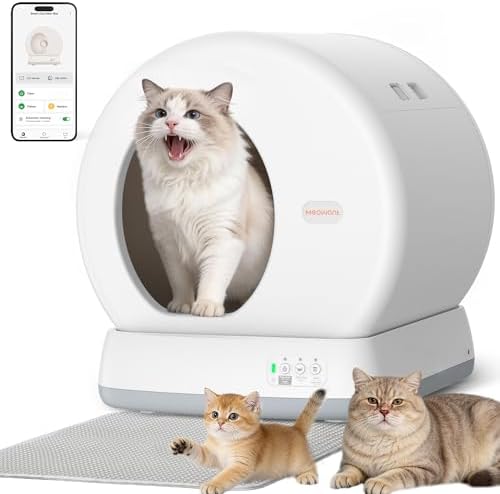
Each of the 3 shown here has its own full review on this site; they run from $239.99 to $359.99.


What happens if you go under or overbuy on Sensor Detection Range?
If the sensor detection range is too short for your specific floor plan, the self-cleaning litter box may fail to activate in time. A cat might enter the unit while the cleaning cycle is active or before the sensors can register its presence, leading to a situation where the device does not respond to the cat’s arrival. This can result in the cat being startled or the device failing to complete a cycle because it did not “see” the cat entering the zone.
Short sensor ranges on motorized litter boxes risk safety hazards
Under-buying on this specification often occurs in multi-room layouts where the litter box sits in a wide-open space. If the range is only 3 ft, the cat must be nearly touching the device before the sensor triggers. This creates a risk of the cat entering the unit while the internal mechanism is moving, which is a primary failure mode for motorized litter boxes.
A deeper dive into the specs is available in our full Meowant MW-SC02-111 review for high-capacity needs.
High sensor ranges provide no benefit in small room layouts
Overbuying on sensor detection range involves paying for a high-range sensor that is not necessary for your home layout. If your litter box is placed in a small closet or a narrow hallway, a 10 ft range provides no functional benefit over a 5 ft range. The sensor will still only trigger when the cat enters the immediate vicinity, as the physical boundaries of the room limit the distance the cat can travel before reaching the device.
Excessive sensor sensitivity causes unnecessary cleaning cycles and motor wear
While a higher range might seem like a safety net, it can occasionally lead to “false positives” if the sensor is sensitive enough to pick up movement in a large room that is unrelated to the litter box. If the sensor detects a person walking past the unit 8 ft away, it might trigger a cleaning cycle unnecessarily. This wastes power and may cause the machine to cycle more frequently than needed, potentially shortening the lifespan of the internal motor.
What is the common mistake with Sensor Detection Range?
The most common mistake buyers make with sensor detection range is assuming a higher number always translates to better safety or accuracy. Buyers often prioritize the largest number available on a spec sheet without considering the physical placement of the unit in their home. A high sensor detection range is only useful if there is an unobstructed path for the cat to travel within that range.
Matching sensor range to the active zone improves accuracy
You should optimize for the “active zone” rather than the maximum reach of the sensor. The active zone is the distance between where the cat typically starts its approach and where it enters the litter box. If your cat always enters from a doorway 6 ft away, a 7 ft range is the ideal specification. Buying a 10 ft range does not make the sensor more accurate; it simply expands the area where the sensor can “see.”
You can also view our full review of the 65L+9L multi-function upgrade robot for a versatile option.
Selecting a range based on specific entry points saves money
Instead of chasing the highest foot count, look for the range that matches your specific entry point. If you place the self-cleaning litter box in a corner, the cat’s approach is likely limited to a few feet. In this scenario, a 3 ft or 5 ft range is sufficient. By focusing on the distance of the actual path, you avoid paying for extra sensor depth that your floor plan cannot utilize.
How does Sensor Detection Range interact with other deciding specs?
Sensor detection range interacts with the power source and motor torque of the self-cleaning litter box. A high detection range allows the unit to begin its “ready” state earlier, but the actual cleaning action is still limited by the motor’s ability to move the litter. If a sensor detects a cat at 10 ft, but the motor is a low-torque model that stalls easily, the detection range provides no benefit to the actual cleaning performance.
Long sensor ranges cannot compensate for low weight capacities
The range also interacts with the weight capacity of the device. If a cat is heavy, it may move more slowly toward the unit. A longer sensor detection range gives the machine more time to prepare for a heavy pet, but the weight capacity remains the hard limit for what the motor can physically move. You cannot compensate for a low weight capacity by having a long sensor range.
Another popular option is the KISENG Litter Box full review which features a specialized enclosure design.
Balanced sensor ranges help prevent dust migration from frequent cycles
Another critical interaction is between the sensor range and the dust migration seals of the unit. If a device has a very long detection range, it may trigger more frequently due to peripheral movement. If the enclosure is not well-sealed, these frequent, unnecessary cycles can contribute to dust migration into the home. Therefore, a balanced range that only triggers when a cat is truly approaching the unit helps maintain the integrity of the seals by reducing unnecessary cycles.
Measuring the cat’s path determines the ideal sensor range
When choosing a self-cleaning litter box, consider the layout of your home. A person starts by identifying the path the cat takes to the box, then measures the distance from that starting point to the unit. If the path is clear and long, a higher range is beneficial. If the path is short or obstructed, a lower range is sufficient. You end up with a device that triggers exactly when needed, avoiding both the risk of a late trigger and the waste of over-engineered sensors.
Matching sensor range to hallway length ensures perfect activation
A cat sits in a hallway and begins to walk toward the litter box located at the end of the corridor. The sensor detects the movement at 7 ft, allowing the motor to enter a ready state before the cat reaches the entry point. Because the range matches the hallway length, the unit activates perfectly as the cat arrives.
The other motorized litter box guides we have published
- Best Self Cleaning Litter Boxes for Small Spaces
- Motion Sensing Self Cleaning Litter Boxes Compared
- Choosing the Best Self Cleaning Litter Box with Carbon Filter
- The Self Cleaning Litter Boxes That Work Best for Odor Control
- Which Self Cleaning Litter Box Is Best for Beginners?
- Choosing the Best Self Cleaning Litter Box for Multi Cat Homes
Early Pricing is reader-supported: some links on this page are affiliate links, and as an Amazon Associate Early Pricing earns from qualifying purchases at no extra cost to you. Learn more.