Self-cleaning litter boxes are motorized devices that automate the waste removal process from a cat’s litter area. You need a unit that matches your household’s specific litter type and pet weight to avoid mechanical failure. Before choosing, measure your available floor space and confirm if your current litter brand is compatible with the specific cleaning mechanism of the device.
New owners can find guidance in our guide to the best self cleaning litter box for beginners.
Core Self-Cleaning Litter Box Capabilities
The primary function of a motorized litter box is to move waste away from clean litter using a specific mechanical method. Most units use a system that relies on physical movement rather than just a simple scoop.
If you have a crowded household, view our picks for the best self cleaning litter box for multi cat homes.
- Sifting – This is a method where the device separates waste from clean litter by passing it through a screen. A higher number of sifting cycles per hour generally indicates a faster cleaning frequency.
- Rotating Drum – This mechanism moves the litter in a circular motion to tumble waste into a separate compartment. A larger drum diameter allows for more waste to be processed in a single rotation.
- Raking – This method uses a mechanical arm or blade to pull waste toward a collection area. The speed of the rake determines how quickly the unit returns to a ready state.
- Sifting vs. Rotating – This standard describes the choice between a mechanical rake system and a rotating drum mechanism for waste separation. Rotating drums often handle larger volumes of waste, while raking systems may offer a more compact footprint.
- App Connectivity – This feature allows you to monitor the device and receive notifications via a smartphone. Of the 135 listings we evaluated, 110 stated they included this capability.
- Health Tracking – This software feature monitors a cat’s usage patterns to provide data on frequency and duration of use. This was stated by 83 of the 135 listings we screened.
Where these choices show up in our reviews
Each of the 3 shown here has its own full review on this site; they run from $119.99 to $223.99.
Users who want remote monitoring should see our comparison of the best self cleaning litter box with app control.
If your floor plan is limited, browse our list of the best self cleaning litter box for small spaces.
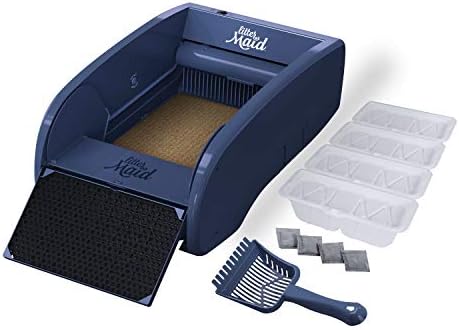
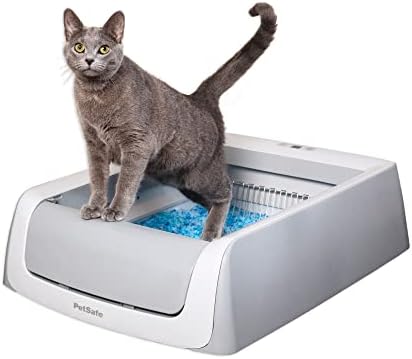

Physical Self-Cleaning Litter Box Specifications
Physical dimensions and weight limits determine whether a motorized litter box fits in your home and if it can safely handle your pet. Selecting the wrong size can lead to the device being unable to clear the waste properly.
You can learn more about the different mechanisms by viewing the various types of self-cleaning litter boxes.
- Weight Capacity – This measures the maximum mass of a pet the unit can support. The listings we screened show a median weight capacity of 18 lbs, with some units reaching up to 34 lbs.
- Dimensions – This measures the physical space the unit occupies on your floor. The median size among the listings is 20 inches, with some units as small as 2 inches in a specific dimension.
- Included Bags – This is the number of waste collection bags provided in the box. The median count is 1.5, though some listings offer up to 30 bags.
- Odor Control Method – This describes how the device manages smells, such as through a Sealed Enclosure or a Carbon Filter. A sealed enclosure provides a physical barrier, while a filter captures airborne particles.
- Odor Neutralizer – This is a chemical or mechanical system designed to counteract smells. These systems vary from simple Odor Control to specialized Ozone or Ionic technology.
Self-Cleaning Litter Box Compatibility
Compatibility determines which types of litter you can safely use without damaging the motor or clogging the internal components. Using the wrong material is a primary cause of mechanical failure in these devices.
If you aren’t ready for automation, explore the alternatives to a self-cleaning litter box.
Before making a purchase, review what to check for in a self-cleaning litter box warranty.
- Litter Type Compatibility – This defines which materials the device can process, such as Clay vs. Silica vs. Tofu. This standard dictates dust levels and moisture absorption.
- Clumping Litter – This refers to litter that forms solids when wet; it is the most common requirement for these devices. 91 of the 135 listings we screened did not state a specific compatibility, making it vital to check your specific brand.
- Bentonite – This is a specific type of clay. Some units are limited to bentonite, while others allow for mixed clumping litters.
- Tofu – This is a plant-based litter. Only 8 of the 135 listings we screened explicitly state compatibility with tofu.
- Silica – This is a crystal-based litter. 7 of the 135 listings we screened state they are compatible with silica.
- Washable Granules – This is a specific type of litter that can be cleaned and reused. Only 1 of the 135 listings we screened states it can handle these granules.
Self-Cleaning Litter Box Maintenance Parts
Maintenance parts are the components you must replace or service to keep the device functioning over time. Knowing these costs helps you calculate the long-term ownership cost of the unit.
To understand different tiers of technology, see what different price levels offer for self-cleaning litter boxes.
- Odor Filter – This is the replaceable component that captures airborne smells. You will need a Replacement Filter that matches the specific model’s dimensions and filtration grade.
- Sifting Drum – This is the rotating component that separates waste from clean litter. If the screen becomes clogged or worn, you may need a Replacement Sifting Screen to ensure proper waste separation.
- Replacement Drive Belt – This is a critical mechanical component for power transmission. If the motor turns but the drum does not, the belt may need replacement.
- Safety Sensor – This is the infrared or ultrasonic device that prevents operation while a cat is inside. If the sensor fails, the unit may attempt to cycle while a pet is present, leading to mechanical damage.
Common Self-Cleaning Litter Box Confusions
Buyers often confuse different types of cleaning mechanisms and material types which can lead to a device that cannot perform its primary task.
To ensure a proper fit, look at how to choose the right dimensions for self-cleaning litter boxes.
Depending on your setup, see how to choose a power source for self-cleaning litter boxes.
Rotating drums handle larger waste volumes than sifting screens
Sifting vs. Rotating: Sifting involves a flat screen that lets small grains through while trapping large waste. Rotating involves a drum that tumbles the litter. A rotating drum often handles larger volumes of waste more effectively than a sifting screen.
Understand the mechanics by comparing the differences between sifting and rotating self-cleaning litter boxes.
Clumping litter allows motorized units to grab waste effectively
Clumping vs. Non-Clumping: Clumping litter forms a solid mass that is easy for a machine to grab. Non-clumping litter stays loose, which can cause a motorized unit to simply move the waste around without ever removing it from the clean litter.
For a detailed analysis of the hardware, see our full review of the UPFAS CAST-500C.
More technical data is available in our full review of the AUTOCLEAN-1 Litter Box.
Weight capacity limits the size of the cat the box supports
Weight Capacity vs. Total Volume: Weight capacity is the maximum weight of a pet the unit can safely support without triggering a safety shutoff. Total volume is how much litter the box holds. A box can have a large volume but a low weight capacity, meaning it can hold a lot of litter but cannot safely accommodate a heavy cat.
To see how the open-top design performs, see our full review of the Neakasa M1 Plus.
Sealed enclosures and carbon filters provide different types of odor control
Odor Control vs. Odor Removal: Odor control usually refers to a physical barrier like a Sealed Enclosure to keep smells inside the box. Odor removal refers to active systems like Carbon Filters or Ozone technology that chemically neutralize the smell.
For a deep dive into the smart features, see our full review of the PurrTek Litter Box.
Browse our other motorized litter box pages
- Choosing the Best Self Cleaning Litter Box for Multi Cat Homes
- The Self Cleaning Litter Boxes That Work Best for Large Cats Under $400
- Which Self Cleaning Litter Box with App Control Is Best?
- Best Self Cleaning Litter Boxes for Small Spaces
- Motion Sensing Self Cleaning Litter Boxes Compared
- Choosing the Best Self Cleaning Litter Box with Carbon Filter
Early Pricing is reader-supported: some links on this page are affiliate links, and as an Amazon Associate Early Pricing earns from qualifying purchases at no extra cost to you. Learn more.