Self-cleaning litter boxes come in three meaningfully different types defined by the weight capacity of the pet they support. You need to identify your cat’s weight before choosing a model to ensure the motor and rotation mechanism can handle the load without stalling. Measure your cat’s weight in pounds and compare it against the 1 to 30 lbs or 31 lbs and up thresholds that separate standard from large-capacity units.
Self-Cleaning Litter Box Types Among the Listings We Screened
| Type | What sets it apart | Listings we screened | Price range | Median weight capacity |
|---|---|---|---|---|
| Entry-Level Manual Scoopers | cleaning mechanism: Sifting | 16 | $109.99 to $799.99 | 25 lbs |
| Standard Automatic Boxes | weight capacity 1 to 30 lbs | 42 | $109.99 to $629.99 | 17 lbs |
| Large Capacity/Multi-Cat Boxes | weight capacity 31 lbs and up | 3 | $180.49 to $299.99 | 33 lbs |
Counted over the 135 listings this site screened; a listing that does not state the figure a type is defined by is not counted under any type.
Beginners can learn more by reading how self cleaning litter boxes work.
Where these choices show up in our reviews
Prices across these 3 run from $119.99 to $223.99; each one has a full review here.

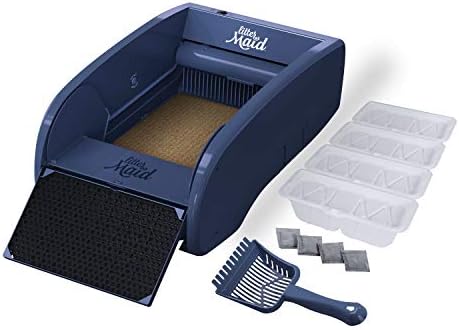
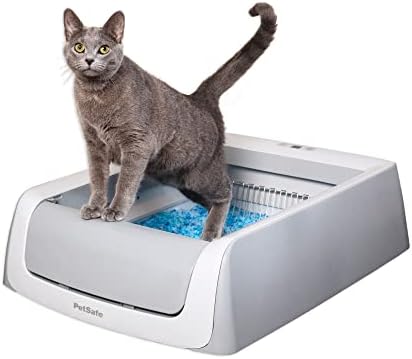
Entry-Level Manual Scoopers Use Sifting Mechanisms Instead of Rotation
Entry-level manual scoopers are self-cleaning litter boxes that use a sifting mechanism rather than a fully automated rotation cycle. These units are designed for owners who want to reduce the frequency of manual cleaning but do not require a device to move the litter for them. They typically feature a large enough basin for a standard cat but lack the motorized components found in automatic models. Because they omit the motor and sensors, these units occupy the lowest price band of the category.
Ensure a perfect fit by checking dimensions for self cleaning litter boxes.
How manual scooper designs can increase the amount of manual effort
Choosing a manual scooper means you trade automated convenience for a simpler mechanical design. A common issue occurs when a user selects a manual scooper that lacks a sufficient sifting area, leading to more manual effort than expected. If you want a device that handles the heavy lifting of waste separation, these models may result in a waste of time as you still perform the primary scooping task.
Standard Automatic Boxes Support Pets Weighing Between 1 and 30 lbs
Standard automatic boxes are motorized litter boxes with a weight capacity of 1 to 30 lbs. These units are for owners of single cats or small pets who want a device that automatically cycles the litter to separate waste. They utilize sensors to detect when a cat enters or leaves the unit, triggering a cleaning cycle to prevent waste from remaining in the path. These models sit in the middle price band and offer the most common balance of automation and footprint.
Determine your setup needs by looking at power source options for litter boxes.
Preventing mechanical damage by ensuring consistent cat movement for sensors
A buyer typically places the unit near a laundry room or utility area, sets the initial cycle, and allows the sensors to manage the daily maintenance. If the sensors fail to detect a cat due to “sensor blindness,” where the IR beam cannot see the pet, the unit may cycle while the cat is still inside, causing mechanical damage. To avoid this, ensure your cat’s movement patterns are consistent with the sensor’s detection range.
How the Neakasa M1 Plus sets a benchmark for app-based monitoring
The Neakasa M1 Plus serves as the standard for high-tech sensor integration and app-based monitoring in the mid-to-high range. While many standard automatic boxes offer basic motion detection, the Neakasa M1 Plus provides a benchmark for how sensors can be paired with mobile alerts to track usage. Most standard models on the market provide the core motorized functionality but may lack the advanced software integration found in that specific benchmark.
Compare different cleaning styles by seeing sifting vs. rotating litter box options.
Large Capacity Boxes Feature Reinforced Structures for Pets Over 31 lbs
Large capacity boxes are motorized litter boxes designed for heavy pets or multi-cat households with a weight capacity of 31 lbs and up. These units are built with reinforced structures and high-torque motors to handle the increased mass of larger animals without risking a motor stall. They offer the highest level of durability for heavy-duty use but occupy the highest price band in the category.
Take a closer look at our full review of the UPFAS CAST-500C.
Why selecting a large capacity model prevents motor jams for heavy pets
If you have a pet that weighs near the 30 lb limit, choosing a standard box instead of a large capacity model can lead to a permanent motor jam. This occurs when the motor lacks the torque to turn a heavy clump or a large cat, resulting in a costly repair or a non-functional unit. By selecting a model rated for 31 lbs and up, you ensure the hardware is sized for the physical demands of a larger animal.
The LitterMaid LM980 is the industry benchmark for high-capacity, multi-cat durability and heavy-duty motor reliability. It establishes the standard for how a motor should perform under constant stress from multiple users.
Get the full details in our full review of the LM980 Mega.
Comparison of Self-Cleaning Litter Box Types
| Type | Best-Fit Buyer | Main Advantage | Main Compromise |
|---|---|---|---|
| Entry-Level Manual Scoopers | Budget-conscious owners | Lowest cost and simplicity | Requires manual scooping |
| Standard Automatic Boxes | Single-cat owners | Automated daily cleaning | Limited weight capacity |
| Large Capacity Boxes | Multi-cat or large pet owners | High-torque motor reliability | Highest price point |
How to Tell Which Type Fits Your Needs?
You belong in the entry-level manual scooper category if your primary goal is to find a larger-than-average litter tray and you do not mind scooping the waste yourself. This choice is best if you want to avoid the complexities of sensors and power requirements while still having a dedicated space for your cat.
You should choose a standard automatic box if you have one cat weighing less than 30 lbs and want to automate the cleaning process. This is the most common choice for people who want to eliminate the daily chore of scooping but do not have a large animal that requires heavy-duty motor torque.
See the technical details in our full review of the ScoopFree Taupe.
You need a large capacity box if your cat weighs 31 lbs or more, or if you have multiple cats that require frequent cleaning cycles. If your cat is a large breed, selecting a standard box risks a motor stall, which can lead to a permanent jam and unpleasant odors in your home.
Browse our other motorized litter box pages
- Motion Sensing Self Cleaning Litter Boxes Compared
- Choosing the Best Self Cleaning Litter Box with Carbon Filter
- The Self Cleaning Litter Boxes That Work Best for Odor Control
- Which Self Cleaning Litter Box Is Best for Beginners?
- Choosing the Best Self Cleaning Litter Box for Multi Cat Homes
- The Self Cleaning Litter Boxes That Work Best for Large Cats Under $400
Early Pricing is reader-supported: some links on this page are affiliate links, and as an Amazon Associate Early Pricing earns from qualifying purchases at no extra cost to you. Learn more.