Dimensions for a self-cleaning litter box refer to the physical footprint and height the unit occupies in your home, measured in inches. You must determine the correct size by measuring your available floor space and your cat’s physical size to ensure the unit functions without obstruction.
Which Self-Cleaning Litter Box Dimensions Suit You?
| If this is you | The Dimensions that suit you | Why |
|---|---|---|
| You have a small apartment or limited floor space. | 15 to 18 inches in any direction. | Smaller footprints allow the unit to fit into corners or narrow hallways without blocking foot traffic. |
| You own a standard-sized domestic cat. | 18 to 22 inches in width and depth. | These dimensions provide enough internal clearance for a cat to turn around and dig without hitting the walls. |
| You have a large breed or a very active cat. | 22 inches or greater in width and depth. | Larger dimensions prevent the cat from feeling cramped, which reduces the risk of the cat attempting to jump out of the unit. |
| You need to place the unit in a high-traffic area. | Under 20 inches in width. | A narrower width ensures the unit does not create a tripping hazard or narrow the walking path in a shared room. |
Examples from this category, each with its own review here
3 options shown here, $329.99 to $399.99, each with its own full review behind its name.


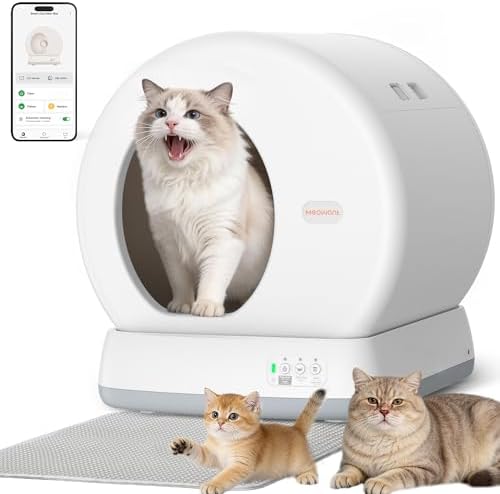
How do I measure the space for a self-cleaning litter box?
To establish your own required dimensions, you must measure the floor area where the self-cleaning litter box will sit. Use a standard metal tape measure to record the length and width of the designated spot, ensuring you account for the clearance needed for the unit’s moving parts. The dimensions for these devices are typically stated in the manufacturer’s description as “Length x Width x Height” or “Footprint.”
You can see the specific dimensions and features in our full Neakasa M1 Plus review.
Measuring cat body dimensions ensures comfortable entry and exit
You should also measure your cat’s largest dimension, which is usually their body length from nose to tail base. A useful rule of thumb is that the internal width of the litter box should be at least 4 inches wider than your cat’s body width. This ensures the cat can enter and exit the device comfortably. If the unit is too narrow, the cat may struggle to turn around, leading to frustration or a refusal to use the box.
Footprint and clearance measurements determine required floor space
Check the product listing for the specific “footprint” measurement. This tells you how much floor space the base of the unit covers. Because these are motorized units, you may also need to check the “clearance” requirements. Some models require extra inches of space around the sides or top to allow the cleaning mechanism to move freely or for the lid to open fully.
What happens if I choose the wrong dimensions?
Choosing dimensions that are too small for your cat leads to a cramped environment where the animal cannot rotate. If a cat cannot turn around comfortably, it may begin to dig in only one spot, leading to uneven litter distribution and potential clogs in the cleaning mechanism. In some cases, a cat that feels trapped by narrow walls may attempt to jump over the sides, which can damage the motorized components or cause the unit to tip. This mistake often results in a product that the cat refuses to use entirely, leading to a costly return or a messy home as the cat finds other places to go.
We provide a detailed spec breakdown in our full PurrTek Litter Box review.
Oversized self-cleaning litter boxes create tripping hazards and layout issues
Conversely, choosing dimensions that are too large for your available space can create a physical hazard in your home. A unit that is too wide for a hallway or a small bathroom can block the path, creating a tripping risk or making the room difficult to navigate. If the unit is too large for the room’s layout, it may also prevent you from being able to reach the maintenance points or the power outlet comfortably. You lose usable floor space and may find the device is poorly positioned for daily cleaning tasks.
What should I do if my space falls between two sizes?
If your available space falls between two standard sizes, such as 18 inches and 22 inches, you should prioritize the smaller footprint that fits your room while still meeting the minimum requirements for your cat. In this category, a unit that is slightly smaller but still allows for a full turn is preferable to a unit that is too large to fit in the designated area. If the space is tight, look for a model that emphasizes a “compact” footprint but maintains a high internal depth.
View the technical specifications in our full Neakasa M1GW review to see how it compares.
Balancing cat comfort and room size prevents product returns
When requirements conflict, such as having a large cat but a small room, you must decide which constraint is more rigid. If the floor space is fixed, you must find a model that maximizes internal volume without increasing the outer footprint. If the cat’s comfort is the priority and you can move furniture, it is better to move the unit to a larger area. Choosing a unit that is too small for the cat is a common reason for these products to be returned, as a cat that feels restricted will often stop using the box immediately.
Adding buffer space prevents motorized litter box motor stalls
To avoid a return, verify the “clearance” requirements before ordering. Some motorized litter boxes require a specific amount of empty space around the base to operate the cleaning cycle. If your space is exactly the same size as the product’s footprint, the motor may stall or the unit may not be able to complete its cycle. Always add at least 2 inches of buffer space to your measurements to ensure the device has room to function correctly.
Every Self-Cleaning Litter Box guide in this category
- Which Self Cleaning Litter Box with App Control Is Best?
- Best Self Cleaning Litter Boxes for Small Spaces
- Motion Sensing Self Cleaning Litter Boxes Compared
- Choosing the Best Self Cleaning Litter Box with Carbon Filter
- The Self Cleaning Litter Boxes That Work Best for Odor Control
- Which Self Cleaning Litter Box Is Best for Beginners?
Early Pricing is reader-supported: some links on this page are affiliate links, and as an Amazon Associate Early Pricing earns from qualifying purchases at no extra cost to you. Learn more.