Early Pricing is reader-supported: some links on this page are affiliate links, and as an Amazon Associate Early Pricing earns from qualifying purchases at no extra cost to you. Learn more.
Cat enclosure warranties typically span a range of 1 to 3 years, with the most common reason for a refused claim being structural damage caused by excessive weight or improper assembly. You should check the specific warranty document for the product you intend to purchase to confirm the exact coverage period and conditions. If you own more than three adult cats, you need to verify that the warranty covers the specific weight load of your household before making a purchase.
What does a cat enclosure warranty normally cover or exclude?
A cat enclosure warranty normally covers manufacturing defects in the materials and the structural integrity of the frame. This means the coverage applies to the components that make up the core of the unit, such as the wood, metal, or plastic used in the build. If a joint fails or a pre-drilled hole cracks under normal use, these are the types of issues the warranty is designed to address.
If you need extra space, see our list of large outdoor catios with ramps.
The scope of coverage is often limited to the structural skeleton of the enclosure rather than the interactive elements or aesthetic finishes. Because these items experience high-frequency contact and friction, they are frequently excluded from standard protection plans.
If you prefer to keep your pets inside, explore our best indoor cat enclosure hide-away furniture.
- Structural frame defects
- Material manufacturing flaws
- Faulty hardware or fasteners
- Warping of primary load-bearing beams
- Failures in pre-drilled assembly points
Warranty exclusions typically focus on wear and tear or environmental damage that occurs after the unit is placed in a home. Because cat enclosures are subject to constant physical interaction, many parts are considered consumable or high-wear items that do not qualify for replacement.
- Surface scratches or bite marks
- Fading or UV degradation of finishes
- Damage from pet-related accidents
- Modifications or aftermarket additions
- Natural wear on climbing surfaces
- Failure due to overloading beyond rated limits
Distinguishing between structural failure and superficial surface wear on cat enclosures
Think of a warranty like a car’s bumper-to-bumper coverage: it covers the engine’s internal components but not the dents you get while driving. In the same way, a cat enclosure warranty covers the internal structural integrity but not the superficial marks left by the animal. If a buyer fails to distinguish between structural failure and surface wear, they may spend months attempting to claim a replacement for a scratch that the manufacturer considers normal usage.
Before purchasing, you should see what cat enclosures cost at every price level.
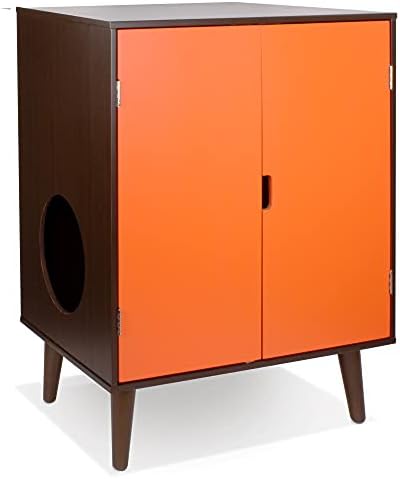
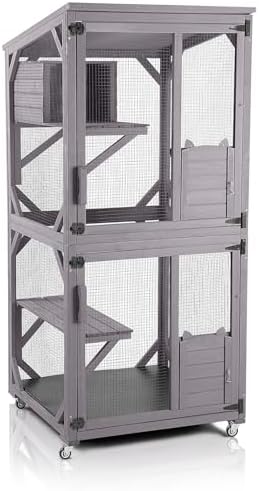
Examples from this category, each with its own review here
3 options shown here, $100.09 to $189.99, each with its own full review behind its name.
To ensure your pet has enough room to climb, check our guide on how many platforms you actually need.

How does the purchase location affect the cat enclosure warranty?
The purchase location determines who handles the claim and which legal protections apply to the transaction. When you buy from different sources, the chain of responsibility shifts from the manufacturer to the middleman or the individual seller.
Faster warranty processing when buying cat enclosures directly from manufacturers
Buying directly from the manufacturer typically provides the most straightforward path for a claim. In this scenario, the manufacturer owns the product and the warranty, meaning you deal with the entity that produced the item. This often results in faster processing because there is no third party to verify the defect or manage the shipping of replacement parts.
Beginners can start by reading how a cat enclosure works and functions.
How authorised retailers handle cat enclosure warranty claims and extensions
Purchasing from an authorised retailer involves a middleman that has a formal agreement with the manufacturer. The retailer may act as the first point of contact, but they will often refer you back to the manufacturer for structural claims. You should check if the retailer offers their own extended protection, which might sit on top of the manufacturer’s standard warranty.
If a full structure isn’t right for you, explore various alternatives to a traditional cat enclosure.
Risks of limited warranty coverage from marketplace and individual sellers
Buying from a marketplace seller introduces a layer of complexity where the seller may not be the manufacturer or an authorised dealer. In these cases, the warranty is often only as good as the seller’s willingness to facilitate a return. If the seller is an individual, you may find it difficult to get a replacement, as the manufacturer may refuse to honour a warranty for a product sold outside their official channels.
Reduced warranty periods for refurbished or open-box cat enclosures
A refurbished or open-box seller provides a unit that has been previously owned or returned. These units often come with a significantly reduced warranty period, sometimes as short as 30 to 90 days. You must confirm whether the original manufacturer’s warranty transfers to a second owner, as many brands explicitly state that the warranty is non-transferable.
Different styles exist for different needs, so view the various types of cat enclosures available.
Lack of local support for imported or grey-market cat enclosures
Imported or grey-market sellers provide products intended for different regions or markets. These units may lack the local support infrastructure needed to process a warranty claim. If a component fails, the manufacturer may refuse to provide a replacement because the product was not sold in your specific country or region.
To ensure your cat can stand comfortably, see how to choose the right enclosure height.
What actions specifically void a cat enclosure warranty?
Actions that void a cat enclosure warranty involve any modification or use that deviates from the manufacturer’s provided assembly instructions. Because these units rely on specific weight distributions, any change to the structural design can disqualify a claim.
Make sure the dimensions are sufficient by viewing how to choose the right enclosure length.
How drilling or cutting wood voids the cat enclosure warranty
Modifying the frame by drilling new holes or cutting the wood to fit a specific space is a primary reason for voiding coverage. If a structural failure occurs at a point where the material was cut or altered by the user, the manufacturer will typically refuse the claim. This is because the structural integrity of the wood or metal was compromised by a non-factory modification.
Exceeding the stated weight capacity voids the cat enclosure warranty
Overloading the unit beyond the stated weight capacity also voids the warranty. If an enclosure is rated for 50 kg and the owner places 80 kg of weight on it, any resulting sag or collapse is considered a result of misuse. Manufacturers rely on these limits to ensure the safety of the product, and exceeding them removes the manufacturer’s liability for the outcome.
For a deeper dive into that specific model, view our full PawHut Cat Enclosure review.
Environmental exposure and moisture damage voiding the cat enclosure warranty
Exposure to extreme environments, such as placing an indoor-only enclosure in a high-moisture area or outdoors, will also void the warranty. Wood and certain finishes are not designed to withstand constant humidity or direct rain. If the material begins to rot or warp due to environmental exposure, the warranty will not cover the replacement of the unit.
You can find a detailed analysis of that model in our full Aivituvin Window Catio review.
What should you keep and do before buying to ensure a future claim works?
To ensure a future claim works, you must document the condition of the enclosure at the moment of delivery and retain all original documentation. This creates a paper trail that proves the defect was present at the time of purchase rather than caused by your own usage.
- Take photos of the unit in its original packaging upon arrival
- Save the digital or physical copy of the warranty certificate
- Keep the original receipt or invoice showing the date of purchase
- Record the specific model name and any serial numbers provided
- Document the assembly process with photos of each major step
- Verify the weight capacity limits in writing before the unit arrives
Evidence sequence to prove manufacturing defects in cat enclosures
A buyer follows a sequence of steps to secure their investment. First, they purchase the unit and save the receipt. Second, they photograph the item immediately upon unboxing to confirm no shipping damage occurred. Third, they complete the assembly according to the manual, taking a photo of the finished structure. If a problem arises later, they provide this sequence of evidence to the manufacturer to prove the issue is a manufacturing defect.
Check out our full Oneluck OK-387D-FBA spec breakdown to see if it fits your needs.
When is an extended warranty worth it for a cat enclosure?
An extended warranty is worth it for a cat enclosure if you plan to keep the unit for more than three years or if the unit features complex moving parts. For a simple, static wooden structure, the added cost of an extended warranty often provides little value because the primary risk is structural failure, which is usually covered by the initial manufacturer’s warranty.
We provide a detailed analysis of that specific unit in our full Aivituvin Catio review.
Why extended warranties benefit cat enclosures with moving mechanical parts
If the enclosure includes mechanical components like rotating platforms, motorized elements, or complex pulley systems, an extended warranty becomes more practical. These moving parts are prone to mechanical wear that may occur after the standard one-year period ends. In these cases, the cost of the extended warranty is a hedge against the high cost of replacing complex internal hardware. For a basic multi-level climbing tower, the risk of a major structural failure after three years is lower than the cost of the extra insurance, making the extension less necessary.
The other cat enclosure guides we have published
- Walk in Cat Houses with Platforms Compared
- Choosing the Best Outdoor Cat Enclosure with Wheels
- The Cat Houses That Work Best for Waterproof Roofs
- Which Wall Mounted Cat Playpen Is Best for Small Spaces?
- Best Large Outdoor Catio with Ramps
- Protecting Cats from Predators on a Budget With Outdoor Cat Enclosures